Construction Stone Size Guide How to Choose the Right Stone for Your Project
Get an estimate for your project in 60 seconds
 Your information is secure
Choosing the right stone size can make or break your construction project. Whether you’re building a foundation that needs to support heavy loads or creating decorative pathways, the size of your stones directly affects both structural integrity and visual appeal.
Construction stones typically fall into three main categories: small stones (1/8 to 3/8 inch) for decorative work, medium stones (3/8 to 3/4 inch) for pathways and driveways, and large stones (3/4 to 1.5 inches) for structural applications like foundations and retaining walls. Understanding these categories helps you match the right stone size to your specific project needs.
Quick Fact: Larger stones provide better load-bearing capacity and stability, while smaller stones offer enhanced visual appeal and easier installation for decorative features.
Understanding construction stone size categories
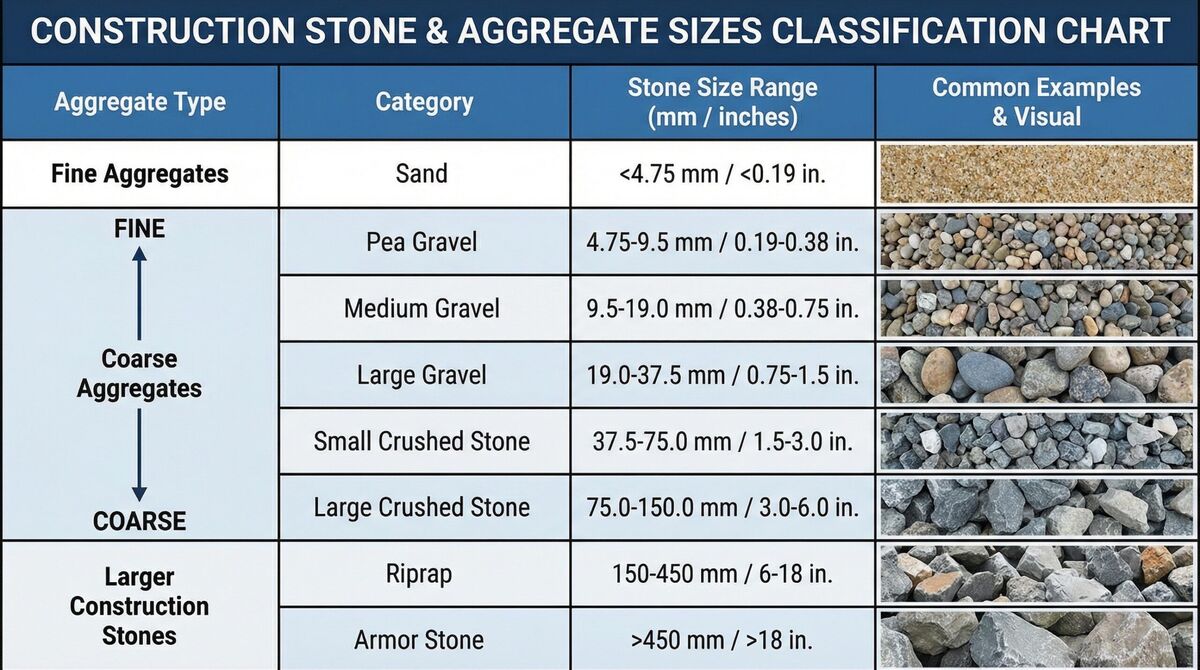
The construction industry classifies stones into three primary size ranges, each serving distinct purposes in building projects. For a more detailed breakdown of how different aggregate sizes are categorized and measured, refer to our comprehensive reference guide.
Small-sized stones, measuring 1/8 to 3/8 inch, work best for intricate designs and decorative accents. You’ll often see these used in mosaic patterns, garden borders, or as finishing touches on concrete surfaces. Their compact size allows for detailed work but limits their structural applications.
Medium-sized stones range from 3/8 to 3/4 inch and strike a balance between function and aesthetics. These stones commonly appear in driveways, walkways, and as base materials under larger stones. They compact well while still providing visual interest.
Large-sized stones, spanning 3/4 to 1.5 inches, handle the heavy-duty work in construction. You’ll find these in foundations, retaining walls, and major structural elements where load-bearing capacity matters most.
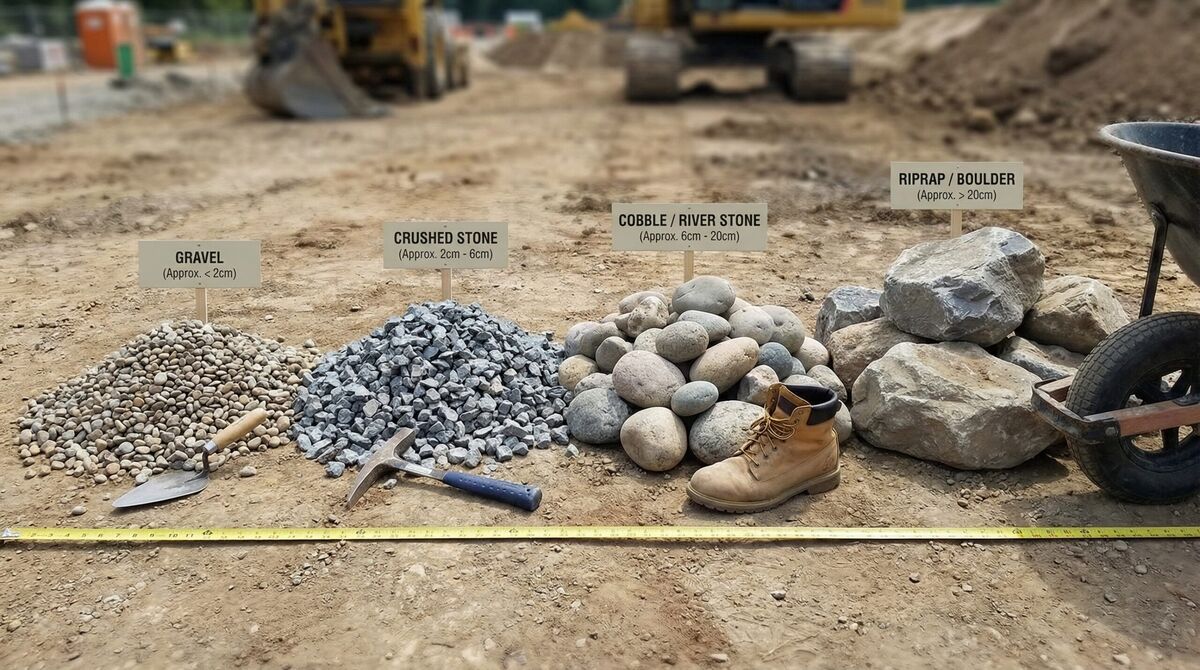
| Stone Category | Size Range | Primary Uses | Load-Bearing Capacity |
|---|---|---|---|
| Small | 1/8″ – 3/8″ | Decorative, patterns, accents | Low |
| Medium | 3/8″ – 3/4″ | Pathways, driveways, base layers | Moderate |
| Large | 3/4″ – 1.5″ | Foundations, retaining walls | High |
Key factors when selecting stone sizes
Your project type should guide your stone size decision more than any other factor. Heavy-duty applications like foundation work demand larger stones that can distribute weight effectively and resist settling over time. To better understand the various sizes of stones available for different construction applications, explore our detailed guide.
Consider your budget carefully, as larger stones typically cost more due to increased weight and transportation expenses. However, skimping on stone size for structural applications can lead to costly repairs later.
Pro Tip: Consult with local building codes before finalizing your stone size choice, as some regions have specific requirements for structural applications.
Climate plays a crucial role in stone selection. Areas with freeze-thaw cycles benefit from larger stones that resist movement, while regions with heavy rainfall need stones that provide adequate drainage.
Think about long-term maintenance when choosing stone sizes. Smaller decorative stones may shift over time and require periodic adjustment, while properly sized structural stones should remain stable for decades.
Popular construction stone types and their ideal sizes
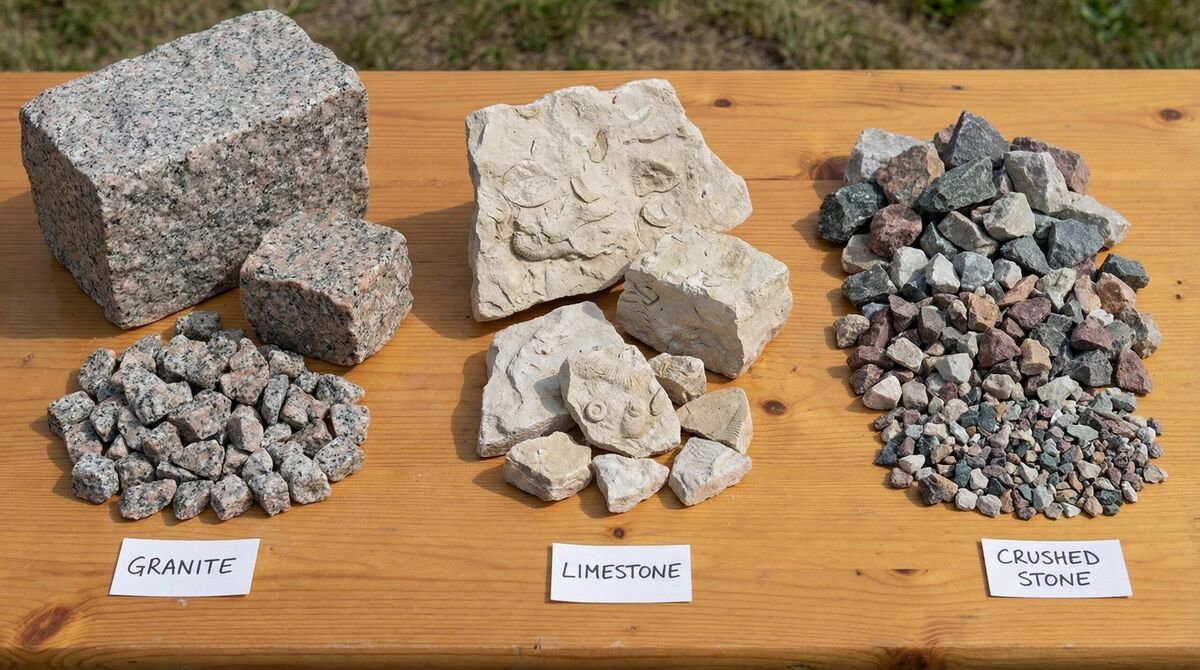
Granite stands out as one of the most durable construction stones available. For structural work, choose granite stones in the 3/4 to 1.5-inch range. When using granite decoratively, smaller sizes from 1/8 to 3/8 inch create beautiful accent patterns while maintaining the stone’s natural strength.
Limestone offers versatility and attractive appearance across various applications. Large limestone stones (1 to 1.5 inches) excel in wall construction and fencing projects. Medium-sized limestone (3/8 to 3/4 inch) works perfectly for patios and interior flooring where you want visual appeal with moderate durability.
Crushed stone provides excellent compaction properties regardless of the source material. The angular edges of crushed stone help pieces lock together, making it ideal for base applications in any size category. For specific information about quarry stone and crushed stone sizing, our comprehensive chart breaks down all the options.
Making the right choice for your project
Start by clearly defining your project’s primary purpose. Ask yourself whether you need maximum structural support, visual appeal, or a combination of both. This clarity will immediately narrow your stone size options. If you’re working on landscaping projects, our landscape stone size chart can help you find the perfect fit for your outdoor space.
Balance functionality with aesthetics by considering how the stone size affects your project’s overall appearance. Larger stones create bold, imposing looks suitable for retaining walls or foundation work, while smaller stones offer delicate, detailed appearances perfect for decorative features.
Remember: The best stone size meets both your structural requirements and design vision without exceeding your budget constraints.
Work with experienced suppliers who understand local conditions and building requirements. They can provide valuable insights about which stone sizes perform best in your specific climate and soil conditions.
Test your chosen stone size on a small area before committing to large quantities. This approach helps you verify that the size works well with your installation methods and achieves the desired visual effect. For driveway projects specifically, consult our driveway stone size chart to ensure you select the optimal material for vehicle traffic and drainage.
When you’re ready to move forward with your construction project, having the right stone size makes all the difference in achieving both structural integrity and visual appeal. Take time to evaluate your specific needs, consult with professionals when needed, and choose stones that will serve your project well for years to come.
Ready to find the perfect construction stones for your project? Hello Gravel offers high-quality aggregates delivered directly to your site, whether you’re working on a small residential project or large commercial construction. Our white-glove service takes the guesswork out of stone selection and ensures you get exactly what you need for success.