3/4 Gravel vs 3/4 Minus: Complete Comparison Guide
Get an estimate for your project in 60 seconds
 Your information is secure
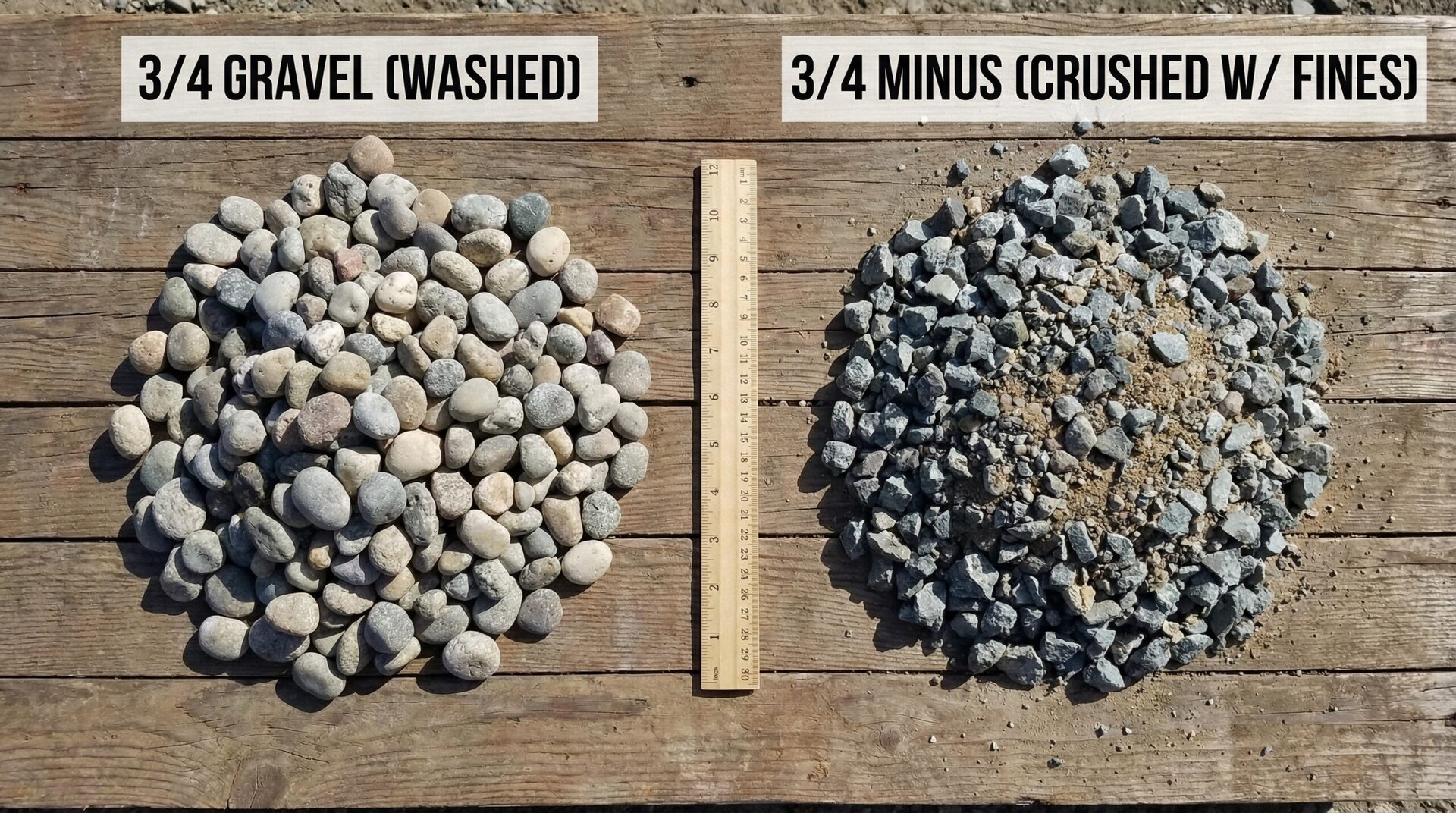
When choosing between 3/4 gravel and 3/4 minus for your project, the main difference comes down to the fine particles. Both materials are roughly the same size, but 3/4 minus contains small particles called “fines” that help it compact into a solid, stable base. Standard 3/4 gravel lacks these fines, making it better for drainage applications where water needs to flow through freely.
The choice between these materials can make or break your project’s success. Using 3/4 minus where you need drainage could lead to water pooling, while using regular 3/4 gravel for a driveway base might result in shifting and instability over time.
Quick Fact: The “minus” in 3/4 minus refers to the inclusion of all particle sizes from dust up to 3/4 inch, while regular 3/4 gravel contains primarily stones close to 3/4 inch in diameter.
This guide breaks down everything you need to know about both materials, from technical specifications to real-world applications, helping you make the right choice for your specific project.
Key differences between 3/4 gravel and 3/4 minus
The fundamental difference between these materials lies in their particle composition and how they behave when installed. Understanding these differences will help you choose the right material for your specific needs.
3/4 gravel consists primarily of stones that measure close to 3/4 inch in diameter. These stones have been washed and screened to remove most fine particles, creating uniform gaps between stones that allow excellent water drainage. The clean, angular stones don’t lock together tightly, maintaining their loose structure even under moderate pressure. If you’re comparing different stone sizes, you might also want to explore the differences between #57 and #67 crushed stone, which have similar applications.
3/4 minus includes the full range of particle sizes from dust and sand up to 3/4 inch stones. This gradation of sizes means smaller particles fill the voids between larger stones. When compacted, these fines act like cement, binding the material together into a firm, stable surface that can support heavy loads.
The presence or absence of fines affects everything from installation to long-term performance. Projects requiring structural stability benefit from the binding action of fines, while drainage applications need the open structure that only clean gravel provides.
Technical specifications and grading
Both materials fall within specific size ranges, but their particle distribution tells the real story of how they’ll perform in your project.
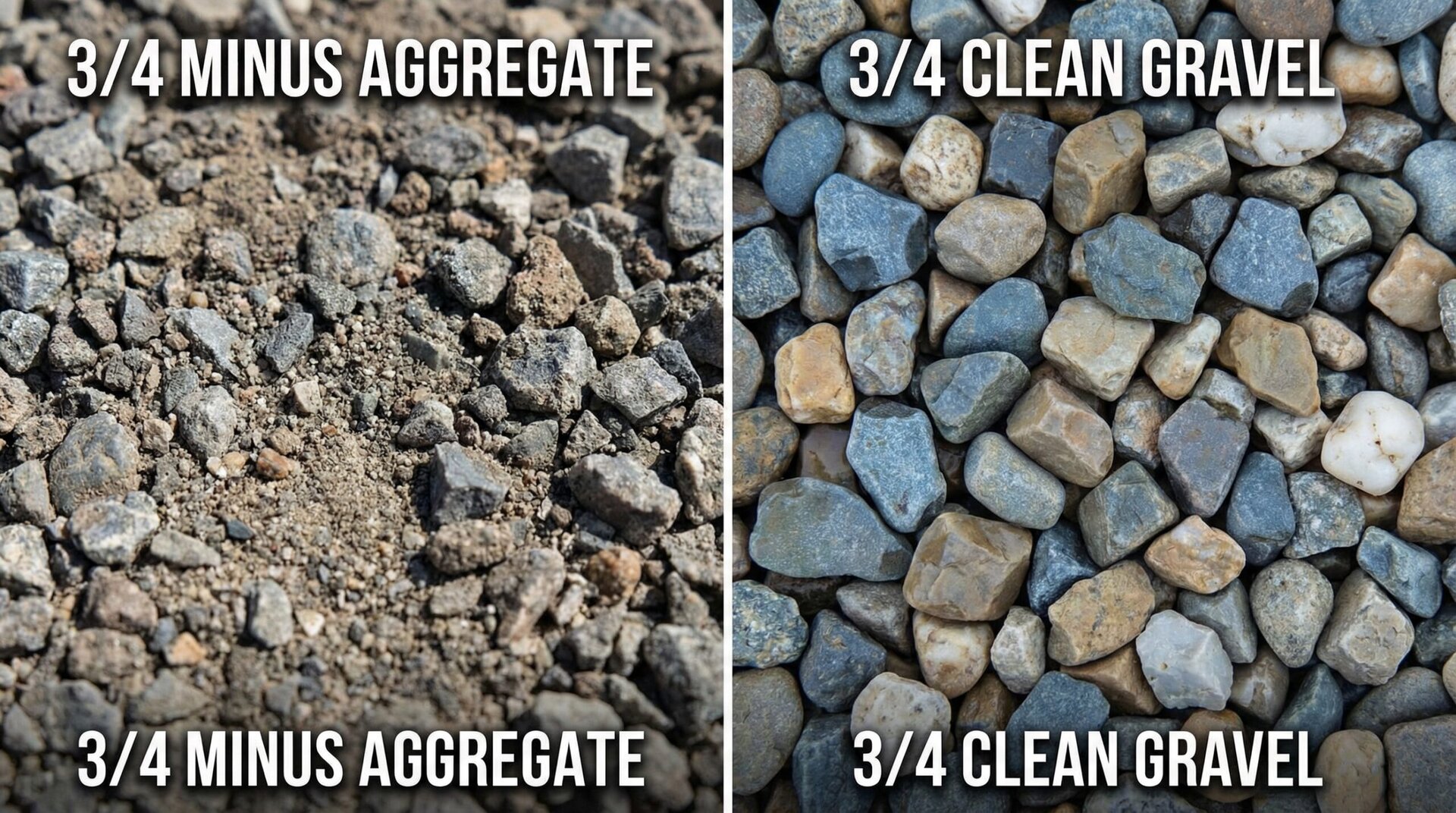
Standard 3/4 gravel typically ranges from 1/2 inch to 3/4 inch in diameter, with minimal material passing through a #4 sieve (about 1/4 inch). This clean grading creates consistent void spaces of approximately 35-40% of the total volume, making it ideal for drainage applications where water flow is critical. For comparison, #57 stone offers similar drainage properties with slightly different sizing.
3/4 minus follows a well-graded curve from fine particles up to 3/4 inch maximum size. Approximately 8-15% of the material passes through a #200 sieve (very fine particles), with the remainder distributed across various sizes. This gradation allows the material to achieve maximum density when compacted, often reaching 95% or higher compaction rates.
The angular shape of both materials, created during the crushing process, provides better interlocking than rounded river gravel. However, the fines in 3/4 minus fill the angular voids, while clean 3/4 gravel maintains its open structure.
Technical Note: Well-graded 3/4 minus can support loads exceeding 3,000 pounds per square foot when properly compacted, while 3/4 gravel typically supports 1,500-2,000 pounds per square foot.
Best applications for each material
Choosing the right material depends entirely on what you’re trying to accomplish with your project. Each material excels in specific applications where its properties provide the best performance.
3/4 Minus Applications
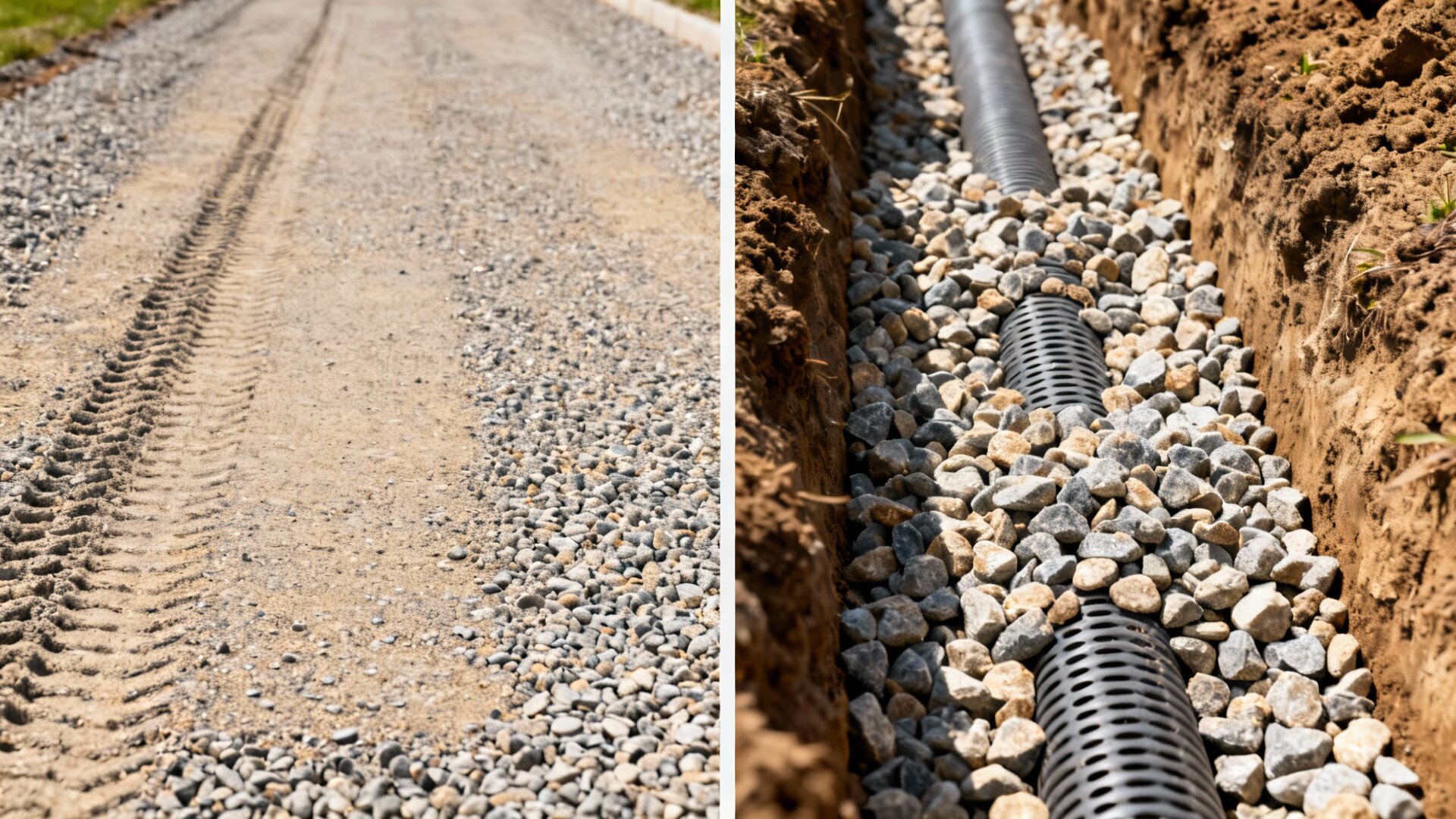
Driveways and parking areas benefit tremendously from 3/4 minus as a base layer. The material compacts into a solid foundation that prevents rutting and provides stable support for vehicles. The fines lock everything together, creating a surface that won’t shift under load. Similar to crusher run material, 3/4 minus provides excellent compaction for base applications.
Patio and walkway bases also perform better with 3/4 minus. The compacted surface provides a stable foundation for pavers or flagstone, preventing settling and maintaining level surfaces over time. The material’s ability to shed water while remaining stable makes it ideal for these applications.
3/4 Gravel Applications
French drains and drainage systems require the open structure of clean 3/4 gravel. The large void spaces allow water to flow freely through the material, preventing clogging that could occur with finer particles. This makes it essential for foundation drainage and stormwater management.
Decorative landscaping applications often favor 3/4 gravel for its clean appearance and excellent drainage properties. The uniform stone size creates an attractive surface that doesn’t compact into a hard layer, making it easier for plants to establish root systems. If you’re looking for even smaller decorative options, consider comparing 3/4 gravel with pea gravel for your landscaping needs.
Septic system drain fields specifically require clean gravel to function properly. The open structure allows effluent to percolate through the soil while preventing the system from becoming waterlogged.
Cost comparison and value considerations
Pricing for both materials typically falls within a similar range, but several factors can influence the final cost and overall value for your project.
Most suppliers price 3/4 gravel and 3/4 minus competitively, with costs ranging from $120 to $250 per ton delivered. The actual price depends on your location, distance from the quarry, and order quantity. Bulk orders generally reduce the per-ton cost significantly.
| Material | Price Range | Best Value For |
|---|---|---|
| 3/4 Gravel | $120-$250/ton | Drainage projects, decorative applications |
| 3/4 Minus | $120-$250/ton | Base layers, high-traffic areas |
| Delivery | $50-$150 | Depends on distance and load size |
The real value difference comes from performance and longevity. 3/4 minus may cost slightly more initially but often provides better long-term value for structural applications due to its stability and reduced maintenance needs. Projects requiring frequent re-grading or repair can quickly exceed the initial material savings. When evaluating base materials, you might also want to review 610 limestone versus #57 gravel for additional comparison insights.
Consider the total project cost, including labor and future maintenance. A properly installed 3/4 minus base can last decades with minimal maintenance, while using the wrong material might require costly repairs within a few years.
Cost Tip: Many suppliers offer combination loads where you can get both materials delivered together, which can be cost-effective for projects requiring different materials in different areas.
Understanding these differences helps you make an informed decision that balances upfront costs with long-term performance. Whether you choose 3/4 gravel for its drainage properties or 3/4 minus for its structural stability, selecting the right material ensures your project performs as intended for years to come.
Ready to get started on your project? Use our calculator to estimate how much material you’ll need, or reach out to our team for personalized recommendations based on your specific application. We’re here to help you choose the right material and get it delivered to your door.


 Chance Kittrell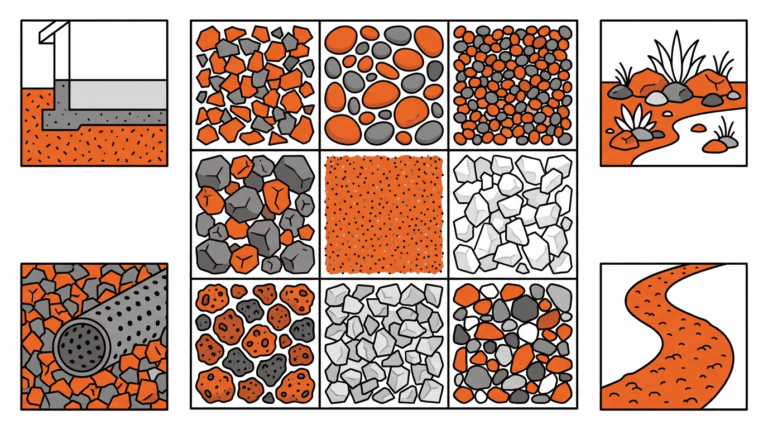
 igor
igor