53 vs 73 Gravel Guide – Which Stone Size is Right for Your Project
Get an estimate for your project in 60 seconds
 Your information is secure
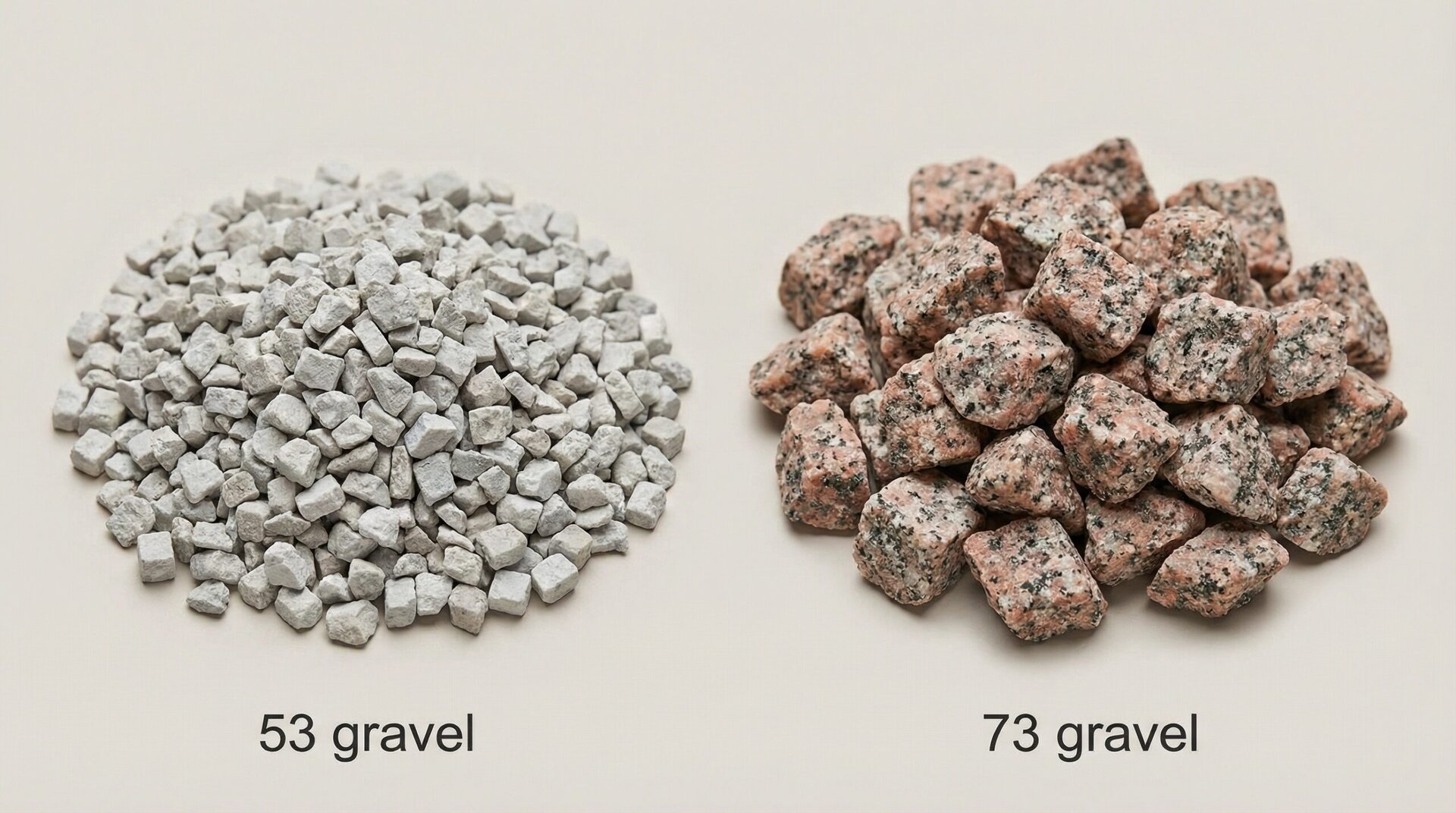
Choosing between 53 and 73 gravel can make or break your project’s success. These two crushed stone aggregates might look similar at first glance, but their differences in size, composition, and performance characteristics determine whether your driveway holds up to heavy traffic or your drainage system works effectively.
Quick Answer: 53 gravel (1/2 inch minus limestone) works best for drainage applications, walkways, and lighter-duty projects, while 73 gravel (3/4 inch minus, harder stone) excels in heavy-load applications like driveways and structural bases.
Key Insight: The number designation refers to the largest particle size that passes through the screening process – 53 gravel passes through a 1/2 inch screen, while 73 gravel passes through a 3/4 inch screen.
Understanding these differences helps you avoid costly mistakes like using undersized gravel for heavy-duty applications or overspending on premium materials for simple landscaping projects. This guide breaks down everything you need to know about 53 vs 73 gravel to make the right choice for your specific needs.
Understanding 53 and 73 gravel specifications
The fundamental difference between these gravel types lies in their particle size and source material composition. 53 gravel consists of crushed limestone particles ranging from fine dust up to 1/2 inch, creating an angular aggregate that compacts well. The limestone composition makes it relatively soft compared to other stone types, which affects its durability in high-traffic applications.
73 gravel features larger particles up to 3/4 inch, typically made from harder materials like granite or basalt. This creates a more robust aggregate with better load-bearing capacity. The larger particle size also creates more void space between stones, affecting drainage characteristics differently than its smaller counterpart. Similar to how 3/4″ gravel differs from pea gravel, the size and composition variations significantly impact performance.
Both materials undergo similar crushing and screening processes, but the end result serves different purposes in construction and landscaping applications.
Size and composition differences that matter
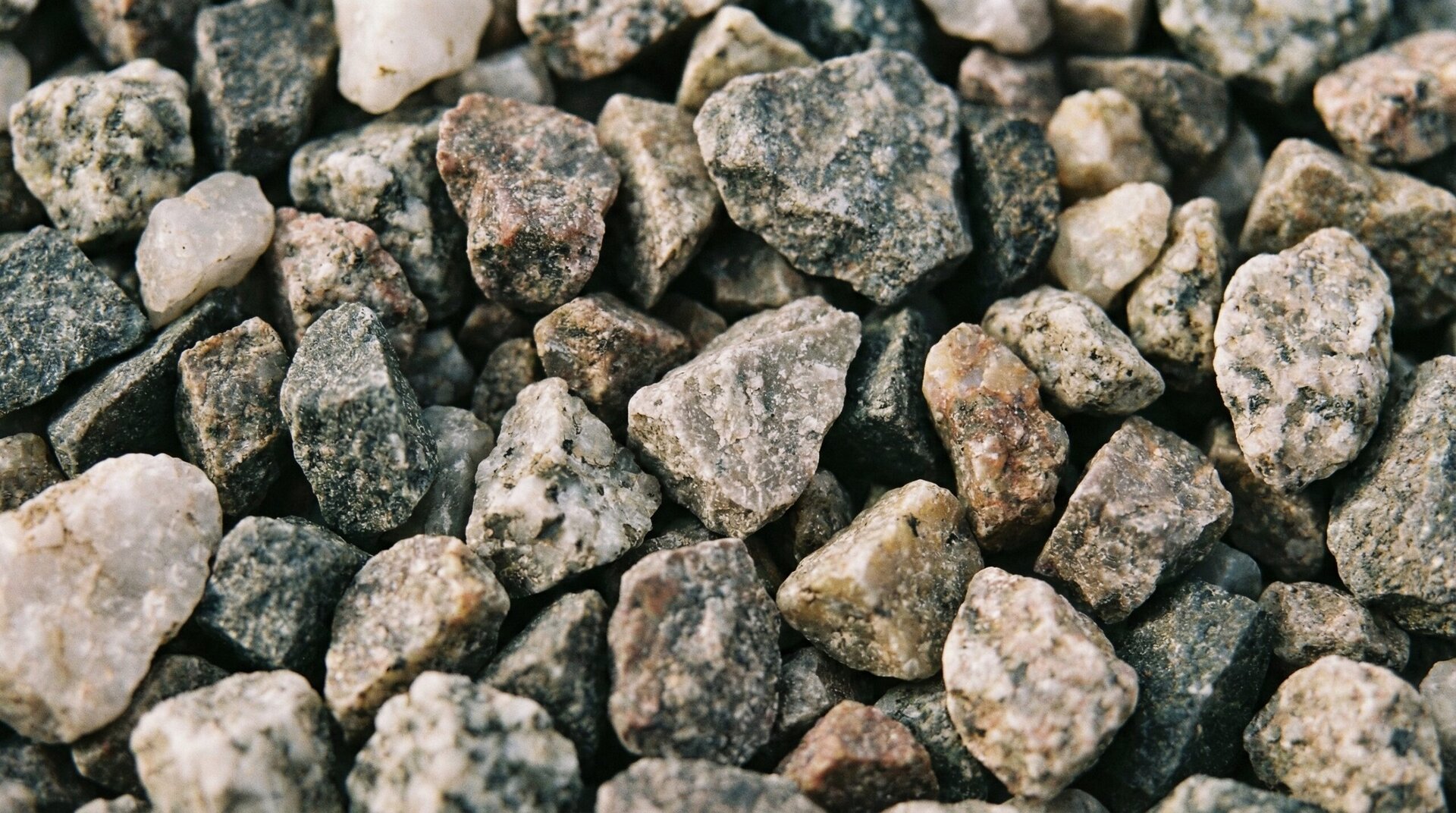
The size variation between 53 and 73 gravel creates distinct performance characteristics for different applications. 53 gravel’s smaller particle size allows for tighter compaction, creating a more stable surface for foot traffic and lighter vehicles. The finer particles fill gaps between larger stones, reducing permeability but increasing surface stability.
73 gravel’s larger stones create a more permeable base layer that handles water drainage differently. The increased void space allows water to move through more freely, making it excellent for drainage applications but potentially less stable for walking surfaces without proper preparation. Understanding the difference between 3/4″ and 3/4″ minus can help you appreciate how particle gradation affects compaction.
| Feature | 53 Gravel | 73 Gravel |
|---|---|---|
| Max Size | 1/2 inch | 3/4 inch |
| Composition | Crushed limestone | Granite/basalt |
| Compaction | Excellent | Good |
| Permeability | Moderate | High |
The composition difference also affects longevity. Limestone-based 53 gravel may show wear over time in high-traffic areas, while the harder stone composition of 73 gravel maintains its structure better under heavy loads.
Drainage and load-bearing performance comparison
Water management capabilities vary significantly between these two gravel types. 53 gravel’s tighter particle arrangement creates moderate drainage while providing excellent compaction for stable surfaces. This makes it ideal for areas where you need both drainage and a firm walking or driving surface.
73 gravel excels in pure drainage applications due to its larger void spaces. French drains, foundation drainage, and other water management systems benefit from 73 gravel’s ability to move water quickly while maintaining structural integrity under load.
Pro Tip: For projects requiring both drainage and load-bearing capacity, consider using 73 gravel as a base layer with 53 gravel as a top layer for the best of both worlds.
Load-bearing capacity differs substantially between the two materials. 53 gravel works well for residential driveways with normal car traffic but may show rutting under heavy truck loads. 73 gravel handles commercial traffic and heavy equipment better due to its larger particle size and harder stone composition.
The angular shape of both materials helps with interlocking, but 73 gravel’s larger size creates a more robust foundation for heavy-duty applications like retaining wall bases or commercial parking areas. For comparison, #67 vs #78 stone also demonstrates how size variations affect structural performance.
Best applications for each gravel type
53 gravel shines in residential applications where appearance and moderate durability matter most. Walkways, garden paths, and decorative landscaping benefit from its smaller, more uniform appearance. The material works exceptionally well around plants and in areas where you want a neater, more controlled look.
For drainage projects like pipe bedding or septic system applications, 53 gravel provides adequate water movement while offering better compaction than larger alternatives. Residential driveways with light to moderate traffic also perform well with 53 gravel when properly installed with appropriate base preparation. When comparing base materials, you might also want to explore crusher run versus 3/4″ limestone for driveway foundations.
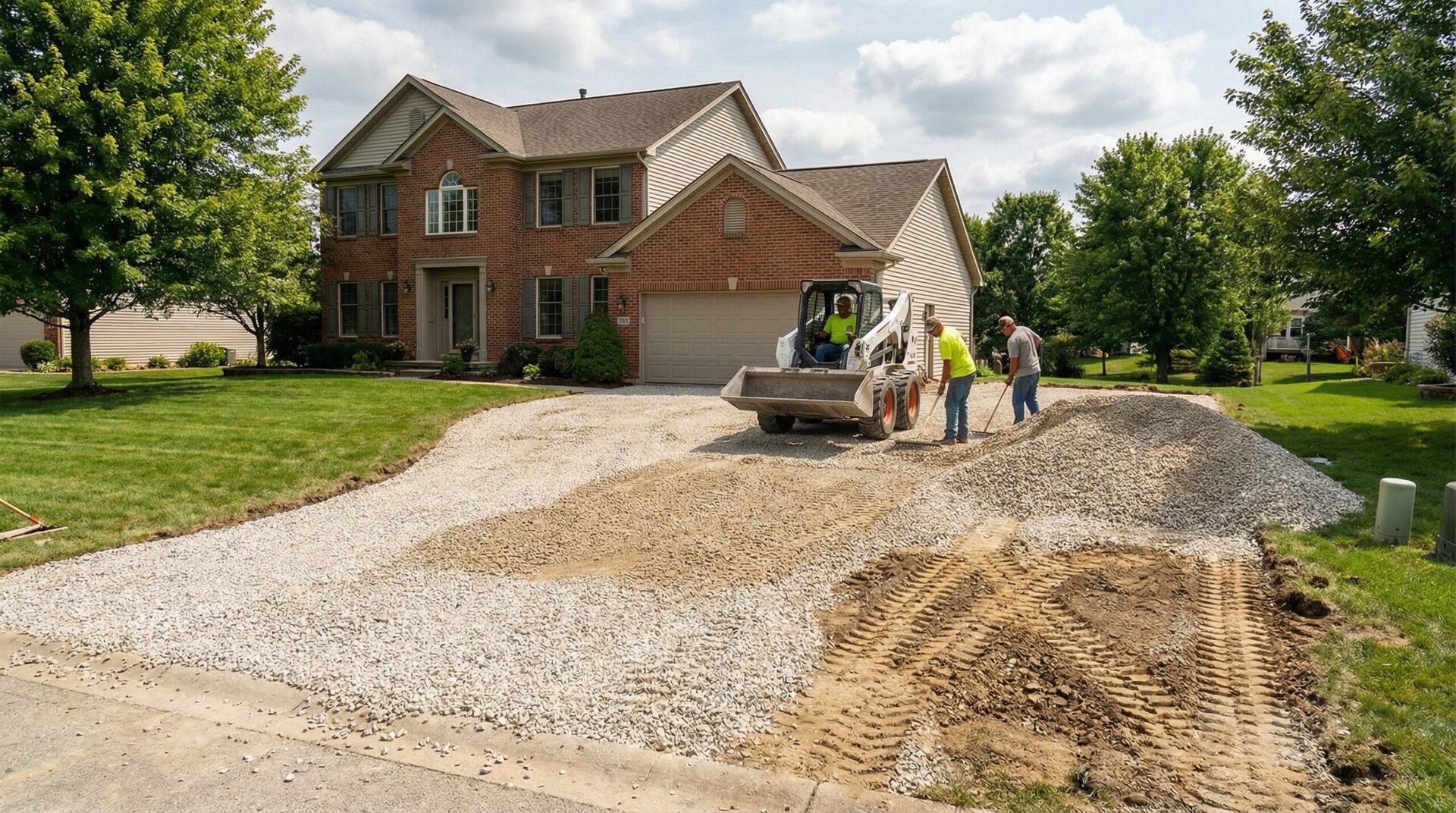
73 gravel dominates in heavy-duty construction applications. Commercial driveways, parking lots, and road base construction rely on 73 gravel’s superior load-bearing capacity. The material also works excellently for retaining wall drainage, foundation perimeter drains, and any application where water movement and structural strength both matter.
Construction projects requiring INDOT specifications often call for 73 gravel due to its proven performance under heavy loads. The material’s resistance to crushing and displacement makes it the preferred choice for infrastructure projects where failure isn’t an option. Like the comparison between #57 and #67 crushed stone, choosing the right size ensures optimal performance for your specific application.
Choosing the right gravel type depends on balancing your project’s specific requirements for drainage, load capacity, appearance, and budget. 53 gravel offers an economical solution for lighter-duty applications, while 73 gravel provides the durability needed for demanding construction projects. Consider your long-term needs and traffic expectations when making this important decision for your project’s success.


 Chance Kittrell
 igor
igor