#57 vs #67 Crushed Stone: Complete Size and Use Comparison Guide
Get an estimate for your project in 60 seconds
 Your information is secure
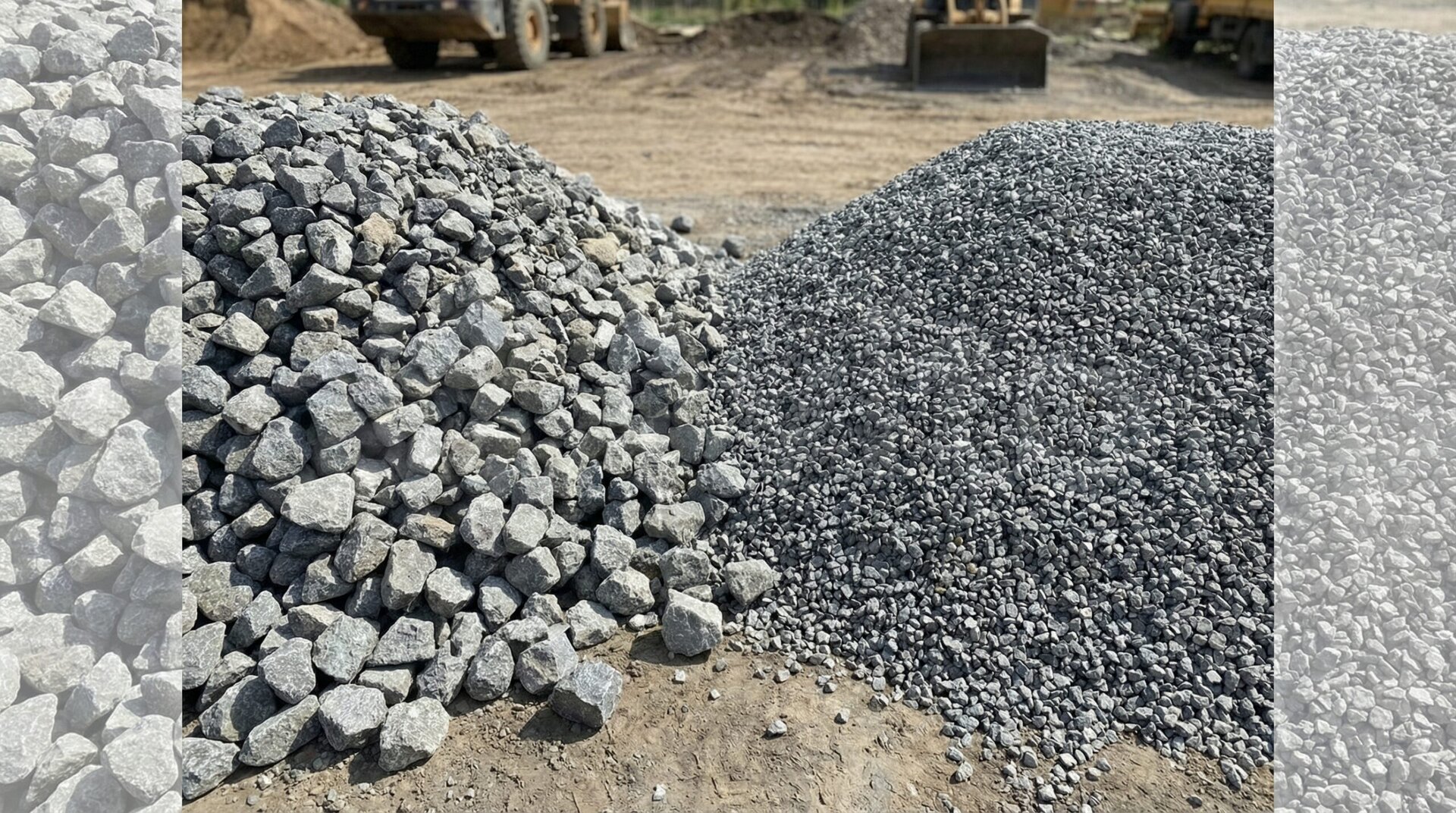
Choosing between #57 and #67 crushed stone can make or break your project. #57 stone ranges from 1/2″ to 1″ and excels in drainage applications, while #67 stone measures 3/8″ to 3/4″ and compacts tighter for smooth finishes. Both serve different purposes, and picking the wrong size can lead to drainage issues, poor compaction, or unnecessary costs.
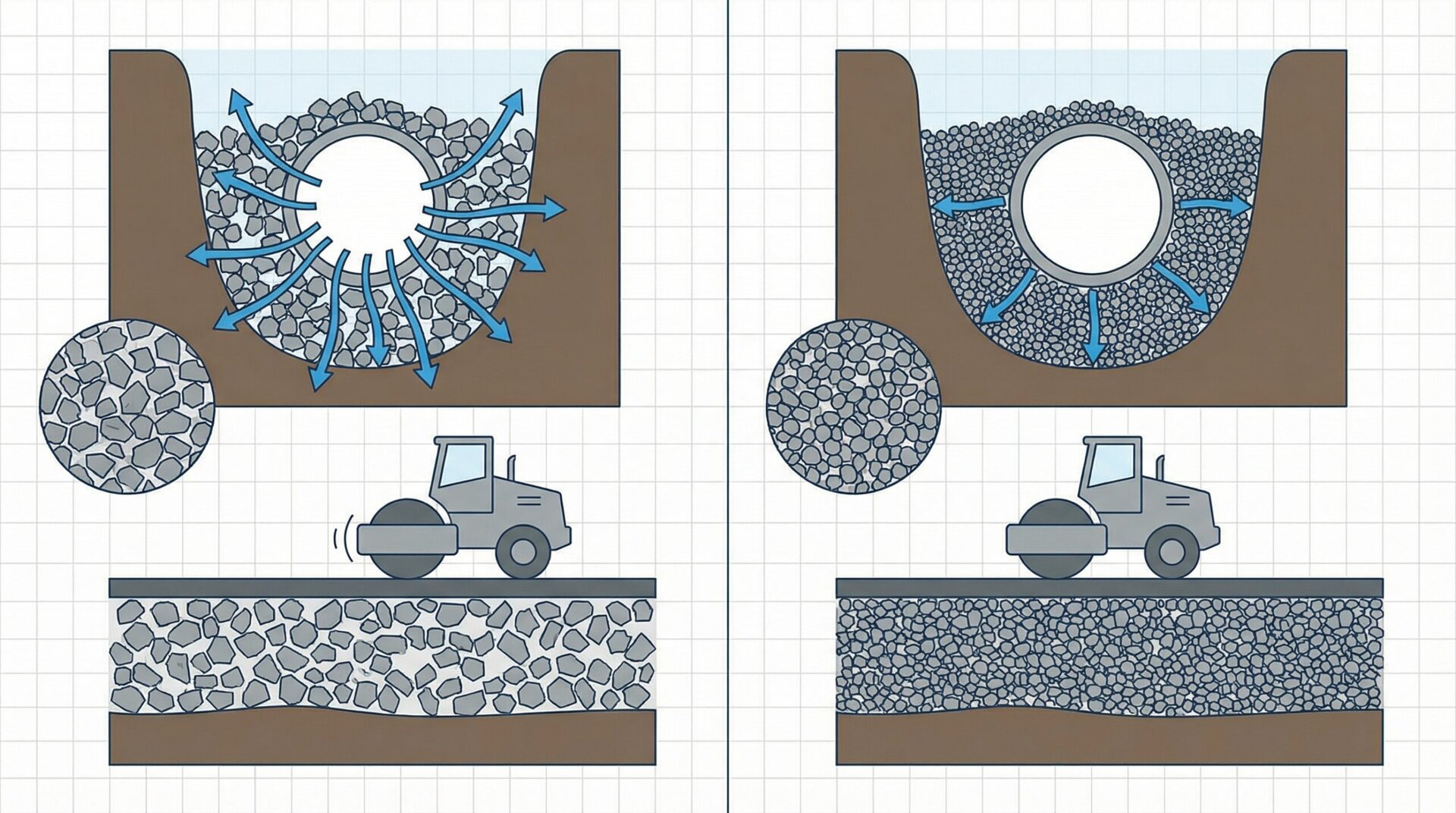
The key difference lies in their size and how that impacts performance. #57 stone allows better water flow and handles heavier loads, making it perfect for driveways and French drains. #67 stone fills gaps more completely and creates smoother surfaces, ideal for walkways and pipe bedding.
Quick Answer: Use #57 for driveways and drainage where water flow matters most. Choose #67 for paths, thin concrete slabs, and areas needing tight compaction.
Understanding crushed stone grading numbers
The numbers in crushed stone refer to standardized size classifications set by ASTM (American Society for Testing and Materials). These numbers correspond to mesh screen sizes that determine which stones pass through and which get retained.
57 stone passes through a 1″ screen but stays on a 1/2″ screen, giving it that medium size range. #67 stone passes through a 3/4″ screen and is retained on a 3/8″ screen, making it noticeably smaller. This grading system ensures consistency across suppliers and regions, though the accuracy can vary depending on how carefully each supplier sorts their material.
Think of it like coffee filters – different mesh sizes catch different sized particles. The stone industry uses this same principle to create uniform products that perform predictably in construction and landscaping applications.
#57 stone applications and benefits

57 stone serves as the workhorse of crushed stone products thanks to its versatile medium size. The 1/2″ to 1″ range creates excellent drainage while still providing solid support and compaction capabilities.
Driveways benefit most from #57 stone because the pieces lock together well while allowing water to flow through. This prevents pudding and frost damage while creating a stable driving surface. The angular shape helps pieces interlock, reducing shifting under vehicle weight.
Drainage systems rely on #57 stone around French drains and foundation footers. The size allows rapid water movement while filtering out smaller debris that could clog drainage pipes. Contractors often choose #57 for septic system drain fields for the same reason.
Concrete work uses #57 as base material under slabs and sidewalks. The stone provides a stable foundation that won’t shift or settle, while the drainage prevents water from pooling underneath concrete surfaces. When comparing base materials, many contractors debate between crusher run vs 57 stone for different project requirements.
Pro Tip: #57 stone works best when you need both drainage and load-bearing capacity in the same application.
#67 stone applications and benefits
The smaller size of #67 stone makes it ideal for applications requiring tighter compaction and smoother finishes. At 3/8″ to 3/4″, these pieces fill gaps more completely than larger stones. If you’re considering even smaller options, you might also explore 3/4″ gravel vs pea gravel for decorative applications.
Walkways and paths benefit from #67 stone’s ability to create surfaces with fewer gaps. The smaller pieces nestle together more tightly, reducing the chance of twisted ankles or uncomfortable walking. This makes it popular for residential pathways and garden trails.
Thin concrete applications work well with #67 stone because the smaller aggregate allows for thinner pours while maintaining strength. When you need concrete slabs under 4 inches thick, #67 provides the right balance of strength and workability.
Pipe bedding projects favor #67 stone because it’s easier to shovel and spread around delicate pipe systems. The smaller size reduces the risk of damaging pipes during backfilling operations, and it conforms better to pipe shapes. For similar-sized alternatives, consider learning about #67 vs #78 stone to understand the full range of options.
Choosing between #57 and #67 for your project
| Feature | #57 Stone | #67 Stone |
|---|---|---|
| Size Range | 1/2″ to 1″ | 3/8″ to 3/4″ |
| Drainage | Excellent | Good |
| Compaction | Good | Excellent |
| Load Bearing | High | Medium |
| Best Uses | Driveways, French drains | Paths, thin concrete |
For driveways and heavy-use areas, choose #57 stone. The larger size handles vehicle weight better and provides superior drainage to prevent water damage. The pieces interlock effectively, creating a stable surface that won’t shift under load. Many professionals also compare #57 gravel vs crusher run gravel when planning driveway installations.
For walkways and decorative applications, #67 stone works better. The smaller size creates smoother surfaces that are more comfortable to walk on. It also compacts more tightly, reducing maintenance needs over time.
Consider your climate when choosing. Areas with heavy rainfall benefit more from #57 stone’s superior drainage. Regions with freeze-thaw cycles need the stability that #57 provides. Dry climates can take advantage of #67 stone’s smoother finish without worrying about drainage issues.
Cost Consideration: Both stones typically cost the same per ton, so base your decision on performance needs rather than price differences.
The bottom line: #57 stone excels when drainage and load-bearing matter most, while #67 stone shines in applications needing smooth finishes and tight compaction. Understanding your project’s primary requirements helps you choose the right material and avoid costly mistakes. For limestone-specific comparisons, check out #610 limestone vs #57 gravel to explore additional material options. When in doubt, consult with your local aggregate supplier about your specific application needs.


 Chance Kittrell
 igor
igor