610 Limestone vs 57 Gravel for Driveways: Which is Best for Your Project
Get an estimate for your project in 60 seconds
 Your information is secure
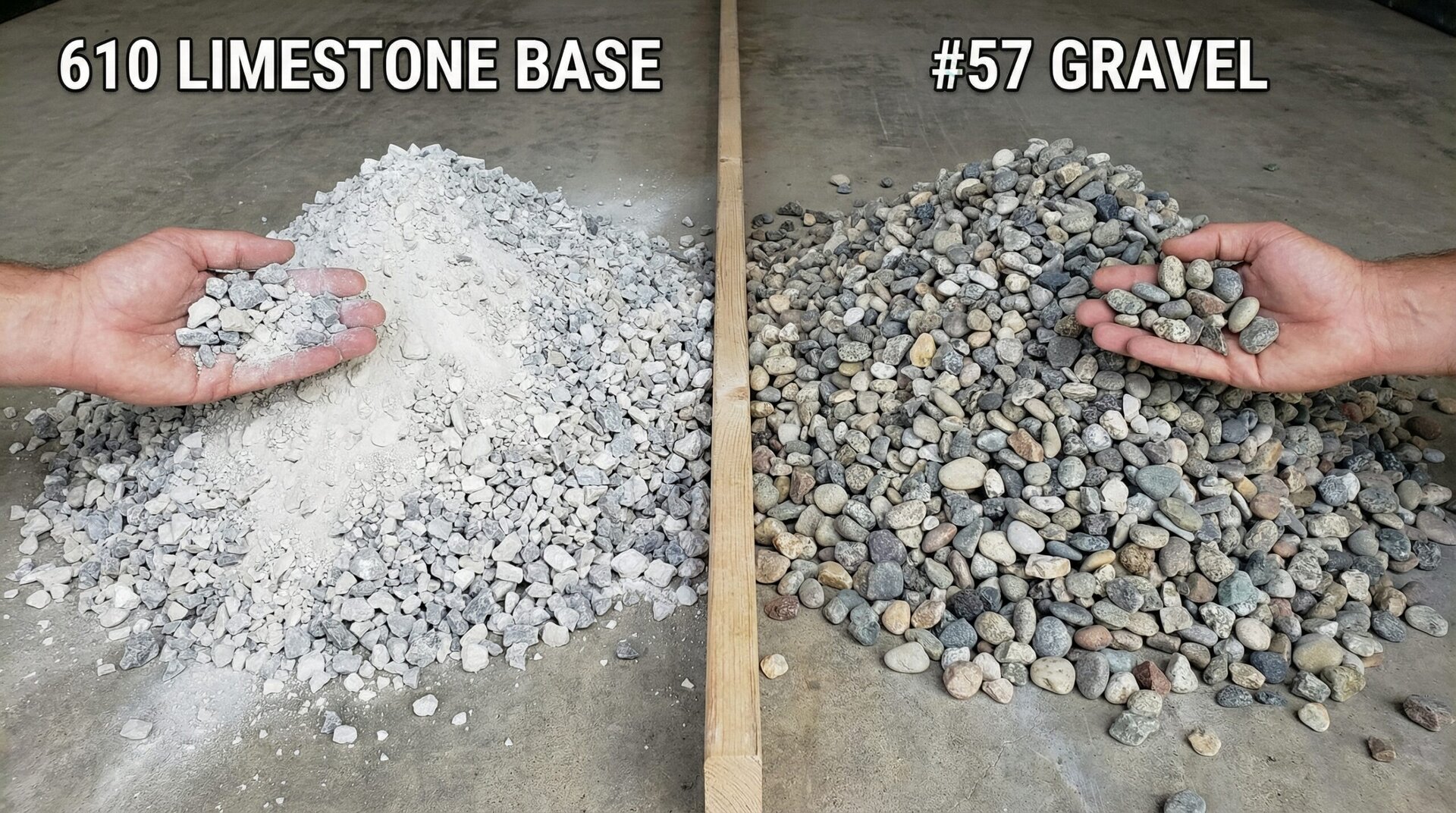
Choosing between 610 limestone and 57 gravel for your driveway or construction project can feel overwhelming. Both materials offer excellent durability and value, but they serve different purposes based on your specific needs. 610 limestone, also known as crush and run, provides superior compaction and stability for base layers, while 57 gravel offers better drainage and a more uniform appearance for surface applications.
Quick Answer: 610 limestone works best for driveway bases and foundations due to its fine particles that compact tightly, while 57 gravel excels for drainage applications and decorative surfaces where water flow is important.
Understanding these key differences will help you make the right choice for your project’s requirements, budget, and long-term performance goals.
What makes 610 limestone different from 57 gravel
The fundamental difference between these materials lies in their particle size and composition. 610 limestone contains a mix of stone sizes ranging from 3/4 inch down to fine dust particles. This varied composition allows the material to compact extremely well, creating a solid, stable base that’s perfect for supporting heavy loads.
57 gravel maintains a more uniform size range, typically between 3/4 inch and 1/2 inch. The consistent sizing creates gaps between stones that promote excellent drainage while still providing structural integrity. You’ll notice 57 gravel has more angular edges compared to the mixed particle sizes in 610 limestone.
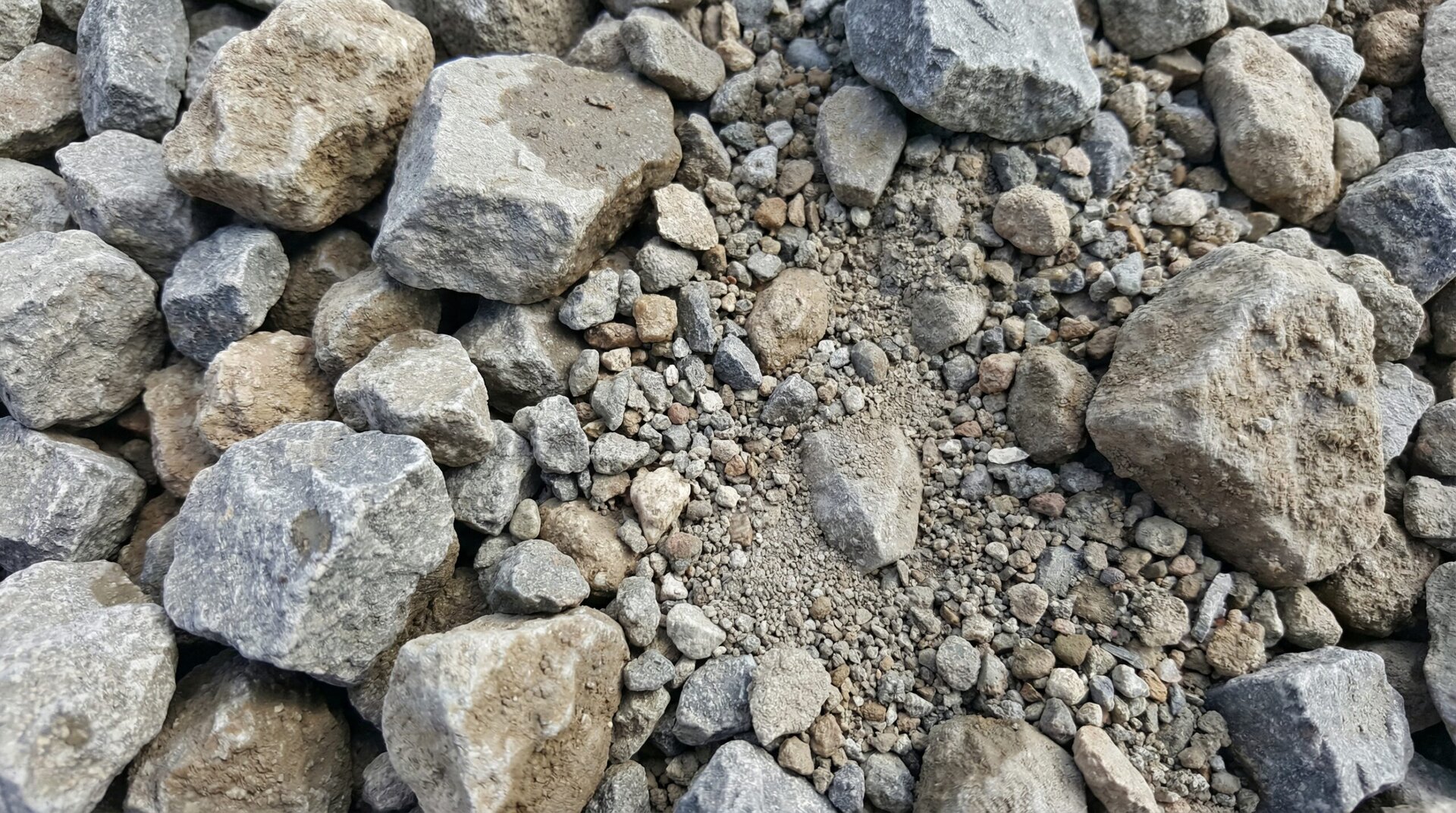
The color difference is also noticeable when you compare them side by side. 610 limestone typically appears lighter in color with a grayish-white tone, while 57 gravel tends to have a slightly darker, more varied appearance depending on the source quarry.
Best uses for each material in construction projects
610 limestone shines when you need maximum stability and load-bearing capacity. It’s the go-to choice for driveway bases, building foundations, and parking lot substrates. The fine particles fill gaps between larger stones, creating an almost concrete-like surface when properly compacted.
For residential driveways, 610 limestone works exceptionally well in areas with heavy vehicle traffic or where you need a solid foundation for pavers or asphalt overlay. Many contractors prefer it for road base applications because it meets most DOT specifications for base course materials. If you’re comparing different base materials, understanding the differences between crusher run and 3/4″ limestone can help you make an informed decision.
57 gravel excels in applications where drainage is the primary concern. You’ll find it commonly used around septic systems, French drains, and as backfill material behind retaining walls. Its uniform size allows water to flow freely while maintaining structural support.
Pro Tip: If you’re building a gravel driveway, consider using 610 limestone as your base layer and 57 gravel as your top surface for the best of both worlds – stability underneath with good drainage on top.
The decorative appeal of 57 gravel also makes it popular for walkways, garden paths, and landscaping projects where appearance matters as much as function. For more insights on how 57 stone compares to crusher run gravel, you can explore the specific applications where each material performs best.
Cost comparison and installation considerations
Both materials typically cost between $25 to $35 per ton, though prices vary by location and supplier. The total project cost depends more on the quantity needed and delivery charges than the material choice itself.
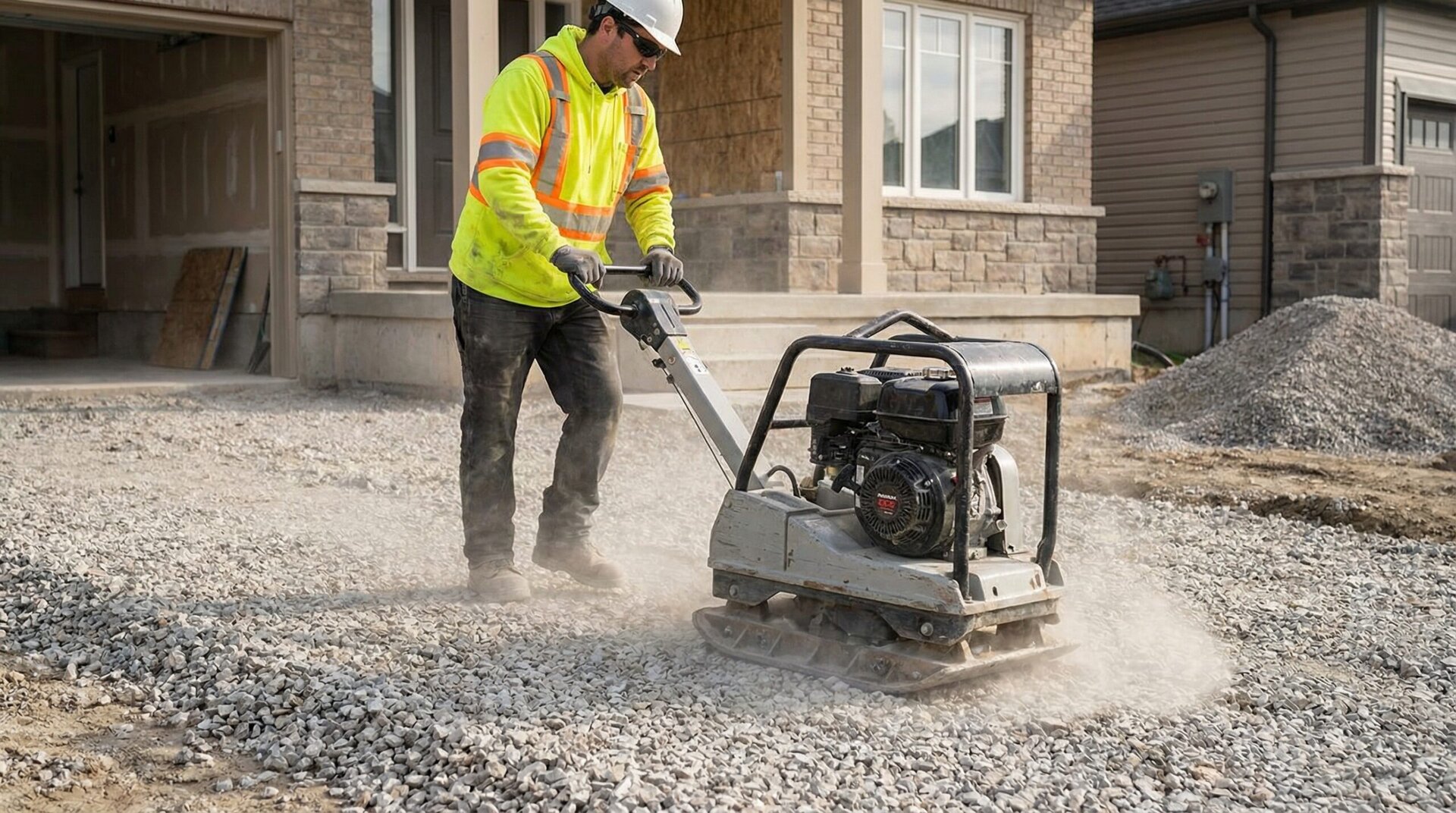
Installation requirements differ significantly between the two. 610 limestone requires thorough compaction using a plate compactor or roller to achieve its maximum strength potential. Without proper compaction, you won’t get the stability benefits that make this material so valuable.
| Feature | 610 Limestone | 57 Gravel | Best Application |
|---|---|---|---|
| Compaction | Excellent | Good | Base layers |
| Drainage | Fair | Excellent | Surface drainage |
| Stability | Superior | Good | Heavy traffic areas |
| Cost per ton | $25-35 | $25-35 | Budget-neutral choice |
57 gravel installs more easily since it doesn’t require the same level of compaction. You can simply spread it and rake it level for most applications. However, you may need to add a geotextile fabric underneath to prevent the stones from sinking into soft soil over time. When evaluating crusher run versus 57 stone, installation complexity is an important factor to consider.
Making the right choice for your specific project
Your decision should start with identifying your primary need. If you’re building something that needs to support significant weight or traffic, 610 limestone provides the superior foundation you need. Think driveways, equipment pads, or any area where vehicles will regularly park or drive.
Choose 57 gravel when water management is your main concern. Areas prone to standing water, locations with poor soil drainage, or projects where you want to maintain natural water flow patterns all benefit from 57 gravel’s superior drainage characteristics. Similar considerations apply when comparing #57 and #67 crushed stone, where particle size affects drainage performance.
Consider your local climate too. In areas with freeze-thaw cycles, the excellent drainage of 57 gravel can prevent ice formation that might damage your surface. However, in stable climates where maximum durability is the goal, 610 limestone’s superior compaction makes it the better long-term investment.
Climate Consideration: In regions with heavy rainfall or poor drainage, 57 gravel’s water management capabilities often outweigh the stability advantages of 610 limestone for surface applications.
For most homeowners building a new driveway, the ideal solution combines both materials. Use 610 limestone for your base layer to provide stability, then top it with 57 gravel for drainage and appearance. This approach gives you the engineering benefits of both materials while staying within a reasonable budget. Understanding 3/4″ versus 3/4″ minus materials can also help you optimize your layering strategy.
The key is matching your material choice to your project’s primary function. Both 610 limestone and 57 gravel offer excellent value when used in their ideal applications, so focus on your specific needs rather than trying to find a one-size-fits-all solution.


 Chance Kittrell
 igor
igor