A Guide to Circular, Square, and Freeform Gravel Fire Pit Layouts

Get an estimate for your project in 60 seconds
 Your information is secure
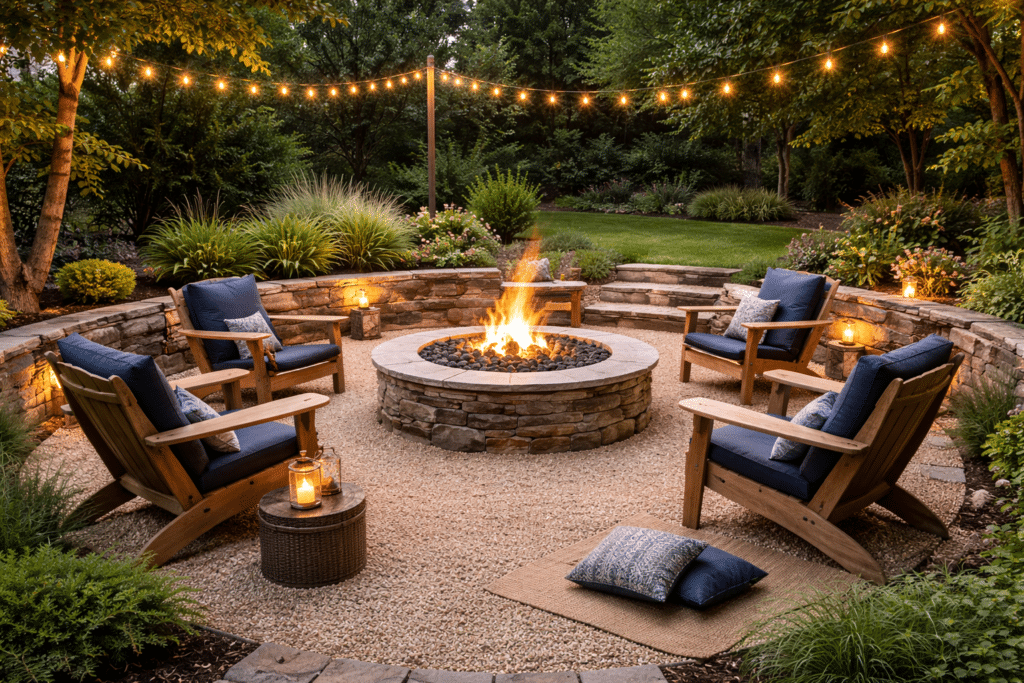
Choosing a layout for your gravel fire pit area is the first step in creating a functional and stylish backyard feature. You can create a classic circular, modern square, or natural freeform design using pea gravel as a safe and versatile ground cover. The best layout depends on your yard’s shape and your desired aesthetic. All three concepts rely on a proper foundation of compacted base rock and secure edging for a lasting result.
Why Gravel is the Foundation for Great Fire Pit Design
Pea gravel is an ideal ground cover for fire pit surrounds because it combines safety with practical benefits. As a non-combustible material, it will not ignite from stray sparks. This makes it a much safer choice than mulch or grass.
Beyond safety, gravel offers excellent drainage that prevents puddles from forming after rain. It is also comfortable to walk on and flexible enough to fill any shape, making it perfectly suited for any design concept you choose.
Exploring the Three Core Fire Pit Layouts
1. The Classic Circular Layout
The circular layout is the most popular choice for a reason. It naturally encourages gathering and conversation, allowing for even heat distribution and flexible seating arrangements. This design works best in open yard spaces where the fire pit can act as a central focal point. A circular gravel area creates a soft, clean look that complements traditional landscapes. A 12-foot diameter circle is a common size that provides ample room for a standard fire pit and four to six chairs.
2. The Modern Square or Rectangular Layout
For yards with strong geometric lines, a square or rectangular gravel pad creates a clean, intentional look. This layout aligns perfectly with patios, decks, and fence lines, making the fire pit feel like a seamless extension of your existing hardscaping. Straight steel or aluminum edging defines the sharp angles of this design and reinforces its modern aesthetic. This layout is particularly effective when paired with a square fire pit and built-in bench seating.
3. The Natural Freeform Layout
A freeform layout is the perfect solution for yards with irregular shapes, slopes, or existing landscape features like garden beds and trees. Instead of a strict geometric shape, the gravel area follows organic, flowing curves that blend into the surrounding environment. Pea gravel is the best material for freeform designs because it fills any custom shape effortlessly. This concept allows for creative transitions to flagstone paths or other landscape elements, resulting in a unique, custom-built feel.
Practical Steps for Any Gravel Layout

No matter which layout you choose, the preparation is key to success. First, consider the location. Your fire pit area should be at least 10 to 15 feet from any structures or overhanging trees. Always check local codes for specific requirements.
Safety First. Always place your fire pit area at least 10 to 15 feet away from your house, fences, and any overhanging trees. Before you start digging, check with your local building department for specific setback requirements or permits.
Next, build a proper foundation. For a stable surface, excavate the area 4 to 6 inches deep. Add and compacted a layer of crushed stone, cover it with landscape fabric to block weeds, and then add your gravel. Finally, install a durable edging. A strong border is non-negotiable because it contains the gravel and maintains the clean lines of your chosen shape over time.
Pro Tip: Build a Solid Foundation. Do not skip the compacted base and landscape edging. A proper base prevents your gravel from sinking, while edging keeps the area looking clean and contained. These two steps are essential for a long-lasting, low-maintenance fire pit area.
Stone for the Fire Pit vs. the Gravel Surround
The materials for the fire pit structure and the ground cover are two separate decisions. The fire pit itself must be built from heat-rated materials like fire brick or specific concrete blocks. Never use porous river rock inside the fire bowl, as it can trap moisture and crack or even explode under high heat.
For the surrounding ground cover, 3/8-inch pea gravel is the standard choice. It offers a comfortable surface and a clean look.
How to Calculate Gravel for Your Layout
To estimate your material needs, first find the square footage of your design. To calculate the area of a circle, use the formula Area = π × radius². For a square or rectangle, the formula is Area = Length × Width. Multiply the square footage by your desired depth in feet (for example, 2 inches = 0.167 feet) to get the cubic feet. Divide that number by 27 to find the cubic yards needed. Always order 10 to 15 percent extra to account for compaction and avoid a second delivery. Once you’ve chosen a layout and calculated your needs, ordering the right amount of material is the final step in creating your ideal backyard space. You can contact us to get an estimate for your project.
Frequently Asked Questions
What are the current fire pit trends?
Smokeless fire pit inserts, which reduce smoke through better airflow, are very popular. Gas fire tables and integrated stone seating walls are also common trends that add convenience and a built-in look to the fire pit area.
Should a fire pit be round or square?
Choose a shape that complements your layout concept. Round fire pits work well with circular layouts for a classic, social feel. Square fire pits pair best with square or rectangular gravel pads for a modern, structured look.
Can I put pea gravel inside my fire pit?
No, pea gravel is only for the area around the fire pit. The stones can trap moisture and may crack under direct heat. Use lava rock or fire brick for the interior of the fire bowl.
Do I really need a base layer under the pea gravel?
Yes. A compacted crushed stone base prevents the gravel from sinking into the soil. This ensures the surface remains level, stable, and drains properly for years to come.
How do you keep pea gravel from spreading into the lawn?
Install a durable landscape edging around the entire perimeter of the gravel area. Steel, aluminum, or concrete block are the most effective materials for creating a clean, permanent border.


 Chance Kittrell