Best Gravel for Driveways Complete Installation Guide 2025
Get an estimate for your project in 60 seconds
 Your information is secure
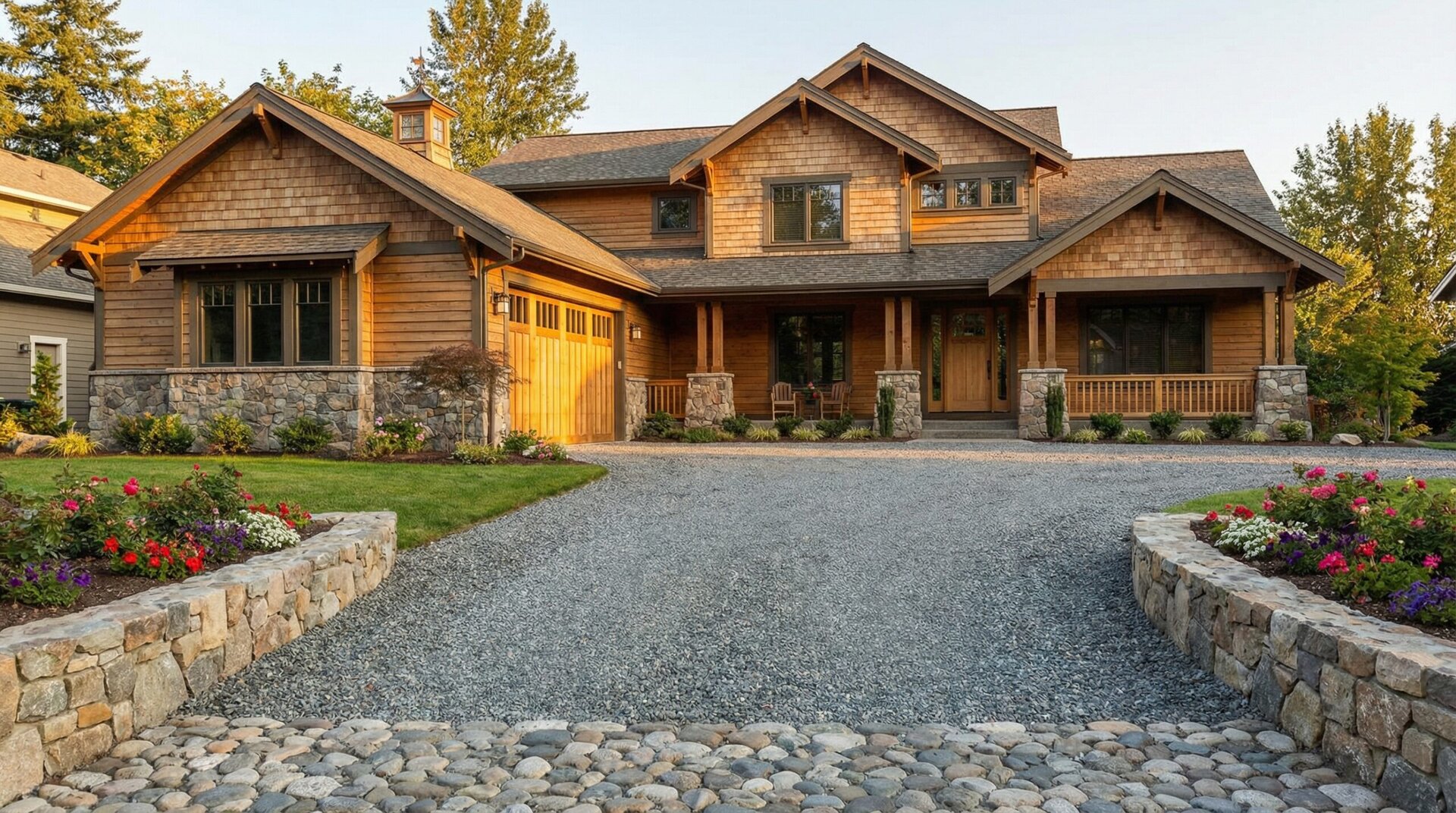
Choosing the right gravel for your driveway can save you thousands in repairs and maintenance over the years. The best gravel options combine affordability, stability, and drainage to create a surface that lasts decades with minimal upkeep.
For most homeowners, crusher run offers the best balance of cost and durability at around $30-50 per ton, while pea gravel provides superior aesthetics but requires more maintenance. River rock works well for decorative applications but struggles on steep inclines.
Pro Tip: A properly installed gravel driveway with the right base layers can last up to 100 years, compared to 30-50 years for concrete or asphalt.
This guide walks you through selecting the perfect gravel type for your specific needs and installing it correctly the first time.
Understanding gravel driveway layers
Every durable gravel driveway consists of three essential layers that work together to prevent shifting, rutting, and drainage problems.
The bottom layer uses 4-inch thick crushed rock #3 or base gravel with stones no larger than 2 inches. This foundation layer provides stability and prevents the driveway from sinking into soft soil. Selecting the best driveway base material is critical for long-term performance.
Your middle layer should be 3-4 inches of #4 crushed rock mixed with sand and dirt, featuring stones roughly 3/4 inch in size. This layer helps bind everything together while allowing proper drainage.
The top surface layer is where you choose between different types of driveway gravel based on your priorities for appearance, stability, and maintenance requirements.

Top 3 gravel types compared
| Gravel Type | Cost per Ton | Stability | Maintenance | Best For |
|---|---|---|---|---|
| Crusher Run | $30-50 | Excellent | Low | Heavy traffic, slopes |
| Pea Gravel | $40-60 | Good | Medium | Decorative, light use |
| River Rock | $50-80 | Poor | High | Aesthetics, flat areas |
Crusher run combines 3/4-inch rocks with stone dust that compacts into a semi-solid surface when wet. The angular edges lock together, making it the most stable option for driveways with regular vehicle traffic or steep grades.
Pea gravel offers smooth, rounded stones in various colors including brown, gray, and red. While comfortable underfoot and visually appealing, the round edges provide less stability than angular alternatives.
River rock delivers the best aesthetic appeal with naturally smooth stones shaped by flowing water. However, these rounded stones shift easily under vehicle weight, making them unsuitable for steep driveways or heavy use areas. For budget-conscious homeowners, exploring the cheapest gravel for driveways can help balance cost with quality.
Important: Steep driveways require angular gravel like crusher run to prevent dangerous shifting under vehicle weight.
Step-by-step installation process
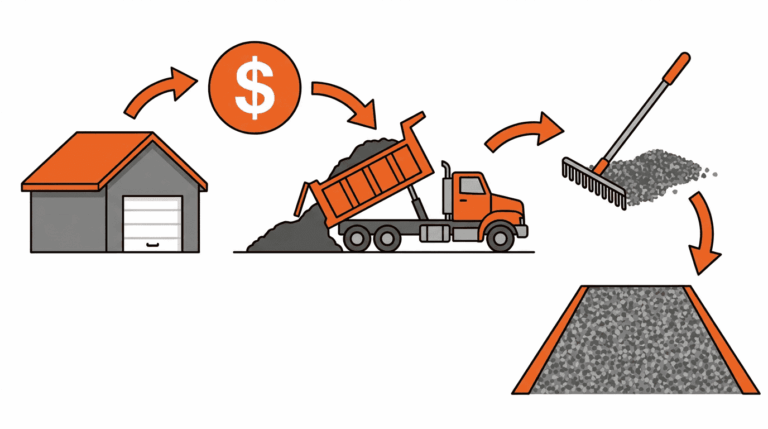
Start by marking your driveway boundaries and calculating the total square footage. You’ll need approximately 1.5 tons of gravel per 100 square feet for a standard 4-inch deep installation. Understanding the best size gravel for a driveway ensures you order the right materials from the start.
Site preparation involves excavating 6-8 inches deep and creating a 2-5% slope away from your house for proper drainage. Remove all vegetation, roots, and debris from the excavated area.
Install your base layer by spreading 4 inches of crushed stone or road base evenly across the prepared surface. Use a plate compactor to compress this layer, making multiple overlapping passes until the surface feels solid underfoot. Choosing the best base rock for driveway applications will prevent future settling issues.
Geotextile fabric placed over the compacted base prevents weeds while allowing water drainage. Overlap fabric edges by 6 inches and secure with landscape pins every 3 feet.
Add your chosen surface gravel in a 2-3 inch layer, spreading evenly with a rake. Make final compaction passes with lighter pressure to avoid crushing decorative stones while ensuring proper settling.

Maintenance and longevity tips
Gravel driveways require periodic maintenance to maintain their appearance and functionality, but proper installation minimizes these needs significantly.
Annual maintenance involves adding fresh gravel to high-traffic areas where settling occurs and regrading the surface to maintain proper drainage slopes. Most driveways need 1-2 cubic yards of additional gravel every 2-3 years.
Address potholes immediately by adding base material first, then surface gravel. Simply adding surface gravel to holes without addressing the underlying base creates recurring problems.
Weed control becomes easier with proper geotextile installation, but occasional spot treatment with herbicide or manual removal keeps your driveway looking professional.
Regular inspection after heavy rains helps identify drainage issues early. Look for standing water, erosion patterns, or areas where gravel has washed away, and address these problems promptly. For project planning, reviewing how much a 100-foot gravel driveway costs helps you budget for both installation and ongoing maintenance.
Money-Saving Tip: Buying gravel in bulk during off-season months can save 20-30% compared to peak spring pricing.
A well-installed gravel driveway using quality materials and proper techniques provides decades of reliable service at a fraction of the cost of paved alternatives. The key lies in choosing the right gravel type for your specific situation and following proven installation methods that address drainage, stability, and long-term durability from the start.


 Chance Kittrell
 igor
igor