Best Gravel Size for Driveway: Complete 2025 Guide
Get an estimate for your project in 60 seconds
 Your information is secure
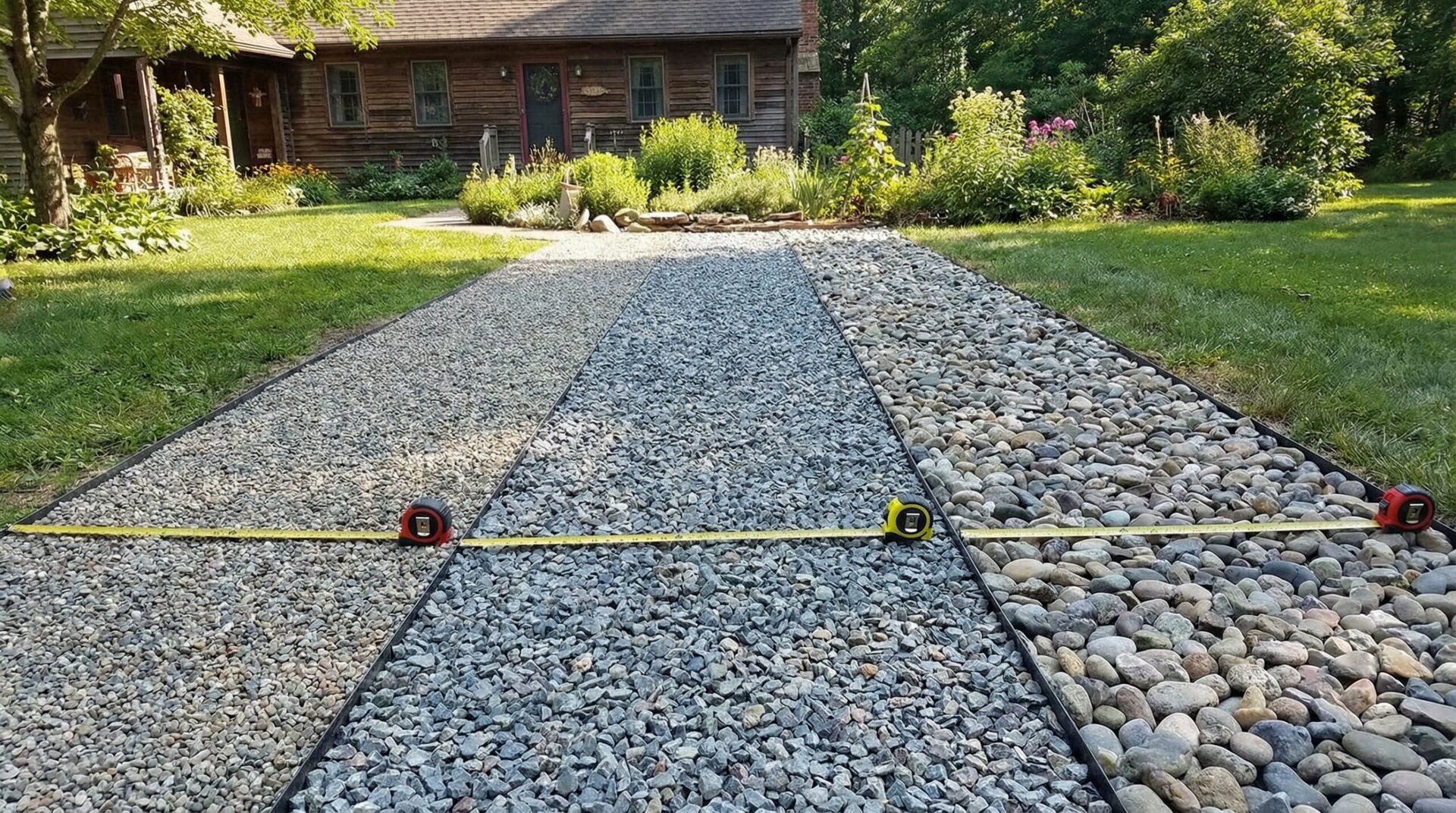
Choosing the right gravel size for your driveway can make the difference between a surface that lasts decades and one that requires constant repairs. The size affects everything from drainage and stability to how comfortable it feels underfoot and how well it handles vehicle traffic.
Quick answer: ¾ inch to 1 inch crushed stone is the most recommended size for driveway surfaces. This size offers the best balance of compaction, drainage, and durability for most residential applications. However, the complete picture involves understanding how different sizes work together in a layered system.
Pro tip: Most successful driveways use multiple gravel sizes in different layers rather than a single size throughout the entire depth.
Let’s walk through everything you need to know about gravel sizes so you can build a driveway that performs well for years to come.
Understanding gravel size categories
Gravel sizes are typically categorized by diameter, and each serves different purposes in driveway construction. Think of it like building a cake where each layer has a specific function.
Small gravel (⅜ inch or smaller) includes what most people call pea gravel. These smooth, rounded stones look attractive and feel comfortable to walk on, but they shift easily under vehicle weight. They work best as decorative top layers on low-traffic areas or walkways.
Medium gravel (½ inch to ¾ inch) strikes a balance between compaction and drainage. This size can work for light-traffic driveways and serves well as a middle layer in multi-layer installations. You might need to rake it occasionally to keep the surface level.

Large gravel (1 inch and larger) provides excellent load-bearing capacity for heavy vehicles. While it can feel rough underfoot and look less refined, it’s essential for base layers and works well in rural or commercial settings where function trumps appearance.
| Gravel Size | Diameter | Best Use | Pros | Cons |
|---|---|---|---|---|
| Small (Pea) | ⅜” or less | Top layer, walkways | Attractive, comfortable | Shifts easily |
| Medium | ½” to ¾” | Middle layer, light traffic | Balanced performance | Needs maintenance |
| Large | 1″+ | Base layer, heavy traffic | Strong, durable | Rough surface |
The three-layer installation system
Professional driveway installations typically use three distinct layers, each with a specific gravel size and purpose. This system maximizes both performance and longevity.
Base layer (4-6 inches deep) uses the largest stones, typically 1½ inch crushed stone or crusher run. This foundation layer bears the weight load and prevents the driveway from sinking into soft soil. The angular edges of crushed stone lock together better than rounded river rock. For more details on selecting the right foundation material, check out our guide on the best base rock for driveway construction.
Middle layer (3-4 inches deep) employs medium-sized gravel, usually ¾ inch crushed stone. This layer provides additional stability while beginning the transition to a smoother surface. It also helps with drainage by allowing water to flow down to the base layer.
Important: Each layer must be compacted thoroughly before adding the next layer. Proper compaction is often more critical than the exact gravel size you choose.
Top layer (1-2 inches deep) uses smaller gravel for the final surface. Many homeowners choose ¾ inch to 1 inch crushed stone for durability, while others prefer pea gravel for aesthetics. The choice depends on your priorities between appearance and maintenance requirements.
Choosing the right size for your situation
Your specific circumstances should guide your gravel size selection. Different scenarios call for different approaches, much like choosing the right tool for a specific job.
For standard residential driveways with typical car and light truck traffic, ¾ inch to 1 inch crushed stone works best for the top layer. It compacts well, drains effectively, and handles daily use without excessive shifting or rutting. To explore all your options, read our comprehensive guide on different types of driveway gravel available for residential projects.
Heavy traffic situations require larger base stones and potentially larger surface stones. If you regularly park work trucks, RVs, or heavy equipment, consider using 1 inch or larger crushed stone throughout more of the driveway depth.
Sloped driveways present special challenges because gravity works against you. Crusher run (a mix of stone sizes and fine particles) often works better on slopes because it compacts tighter and resists washing away during heavy rains.

Climate considerations matter significantly. In areas with freeze-thaw cycles, good drainage becomes critical to prevent ice damage. Larger base stones help water drain away before it can freeze and expand. In very wet climates, avoid fine materials that can turn muddy. Understanding different kinds of driveway gravel helps you select materials suited to your local weather conditions.
Calculating your gravel needs
Getting the right amount of gravel saves money and prevents delays. The basic formula is straightforward: length × width × depth (in feet) ÷ 27 = cubic yards needed.
For a typical 20-foot by 100-foot driveway with a total depth of 6 inches (0.5 feet), you would need: 20 × 100 × 0.5 ÷ 27 = 37 cubic yards of gravel total across all layers. If you’re planning a project of this size, our article on how much a 100-foot gravel driveway costs can help you budget accordingly.
Remember to order 10-15% extra to account for compaction and settling. Different gravel sizes have different coverage rates, so base layers typically require more material than top layers for the same area.
Money-saving tip: Buying all your gravel sizes from the same supplier often reduces delivery costs, even if you’re installing the layers at different times.
Most suppliers can help you calculate exact amounts based on your specific project dimensions and desired layer depths. Having accurate measurements saves both time and money. If budget is a concern, explore our guide on the cheapest gravel for driveways to find cost-effective options without sacrificing quality.
Getting your gravel driveway right the first time depends heavily on choosing appropriate sizes for each layer and your specific situation. The ¾ inch to 1 inch crushed stone recommendation works well for most homeowners, but understanding the complete system helps you make informed decisions about your particular project.
Whether you’re building from scratch or improving an existing driveway, focusing on proper sizing and installation techniques will give you a surface that performs well for many years with minimal maintenance.


 Chance Kittrell
 igor
igor