Best gravel size for foundation drainage and stability
Get an estimate for your project in 60 seconds
 Your information is secure
When you’re building a foundation, choosing the right gravel size can make the difference between a stable structure and costly foundation problems down the road. The optimal gravel size for most residential foundations is 3/4 inch (#57 gravel), which provides the ideal balance of stability and drainage for typical home construction projects.
Quick answer: For residential foundations, use 3/4 inch gravel. For commercial buildings, go with 1.5 to 3 inches. Industrial foundations need 3 to 6 inches for maximum load-bearing capacity.
Your foundation’s long-term performance depends heavily on this seemingly simple decision. The right gravel size ensures proper water drainage, prevents settling, and creates a stable base that can support your structure for decades. Let’s explore how to make the best choice for your specific project.
Why gravel size matters for foundation performance
The size of gravel particles directly affects two critical foundation functions according to 3dev.hellogravel.com. Larger particles create better interlocking for stability, while smaller particles allow for improved drainage through increased pore spaces.
When gravel particles are too large, water can flow too quickly, potentially washing away fine materials and creating voids. Conversely, gravel that’s too small may not provide adequate structural support and can become compacted, reducing drainage effectiveness. Understanding what type of aggregate base is best for foundations helps ensure you select materials that meet both structural and drainage requirements.
The angular shape of crushed stone gravel enhances this interlocking effect. Unlike rounded river rock, crushed stone has jagged edges that lock together tightly when compacted, creating a more stable foundation base that resists shifting under load.

Gravel size recommendations by project type
Different construction projects require specific gravel sizes to meet their unique load-bearing and drainage requirements. Understanding these distinctions helps you select the most appropriate material for your foundation.
Residential foundations typically perform best with 3/4 inch gravel, which provides adequate stability for single-family homes while maintaining good drainage properties. This size compacts well without becoming too dense, allowing water to move through while supporting typical residential loads. For more detailed guidance, check out our article on what is the best crushed stone size for a foundation.
Commercial buildings need larger gravel sizes, typically between 1.5 to 3 inches, to handle increased structural loads. The larger particles create stronger interlocking patterns that can support multi-story buildings and heavy equipment without settling or shifting.
Industrial foundations require the largest gravel sizes, ranging from 3 to 6 inches. These massive particles provide maximum load-bearing capacity for warehouses, factories, and heavy machinery installations where foundation failure could be catastrophic.
Pro tip: When in doubt, consult with a structural engineer. They can analyze your specific soil conditions and building requirements to recommend the optimal gravel size for your project.
Key factors that influence gravel size selection
Your soil type plays a crucial role in determining the appropriate gravel size for your foundation. Clay soils with poor drainage benefit from larger gravel particles that create more space for water movement, while sandy soils may work well with smaller gravel sizes.
Climate conditions also impact your choice. Areas with heavy rainfall or freeze-thaw cycles need gravel that promotes excellent drainage to prevent water accumulation and frost heave. Regions with stable weather patterns may allow for more flexibility in size selection. Learn more about what is the best gravel size for drainage to optimize your foundation’s water management.
The weight and size of your building directly influence gravel requirements. Heavier structures need larger gravel particles to distribute loads effectively, while lighter buildings can often use smaller sizes without compromising stability.
| Foundation Type | Gravel Size | Primary Benefit | Best Use |
|---|---|---|---|
| Residential | 3/4 inch | Balanced stability/drainage | Single-family homes |
| Commercial | 1.5-3 inches | Enhanced load support | Multi-story buildings |
| Industrial | 3-6 inches | Maximum strength | Heavy machinery/warehouses |
Installation depth and compaction guidelines
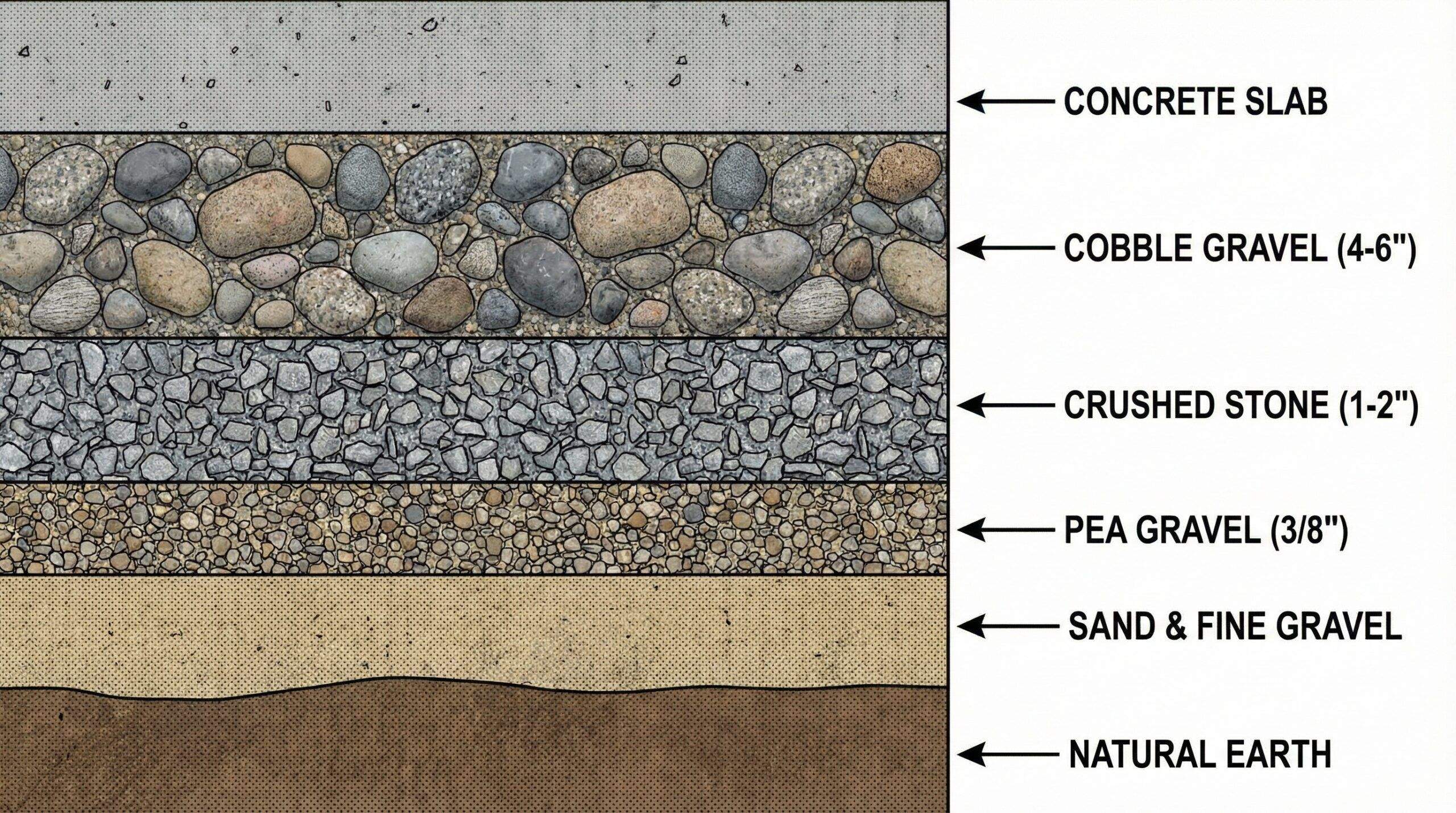
Proper gravel depth varies based on your foundation type and local building codes, but most residential projects require 4 to 6 inches of compacted gravel base according to 3dev.hellogravel.com. Commercial and industrial projects may need 8 to 12 inches or more.
Compaction is equally important as size selection. Use a plate compactor or similar equipment to achieve 95% compaction density, which ensures your gravel base won’t settle after construction begins. Work in 2-inch lifts, compacting each layer before adding the next. For specific applications like sheds, you might want to review how deep should the gravel base be for a shed.
Important note: Always check local building codes before finalizing your gravel specifications. Some areas have specific requirements for foundation materials that may override general recommendations.
Moisture content during compaction affects the final density. Slightly damp gravel compacts better than completely dry material, but avoid oversaturation which can create unstable conditions. Aim for about 5-8% moisture content for optimal compaction results. If you’re working with different aggregate types, explore the best gravel for compacting to ensure maximum stability.

Choosing the right gravel size for your foundation sets the stage for a successful construction project. Whether you’re building a simple residential foundation or a complex industrial facility, understanding how particle size affects stability and drainage helps you make informed decisions that protect your investment for years to come.

 Chance Kittrell