Complete Guide to Gravel Sieve Sizes for Construction and Landscaping Projects
Get an estimate for your project in 60 seconds
 Your information is secure
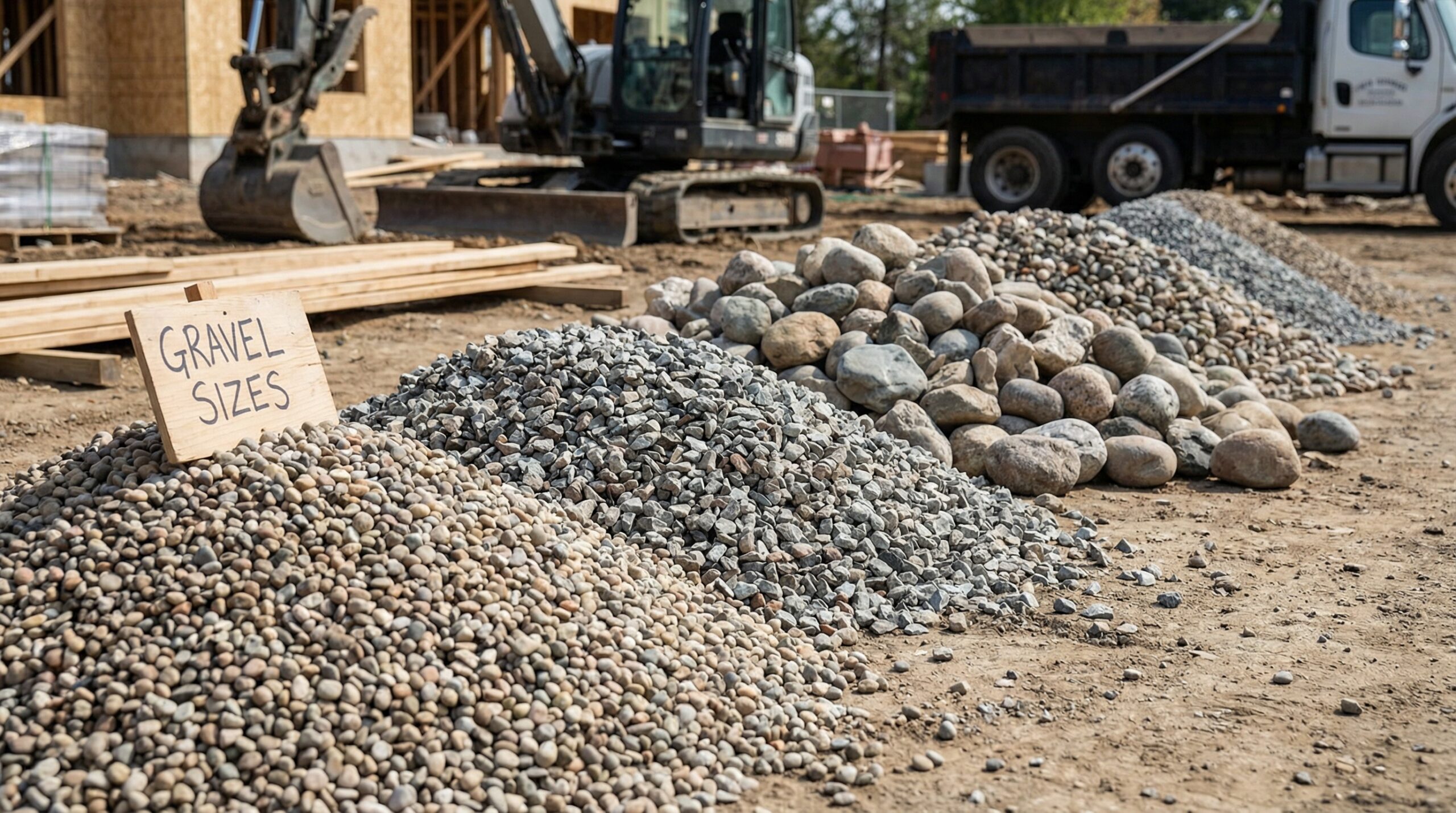
Choosing the right gravel size can make or break your project. Whether you’re building a driveway, creating a garden pathway, or installing drainage systems, understanding gravel sieve sizes is essential for success. Gravel sizes are measured using standardized sieve analysis methods, with common sizes ranging from 1/8 inch pea gravel to 4-inch river rock, each serving specific purposes in construction and landscaping applications.
Quick fact: Gravel sizes are classified according to ASTM International Standard D448, ensuring consistency across the construction industry for optimal project performance.
The difference between using 3/8-inch pea gravel versus 2-inch crushed stone isn’t just about appearance. It affects drainage rates, load-bearing capacity, and long-term durability. When you understand how gravel sizes work, you’ll save money, avoid project delays, and achieve better results.
How gravel sieve sizes are measured and classified
Gravel sizes follow precise measurement standards that ensure consistency across suppliers and projects. The most common method is sieve analysis, where gravel samples pass through a series of mesh screens with decreasing opening sizes.
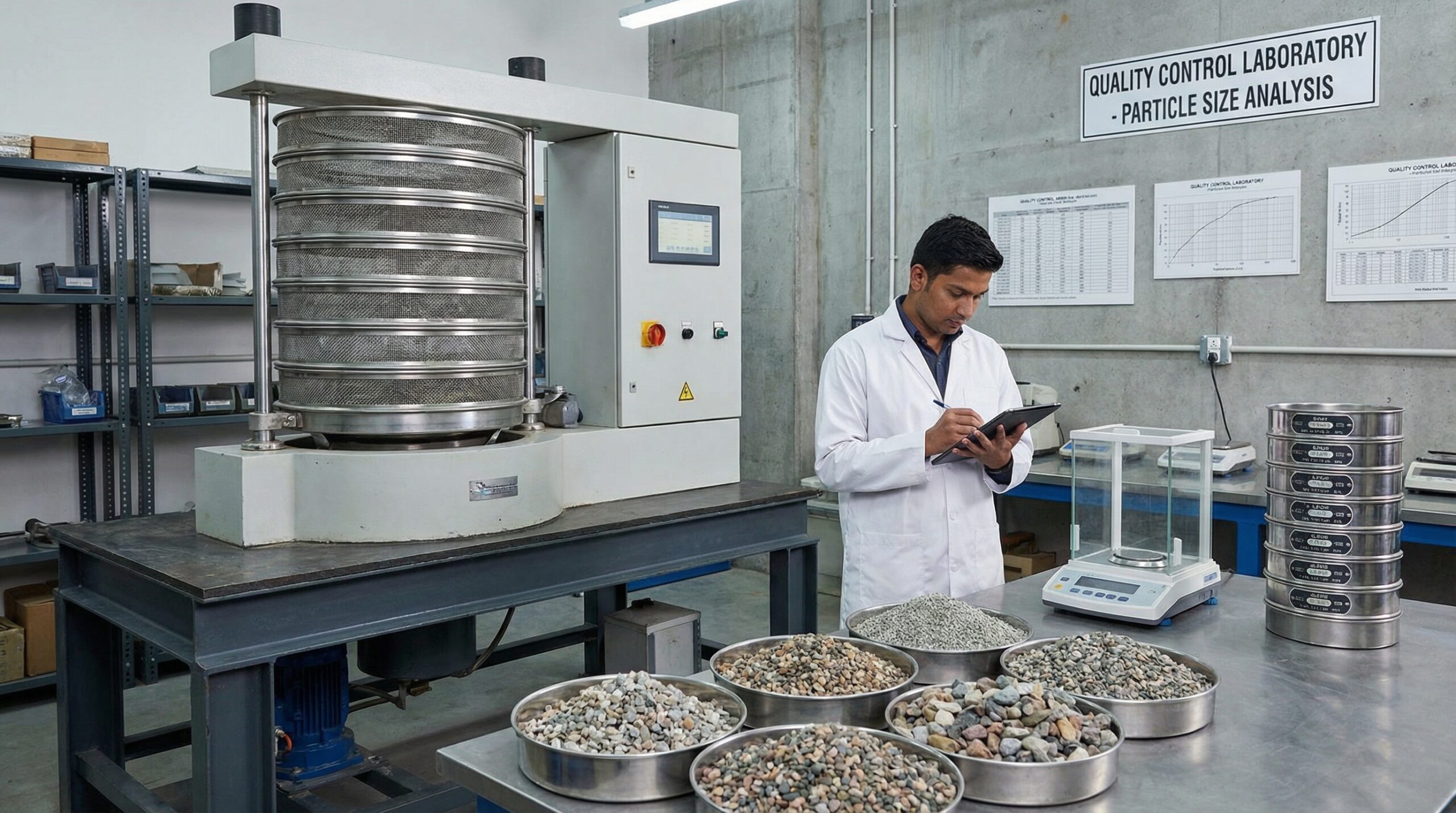
During sieve analysis, gravel gets sorted into size categories based on which screen retains the material. For example, if gravel passes through a 1-inch screen but gets caught on a 3/4-inch screen, it’s classified as 3/4-inch to 1-inch gravel. This process follows ASTM D448 or AASHTO M43 standards, which construction professionals rely on worldwide.
Visual inspection works for larger stones but lacks precision for smaller sizes. Many suppliers provide gravel size charts with pictures that show actual samples, helping you visualize what each classification looks like before ordering. These charts typically include size ranges, typical uses, and coverage estimates per ton.
The classification system uses both imperial and metric measurements, with common sizes including 1/8 inch, 3/8 inch, 1/2 inch, 3/4 inch, 1 inch, 1.5 inches, 2 inches, and larger. Understanding these classifications helps you communicate clearly with suppliers and ensures you get exactly what your project needs.
Common gravel types and their optimal size ranges
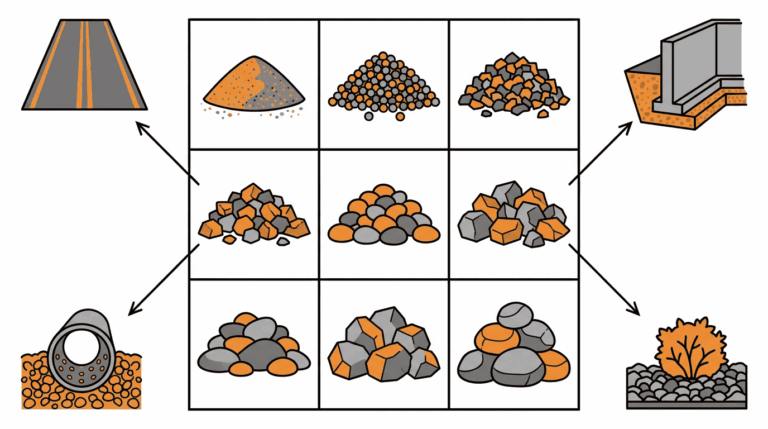
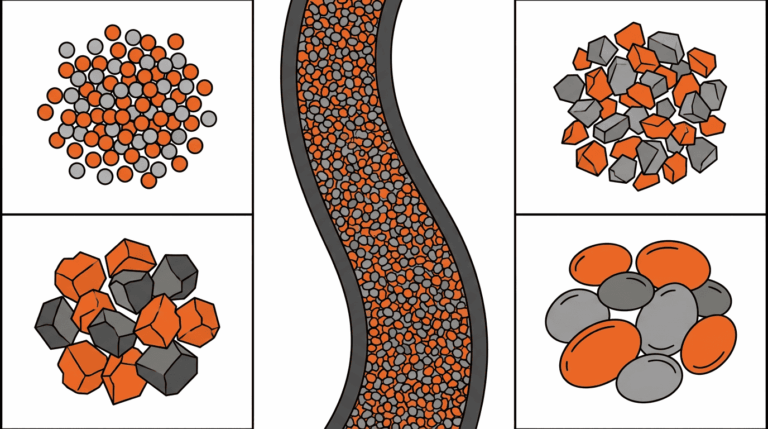
Different gravel types serve distinct purposes, and each comes in specific size ranges that maximize performance. Pea gravel, ranging from 1/8 inch to 3/8 inch, offers smooth, rounded stones perfect for walkways and play areas. Its small size allows excellent drainage while providing a comfortable walking surface.
Crushed stone delivers angular edges that lock together well, making it ideal for load-bearing applications. Available in sizes from 3/8 inch to 2.5 inches, crushed stone creates stable foundations for driveways and building projects. The angular shape prevents shifting under weight, which smooth river rock cannot match.
| Gravel Type | Size Range | Best Uses | Key Benefits |
|---|---|---|---|
| Pea Gravel | 1/8″ – 3/8″ | Walkways, drainage | Smooth surface, good flow |
| Crushed Stone | 3/8″ – 2.5″ | Driveways, foundations | Interlocks well, stable |
| River Rock | 1″ – 4″ | Landscaping, erosion control | Natural appearance, durable |
| Quarry Process | 3/4″ – 2″ | Heavy-duty surfaces | Compacts tightly, strong |
River rock brings natural beauty with sizes from 1 inch to 4 inches. These smooth, water-worn stones work beautifully in landscaping applications and provide excellent erosion control on slopes. The larger sizes create visual impact while allowing water flow.
Quarry process combines stone dust with crushed stone fragments, creating a material that compacts into a solid surface. This mixture, available in 3/4-inch to 2-inch sizes, forms an excellent base for pavers or as a finished surface for utility areas. For more details on quarry materials, explore our comprehensive quarry stone crushed stone size chart.
Pro tip: Always request a sample before ordering large quantities, as gravel appearance can vary significantly between suppliers even within the same size classification.
Selecting the right gravel size for your specific project
Your project’s requirements determine which gravel size will deliver the best results. For driveways handling regular vehicle traffic, larger sizes like 3/4-inch to 1.5-inch crushed stone provide the stability needed to prevent rutting and displacement. These sizes interlock effectively and distribute weight evenly across the surface. Check out our ultimate driveway stone size chart for specific recommendations.
Garden beds and decorative landscaping benefit from smaller sizes like 3/8-inch pea gravel. This size allows plant roots to penetrate while maintaining good drainage around plantings. The smaller stones also stay in place better around curved edges and don’t overwhelm delicate plants visually.
Drainage applications require careful size selection based on flow requirements. Smaller gravel like 1/4-inch to 3/8-inch pea gravel allows rapid water movement, making it perfect for French drains and foundation drainage. Larger sizes may create too much void space, reducing filtration effectiveness.
Construction projects using concrete or asphalt mixes need specific aggregate sizes to achieve proper strength and workability. Crushed stone in the 3/8-inch to 1-inch range typically works best for these applications, providing good bonding with cement while maintaining structural integrity. Learn more about construction stone sizes for building projects.
Consider your local climate when selecting gravel sizes. Areas with freeze-thaw cycles benefit from larger sizes that resist frost heaving, while regions with heavy rainfall need sizes that promote quick drainage to prevent washout.
Installation tips and quantity calculations for gravel projects
Proper installation starts with accurate quantity calculations. Measure your project area’s length and width, then multiply by your desired depth (typically 2-3 inches for most applications). Convert this to cubic yards by dividing cubic feet by 27, then add 10% extra for compaction and settling.
Important: Most gravel projects require a depth of 2-3 inches for optimal performance, but high-traffic areas may need 4 inches or more for adequate support.
Site preparation makes the difference between a successful project and future problems. Remove all vegetation, debris, and organic matter from the installation area. Grade the surface with a slight slope for drainage, typically 1-2% grade away from structures.
Install landscape fabric before adding gravel to prevent weed growth and mixing with underlying soil. This barrier maintains gravel integrity over time and reduces maintenance requirements. Overlap fabric edges by 6 inches and secure with landscape pins.
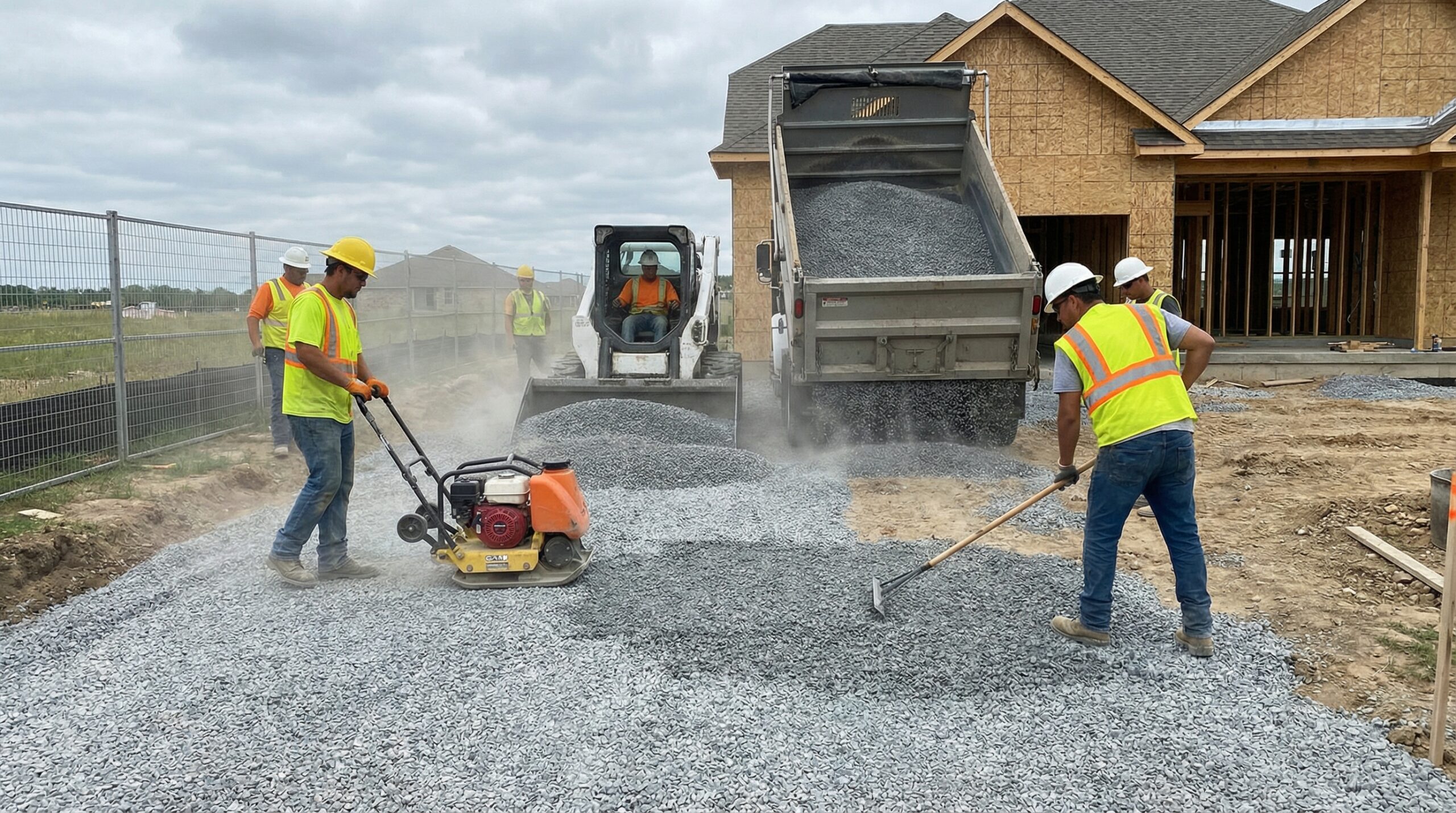
Add gravel in thin lifts, compacting each layer before adding the next. Use a plate compactor for areas larger than 100 square feet, or hand-tamp smaller spaces. Proper compaction eliminates air pockets and creates a stable, long-lasting surface.
Choose reputable suppliers who can provide documentation of their gravel’s source and composition. Quality gravel should be clean, well-graded, and free from excessive dust or organic contamination. Request delivery scheduling that allows immediate installation to prevent material degradation from weather exposure.
Understanding gravel sieve sizes empowers you to make informed decisions for any construction or landscaping project. The right size selection, combined with proper installation techniques, creates durable surfaces that perform well for years. For a comprehensive overview of different gravel sizes and their uses, take time to match gravel characteristics with your specific needs, and don’t hesitate to consult with suppliers about the best options for your local conditions and intended use.

 igor
igor