Crushed Concrete Tonnes to M3 Calculator and Conversion Guide
Get an estimate for your project in 60 seconds
 Your information is secure
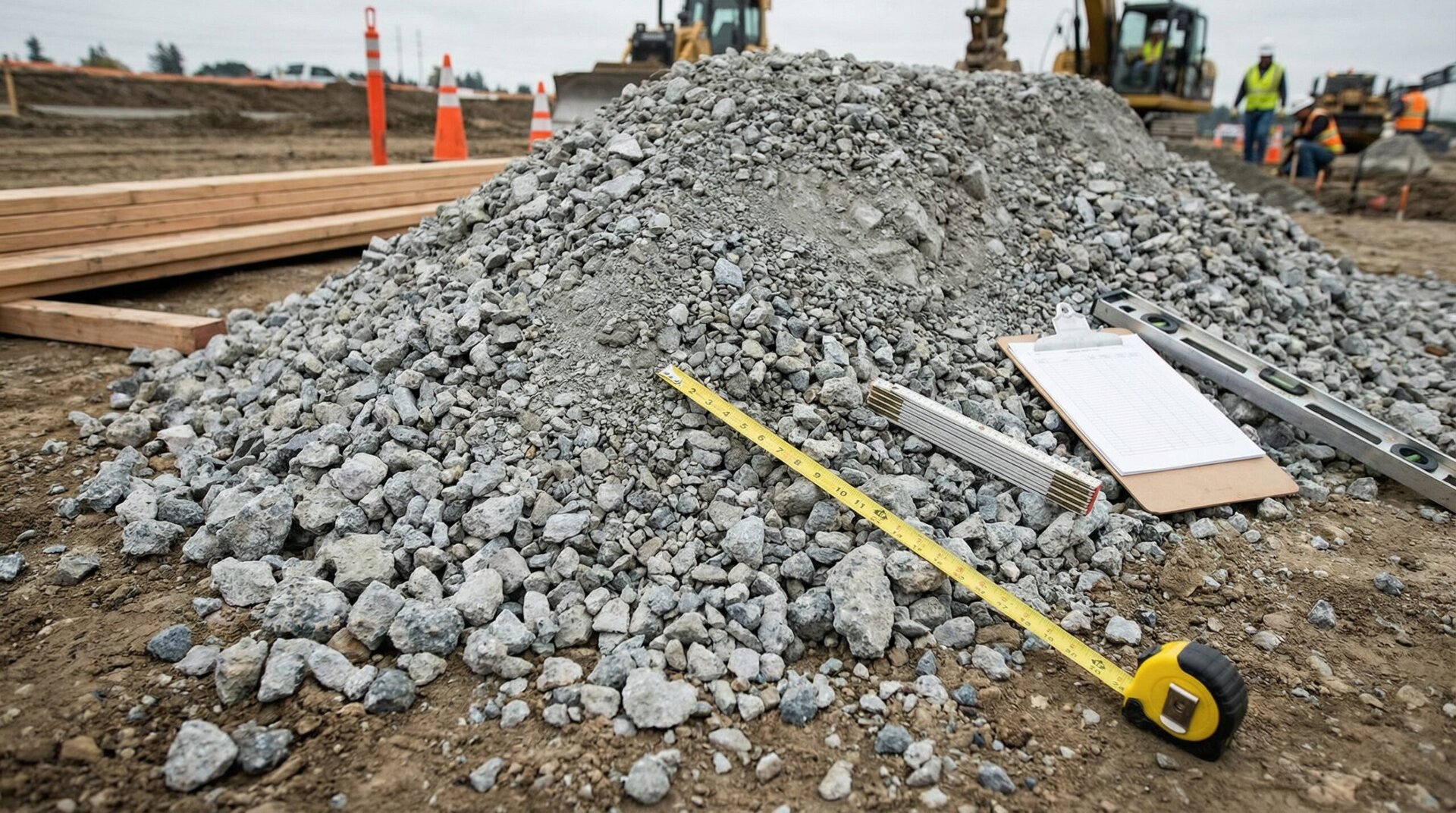
Converting crushed concrete from tonnes to cubic meters is essential for accurate project planning and material ordering. The standard conversion factor for crushed concrete is approximately 1.5 to 1.92 tonnes per cubic meter, meaning one tonne typically equals 0.52 to 0.67 cubic meters depending on the material’s density and compaction level.
Understanding this conversion helps you avoid costly over-ordering or project delays from material shortages. Whether you’re planning a driveway base, foundation work, or landscaping project, getting the measurements right from the start saves both time and money.
Quick Answer: One tonne of crushed concrete typically converts to 0.52-0.67 cubic meters, with the exact amount depending on the material’s density and compaction level.
Understanding the basic conversion formula
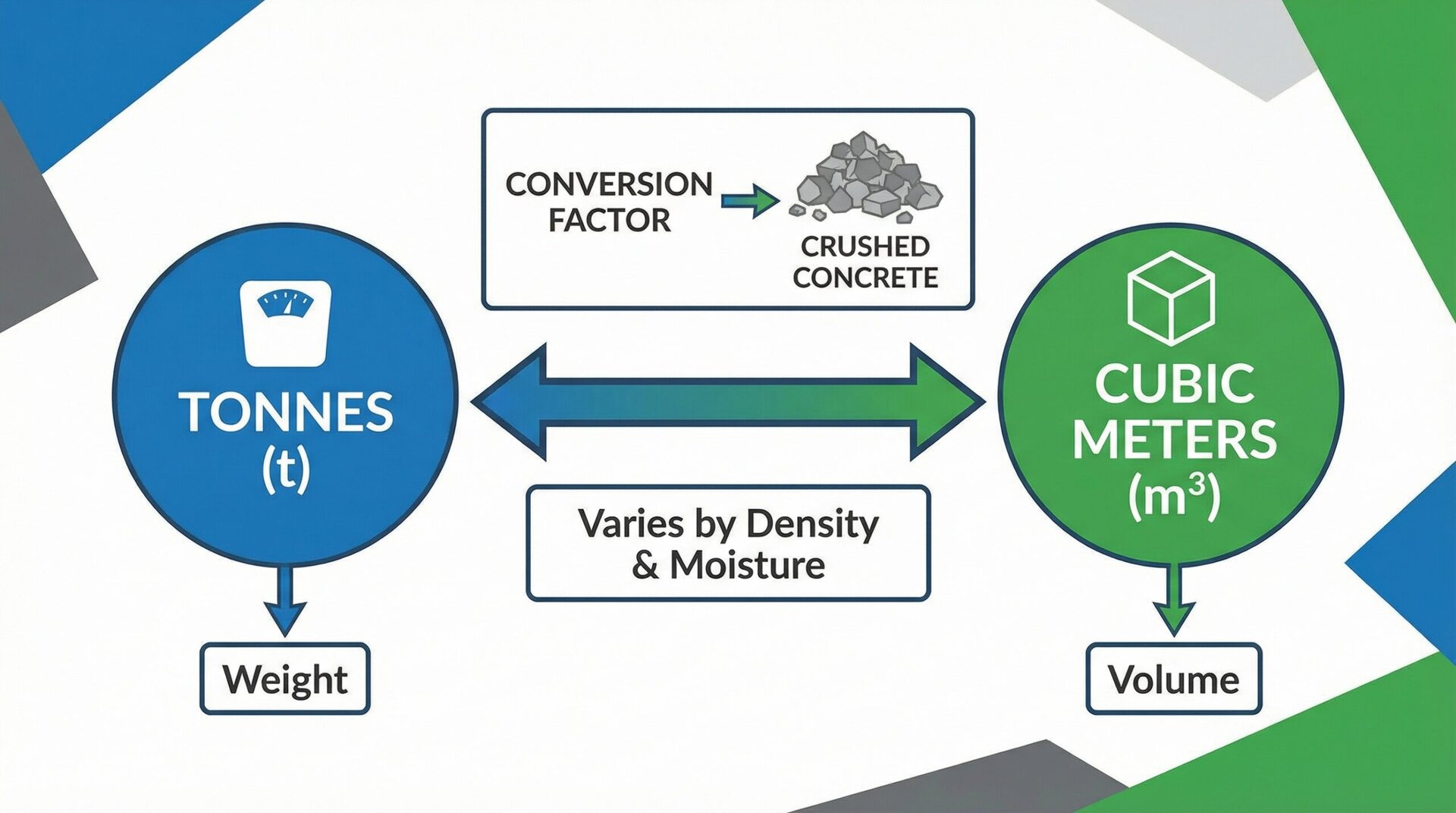
The conversion between tonnes and cubic meters relies on a simple relationship between weight, volume, and density. The formula is straightforward: Volume (m³) = Weight (tonnes) ÷ Density (tonnes/m³).
For crushed concrete, you’ll typically work with densities ranging from 1.5 to 1.92 tonnes per cubic meter. This variation occurs because different grades of concrete have different aggregate sizes and compositions. Higher-grade concrete with larger aggregate particles tends to be denser than lower-grade materials.
The reverse calculation works just as easily when you know your required volume. Simply multiply your cubic meters by the density to get the tonnage needed. This becomes particularly useful when suppliers quote prices per tonne but your project specifications are in cubic meters. For those working with imperial measurements, you can also convert crushed concrete tons to cubic yards using similar principles.
Density factors that affect your calculations
Several key factors influence the density of crushed concrete, which directly impacts your conversion calculations. The grade and composition of the original concrete plays the largest role, with higher-grade materials typically being denser due to larger aggregate content.
Compaction level significantly affects the final density. Loose crushed concrete occupies more volume than compacted material, so the same weight will convert to different cubic meter measurements. Most construction applications require some level of compaction, which increases the density toward the higher end of the range. If you’re working with other materials, understanding how to calculate fill dirt with compaction follows similar principles.
Moisture content also influences density calculations. Wet crushed concrete weighs more per cubic meter than dry material, though this factor is less significant than grade and compaction. When possible, work with suppliers who can provide specific density measurements for their particular crushed concrete products.
| Material Type | Density Range (t/m³) | M³ per Tonne |
|---|---|---|
| Loose Crushed Concrete | 1.5-1.6 | 0.63-0.67 |
| Compacted Crushed Concrete | 1.8-1.92 | 0.52-0.56 |
Calculating volume requirements for your project
Before converting tonnes to cubic meters, you need to determine your project’s total volume requirements. Start by measuring the area where you’ll place the crushed concrete, then multiply by your desired depth to get the total cubic meters needed.
For rectangular areas, the calculation is length × width × depth (all in meters). Circular areas require π × radius² × depth. Remember to account for compaction by adding 10-15% to your calculated volume, as the material will settle and compress over time. If you’re working with square footage measurements, our crushed concrete calculator for square feet can help you determine the right amount.
Consider your project’s specific requirements when planning depth. Driveway bases typically need 100-150mm of crushed concrete, while heavy-duty applications might require 200mm or more. Always check local building codes and engineering specifications for minimum depth requirements.
Pro Tip: Add 10-15% extra material to your calculations to account for compaction and settling, ensuring you have enough crushed concrete to complete your project properly.

Working with suppliers and delivery considerations
When ordering from suppliers, clarify whether their pricing is per tonne or per cubic meter to avoid confusion. Many suppliers sell by weight but can provide volume estimates based on their specific material densities. Ask for the exact density of their crushed concrete to ensure accurate calculations. Understanding how many yards of crushed concrete per ton can help you communicate effectively with suppliers who use different measurement systems.
Delivery logistics also affect your planning. Truck capacities are typically measured in tonnes, so understanding the conversion helps you determine how many loads you’ll need. Standard delivery trucks can carry 20-25 tonnes of crushed concrete, which translates to roughly 10-17 cubic meters depending on the material density.
Consider access restrictions at your site when planning deliveries. Narrow driveways or weight-limited areas might require smaller loads or alternative delivery methods. Discuss these constraints with your supplier early in the planning process to avoid delays or additional costs. For projects involving other aggregates, learning how to calculate how much crushed stone you need can be equally valuable.
Important: Always verify the specific density of your supplier’s crushed concrete, as this can vary significantly between different sources and affect your total material requirements.
Converting crushed concrete from tonnes to cubic meters becomes straightforward once you understand the key factors involved. Use the density range of 1.5-1.92 tonnes per cubic meter as your starting point, adjust for your specific material and compaction requirements, and always add a buffer for settling. With accurate calculations, you’ll order the right amount of material and keep your project on track.


 Chance Kittrell
