Crusher Run vs 3/4 Limestone for Driveways: Which Gravel Is Best for Your Project
Get an estimate for your project in 60 seconds
 Your information is secure
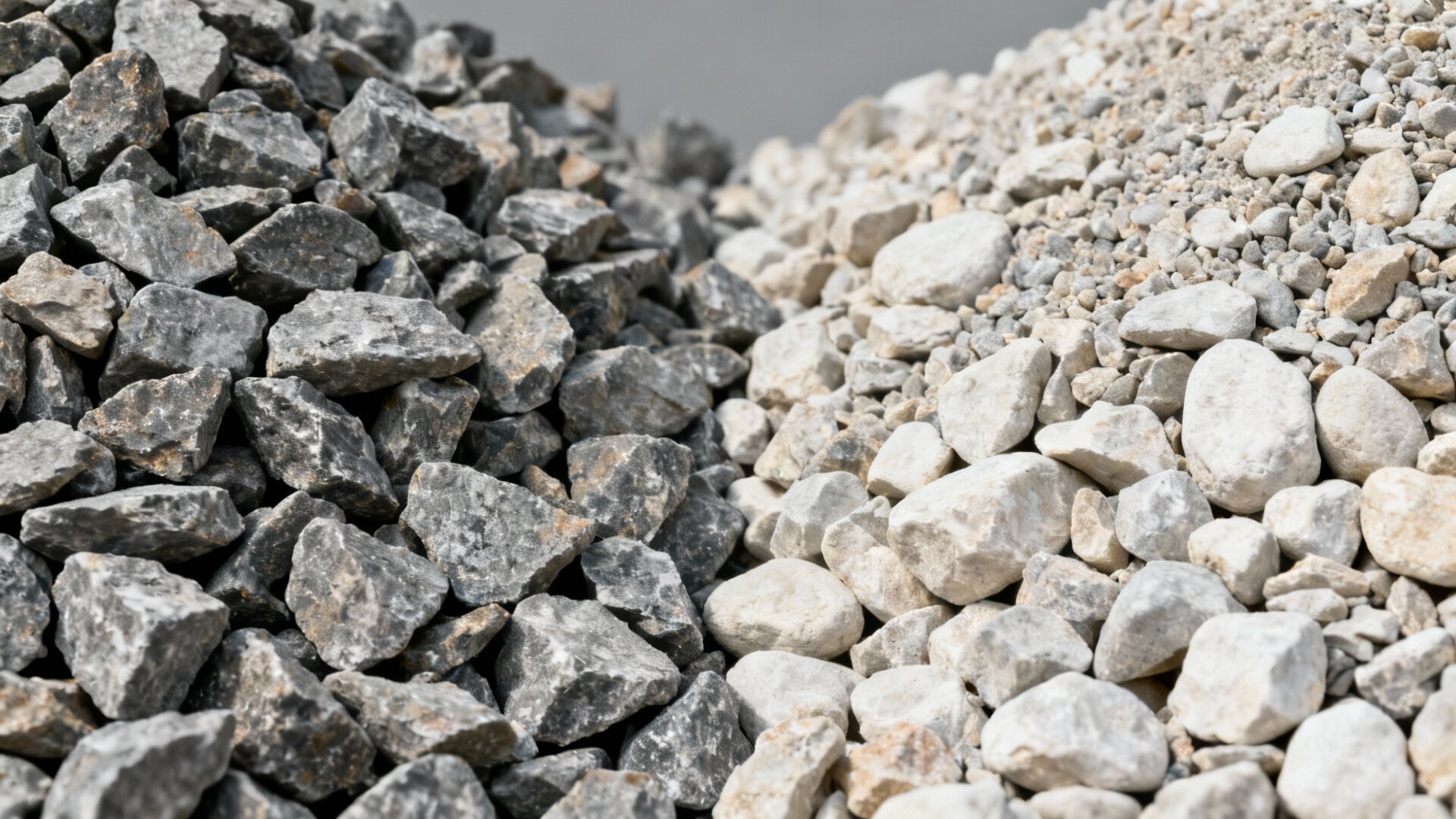
Choosing between crusher run and 3/4 limestone for your driveway can save you hundreds of dollars and years of maintenance headaches. Both materials cost between $1-3 per square foot, but they serve different purposes and perform differently under various conditions.
Quick Answer: Crusher run works best for high-traffic driveways and base layers because it compacts tightly with its mix of stone and fines. 3/4 limestone excels for decorative surfaces and areas needing excellent drainage, though it doesn’t compact as firmly.
Pro Tip: Most professional installers use crusher run as the base layer and top it with 3/4 limestone for the perfect combination of stability and appearance.
Understanding these differences helps you pick the right material for your specific needs, whether you’re building a new driveway or upgrading an existing one.
Understanding crusher run and 3/4 limestone basics
Crusher run combines crushed stone particles with fine dust, creating a material that locks together when compacted. The mixture typically includes stones ranging from dust up to 1 inch, with the fines filling gaps between larger pieces.
This composition makes crusher run incredibly stable once compressed. When you drive over it or apply pressure, the particles interlock and create a solid surface that resists shifting and rutting.
3/4 limestone consists of uniformly sized limestone pieces, each approximately 3/4 inch in diameter. Unlike crusher run, it contains minimal fines, which means better drainage but less compaction ability. If you’re considering other gravel sizes, you might also want to compare 3/4″ gravel vs pea gravel for different applications.
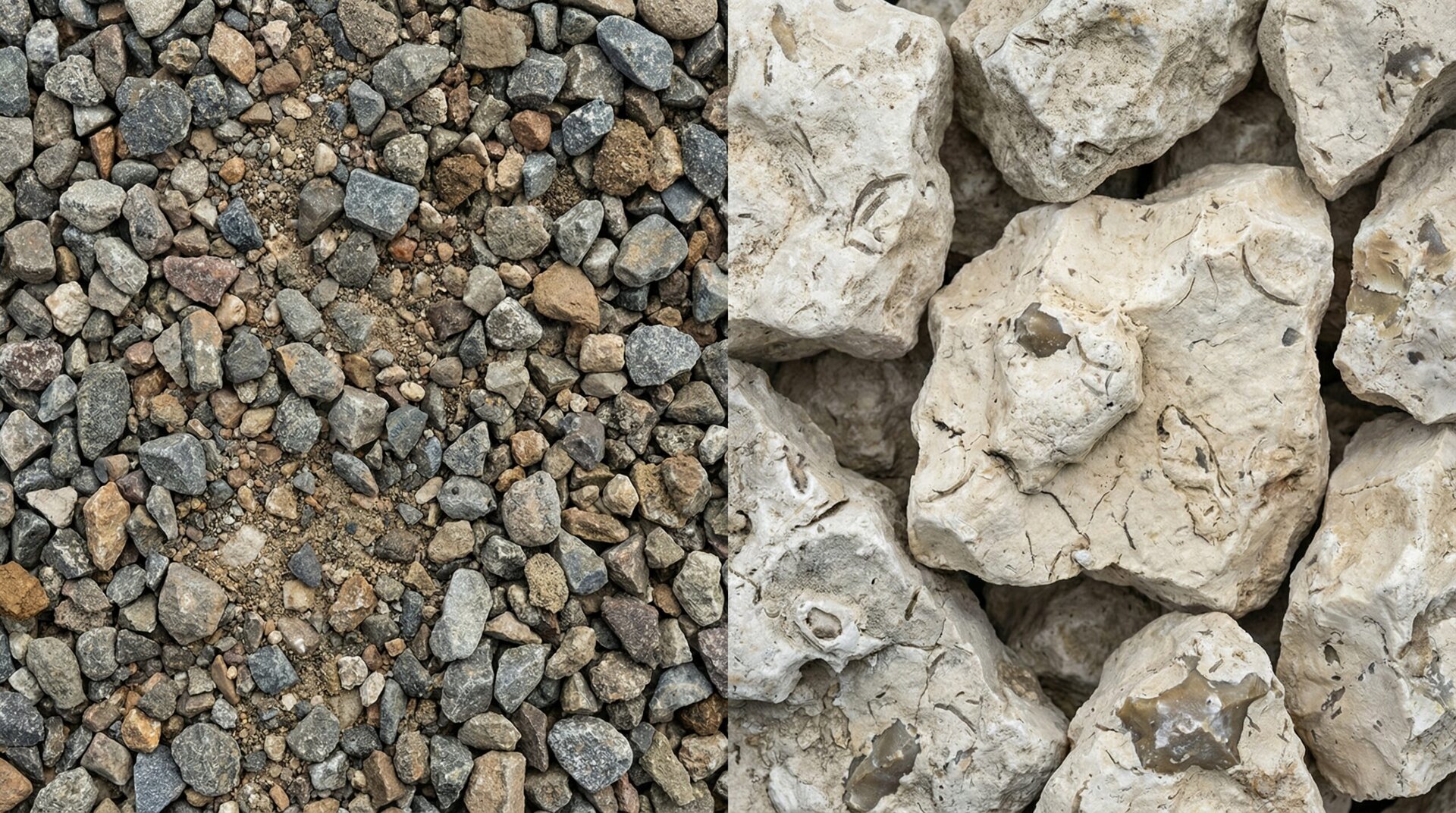
The angular shape of 3/4 limestone provides good traction and creates an attractive, uniform appearance. However, without fines to bind the pieces together, it tends to shift more under heavy loads. Understanding the difference between 3/4″ vs. 3/4″ minus can also help you make an informed decision about which material best suits your needs.
Cost comparison and budget considerations
Both materials fall within the $25-45 per ton range, but several factors affect your total project cost. Crusher run typically costs slightly less because it’s more readily available and requires less processing.
For a standard 12×50 foot driveway, you’ll need approximately 18-22 tons of material. This translates to $450-990 for crusher run or $500-1,100 for 3/4 limestone, not including delivery fees.
| Material | Cost per Ton | Coverage per Ton | Best Use |
|---|---|---|---|
| Crusher Run | $25-40 | 100 sq ft (2″ deep) | Base layers, high-traffic |
| 3/4 Limestone | $30-45 | 120 sq ft (2″ deep) | Top surface, decorative |
Delivery adds $50-150 depending on distance and quantity. Many suppliers offer better rates for larger orders, so consider tackling your entire driveway project at once rather than in phases.
Money-Saving Tip: Order both materials together if you’re doing a two-layer installation. Most suppliers discount combined orders and you’ll save on delivery fees.
Installation and performance differences
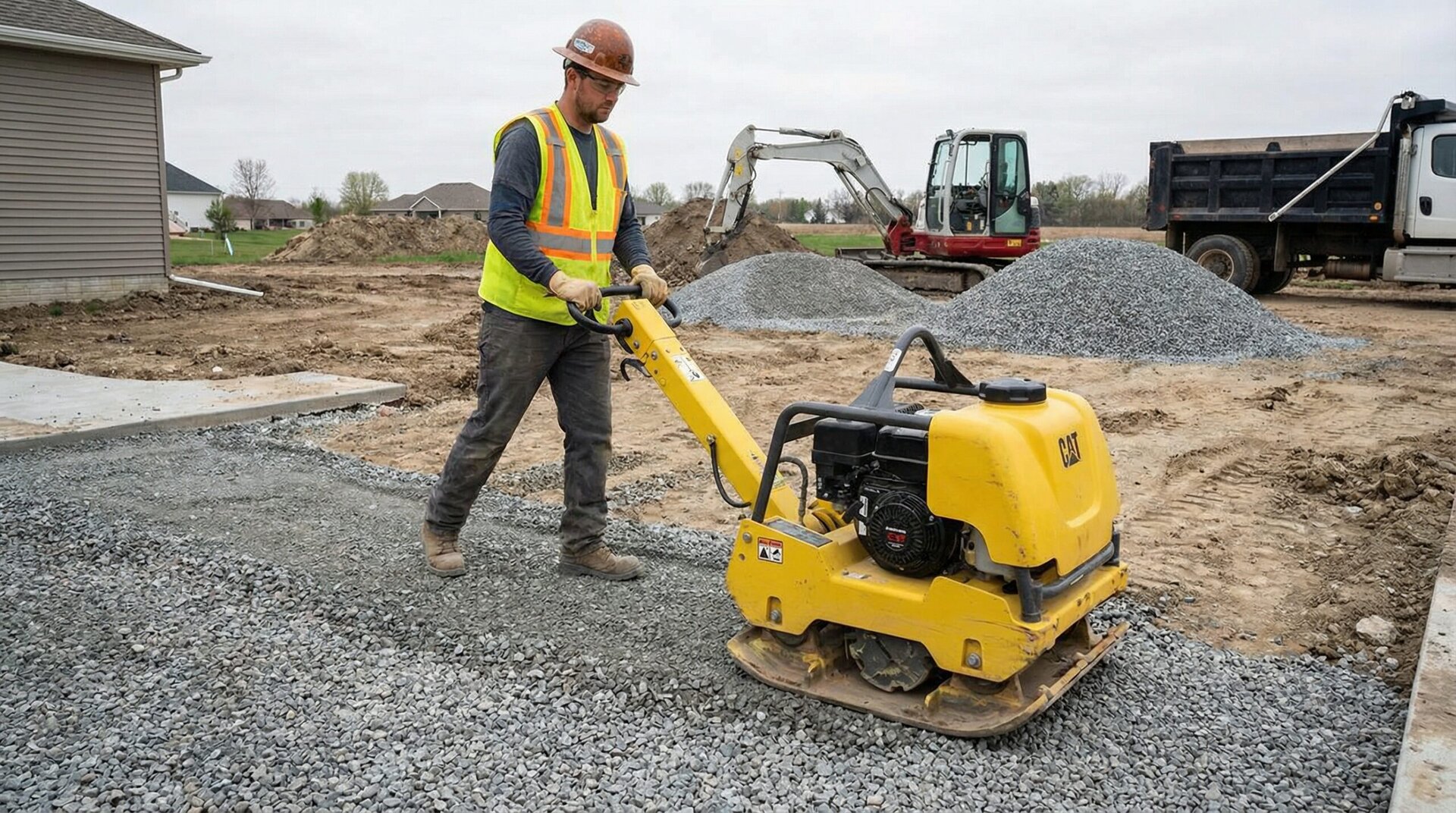
Crusher run requires thorough compaction to achieve its maximum strength. You’ll need to compact it in 2-3 inch lifts using a plate compactor or roller. The fines activate when moistened slightly, creating an almost concrete-like surface when properly installed.
This compaction ability makes crusher run ideal for areas that see regular vehicle traffic. It handles the weight of cars, trucks, and even delivery vehicles without developing ruts or soft spots. For those comparing different crushed stone options, learning about #57 vs. #67 crushed stone can provide additional insights into stone sizing.
3/4 limestone installs more easily but doesn’t compact as tightly. The uniform size means pieces don’t interlock as effectively, though this same characteristic provides superior drainage. Water flows through the gaps between stones rather than pooling on the surface.
For slopes and areas prone to erosion, 3/4 limestone’s angular shape provides better traction than smooth gravel alternatives. The pieces grip together enough to resist washing away during heavy rains.
Choosing the right material for your specific needs
Your decision should factor in traffic levels, drainage requirements, and aesthetic preferences. High-traffic driveways benefit most from crusher run’s stability, while decorative paths and low-use areas can showcase 3/4 limestone’s attractive appearance.
Consider your local climate too. Areas with heavy rainfall need the drainage benefits of 3/4 limestone, while regions with freeze-thaw cycles benefit from crusher run’s resistance to frost heaving.
Professional Insight: The best driveways often combine both materials, using crusher run as a 4-6 inch base layer topped with 2 inches of 3/4 limestone for appearance and drainage.
For DIY installation, crusher run proves more forgiving. Its self-binding properties mean small imperfections in compaction won’t create major problems. 3/4 limestone requires more precise grading to prevent low spots where water might collect. If you’re exploring alternatives, you might find it helpful to read about crusher run vs 57 stone to understand how these materials compare to other popular options.
Many homeowners find that starting with crusher run gives them a solid foundation they can always enhance later with a decorative top layer. This approach spreads costs over time while ensuring structural integrity from day one. For projects requiring specific stone characteristics, comparing 610 limestone vs 57 gravel can help you select the right material for your base layer.
The choice between crusher run and 3/4 limestone ultimately depends on balancing your immediate needs with long-term performance goals. Both materials offer excellent value when matched to the right application, giving you a durable driveway that serves your property well for years to come.


 Chance Kittrell
 igor
igor