Crusher Run vs 57 Gravel for Driveways: Which Stone is Best for Your Project
Get an estimate for your project in 60 seconds
 Your information is secure
Choosing the wrong gravel for your driveway can lead to costly repairs, poor drainage, and constant maintenance headaches. When you’re deciding between crusher run and 57 gravel, you’re essentially choosing between stability and drainage. Crusher run offers superior compaction and load-bearing strength, making it ideal for driveways and high-traffic areas. Meanwhile, 57 gravel provides excellent drainage and aesthetic appeal, perfect for landscaping and decorative applications.
Quick Answer: Crusher run is best for driveways and areas needing heavy load support, while 57 gravel works better for drainage systems and decorative landscaping projects.
Understanding these differences will help you select the right material for your specific project needs, whether you’re building a new driveway, creating a walkway, or designing a drainage system.
What is crusher run and 57 gravel
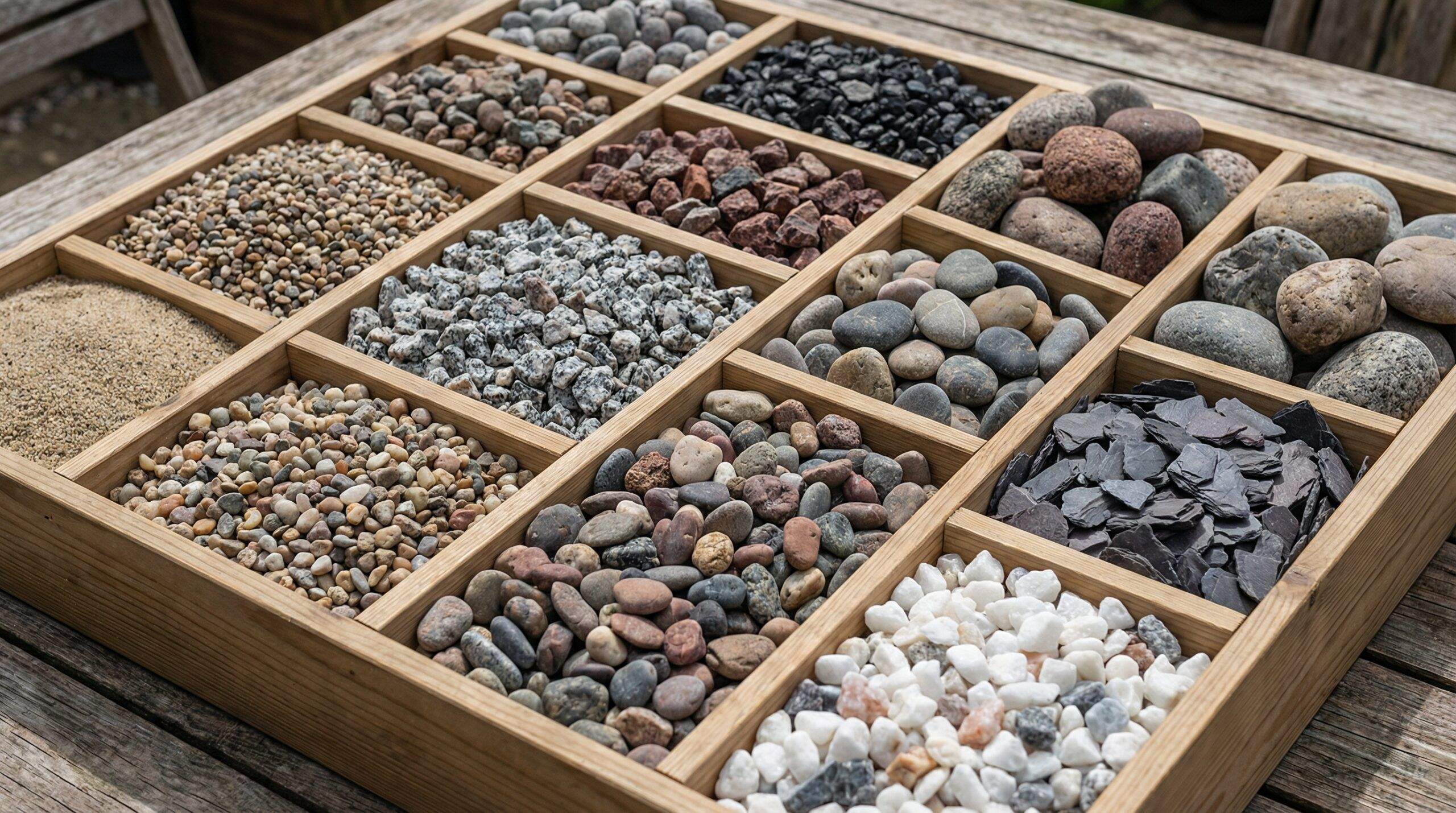
Crusher run, also known as quarry process or crush and run, consists of crushed stone ranging from dust particles up to 3/4 inch in diameter. This mixture combines coarse angular stones with fine material called “fines,” creating a gravel that compacts tightly when installed. The angular edges of the stones lock together, forming a stable, dense surface that can support heavy loads.
57 gravel, despite sometimes being called “pea gravel,” actually consists of angular crushed stone pieces ranging from 1/2 inch to 3/4 inch in size. Unlike smooth river rock, 57 gravel features sharp edges that provide some interlocking capability while still allowing excellent water drainage through the spaces between stones.
The key difference lies in their composition. Crusher run includes fine particles that fill gaps between larger stones, while 57 gravel maintains consistent sizing with minimal fine material. This fundamental difference affects how each material performs in various applications.
Size and compaction differences
The size variation between these materials directly impacts their performance characteristics. Crusher run’s range from dust to 3/4 inch allows it to create what contractors call a “well-graded” aggregate. When compacted, the fine particles fill voids between larger stones, creating maximum density and stability.
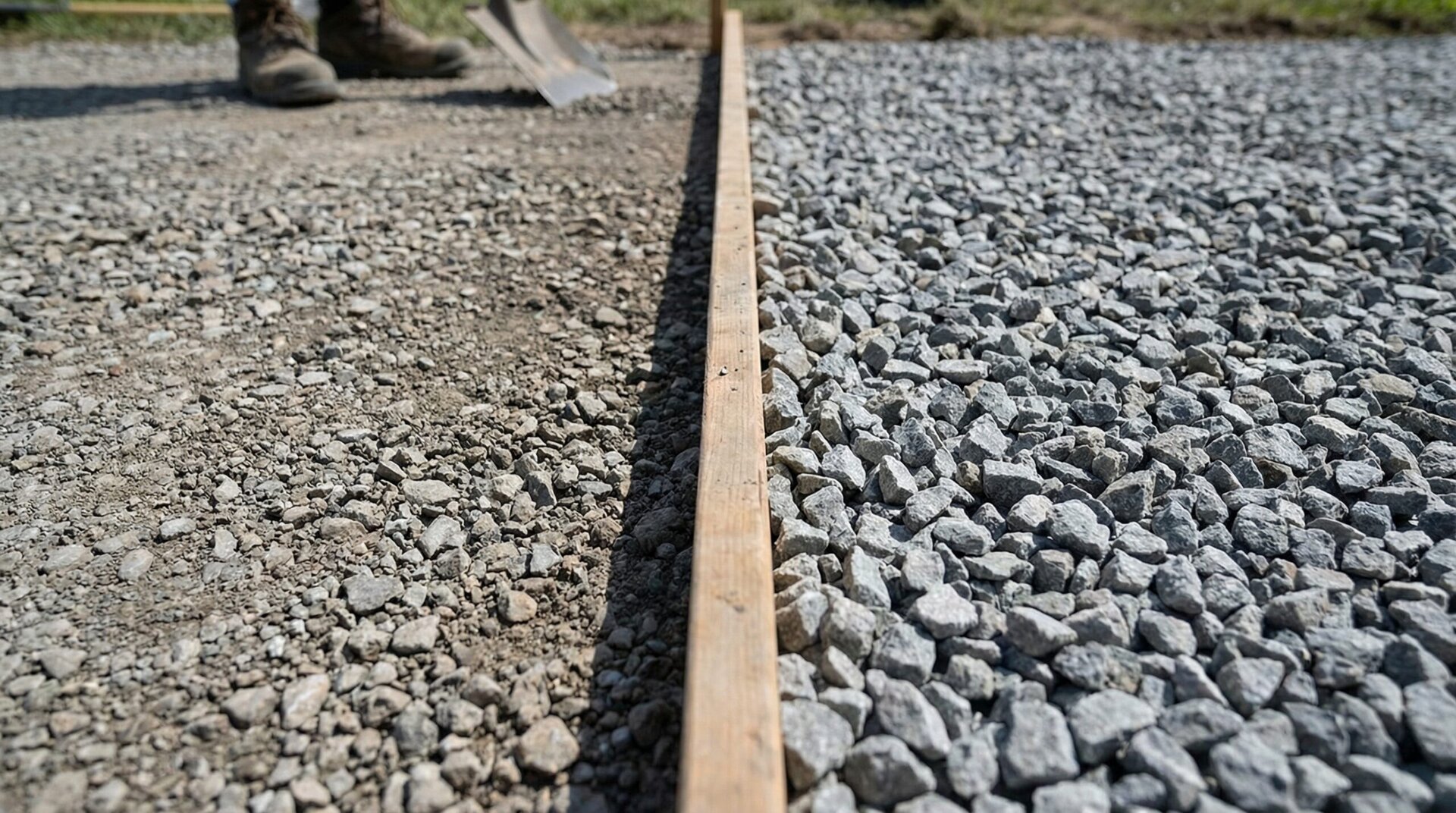
57 gravel’s uniform sizing creates more void space between stones, which enhances drainage but reduces compaction strength. While this makes it less suitable for load-bearing applications, it excels in situations where water movement is crucial.
Compaction Tip: Crusher run compacts to approximately 85-95% of its loose volume, while 57 gravel only compacts to about 70-80%, requiring more material to achieve the same finished depth.
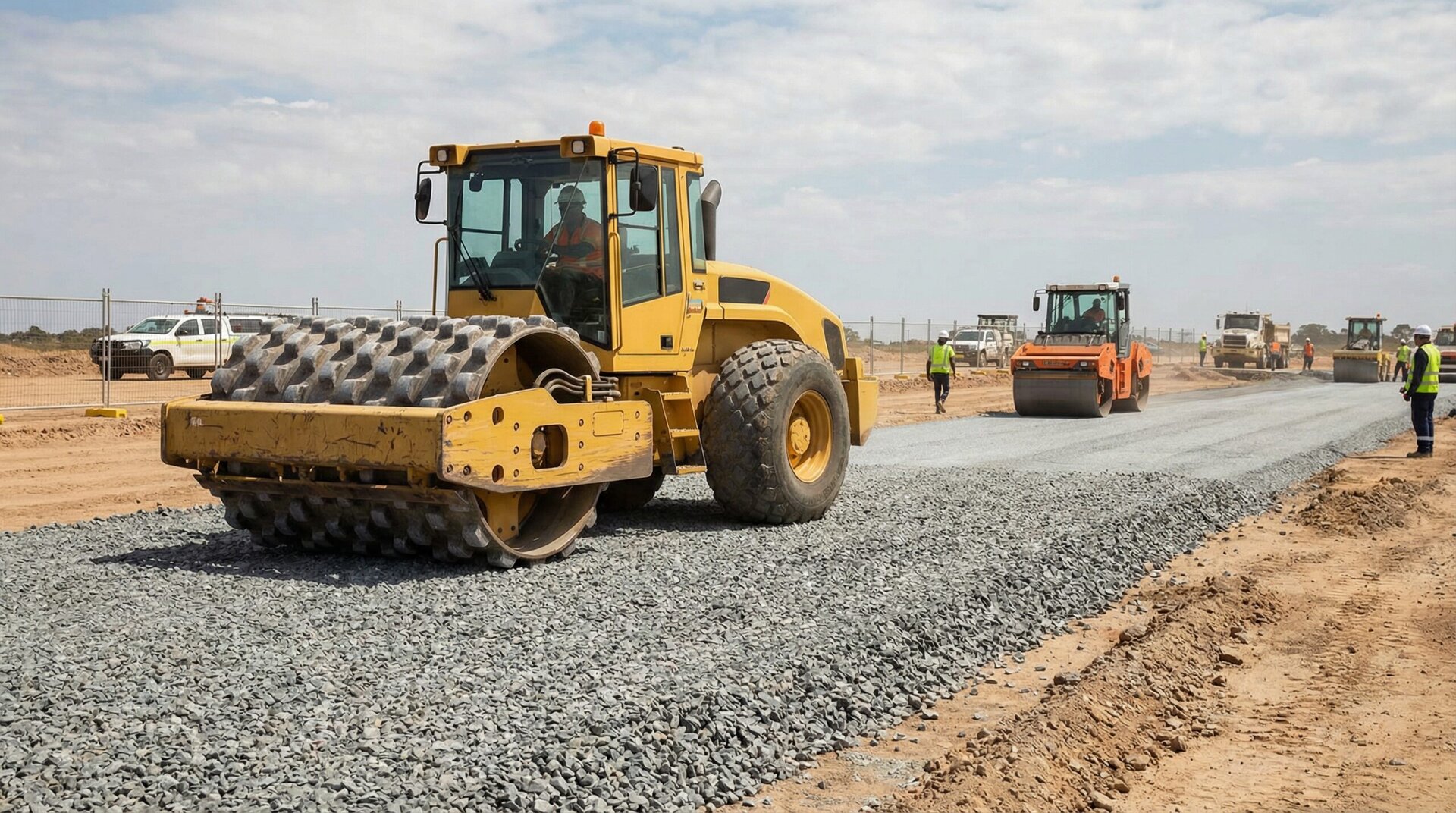
When properly installed with a plate compactor or roller, crusher run forms an almost concrete-like surface. The angular stones and fine materials work together to create a solid foundation that resists shifting under pressure. Understanding the difference between 3/4″ and 3/4″ minus materials can further help you grasp how fine particles affect compaction.
Best applications for each material
Crusher run dominates in applications requiring stability and load-bearing capacity. Driveways represent its most common use, especially for areas expecting regular vehicle traffic. The material also serves as an excellent base layer for asphalt paving, concrete slabs, and retaining wall foundations.
For road construction and commercial applications, crusher run provides the structural integrity needed to support heavy equipment and constant traffic. Its ability to shed water while maintaining stability makes it ideal for areas with moderate drainage requirements. If you’re comparing base materials, you might also want to explore crusher run versus 3/4″ limestone for different foundation applications.
57 gravel shines in landscaping and drainage applications. Its uniform size and excellent drainage properties make it perfect for French drains, septic system drain fields, and around foundation perimeters. The material also works well for decorative pathways, garden borders, and areas where you want to maintain natural water infiltration. For decorative projects, comparing 3/4″ gravel versus pea gravel can help you choose the right aesthetic.
| Feature | Crusher Run | 57 Gravel |
|---|---|---|
| Size Range | Dust to 3/4″ | 1/2″ to 3/4″ |
| Compaction | Excellent | Moderate |
| Drainage | Good | Excellent |
| Load Support | High | Moderate |
| Best Use | Driveways, bases | Drainage, landscaping |
Cost and installation considerations
Crusher run typically costs less per ton than 57 gravel, but its superior compaction means you need less material to achieve the desired finished thickness. For a standard driveway installation, crusher run might require 2-3 inches of loose material to achieve a 2-inch compacted base, while 57 gravel could need 3-4 inches to reach similar stability.
Installation requirements differ significantly between the materials. Crusher run demands proper moisture content during compaction, typically requiring light watering during the compaction process. Too much water creates a muddy mess, while too little prevents proper binding of the fine particles.
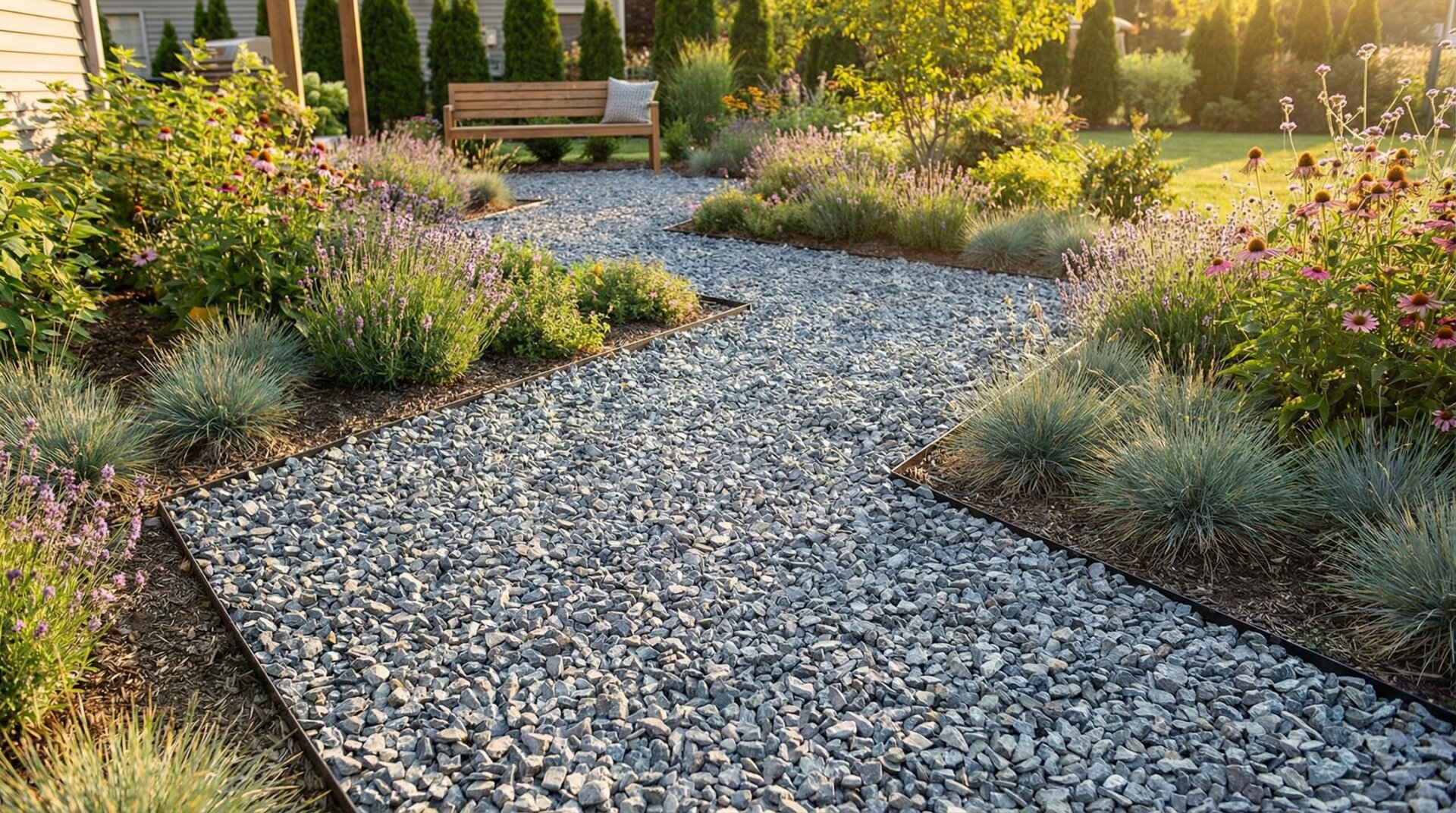
57 gravel installation focuses more on proper grading and edge restraint since the material doesn’t self-compact as effectively. You’ll need adequate borders or edging to prevent the stones from migrating over time, especially in high-traffic areas.
Installation Reality: Most successful driveway projects use both materials, with crusher run as the base layer and 57 gravel as a top dressing for improved appearance and drainage.
Both materials transport easily in dump trucks, but crusher run requires more careful handling during delivery to prevent segregation of the fine and coarse materials. Proper storage on-site also matters more with crusher run, as rain can wash away the crucial fine particles that provide binding strength.
The choice between crusher run and 57 gravel ultimately depends on your project’s primary requirements. For maximum durability and load-bearing capacity, crusher run delivers unmatched performance. When drainage and aesthetics take priority, 57 gravel provides the ideal solution. Many successful projects actually combine both materials, using crusher run for structural support and 57 gravel for surface appeal and enhanced drainage. For more detailed comparisons of different stone sizes, check out 610 limestone versus 57 gravel to understand how limestone alternatives compare to standard crushed stone options.


 Chance Kittrell
 igor
igor