Gravel Cost Per Cubic Yard: 2025 Pricing Guide and Calculator
Get an estimate for your project in 60 seconds
 Your information is secure
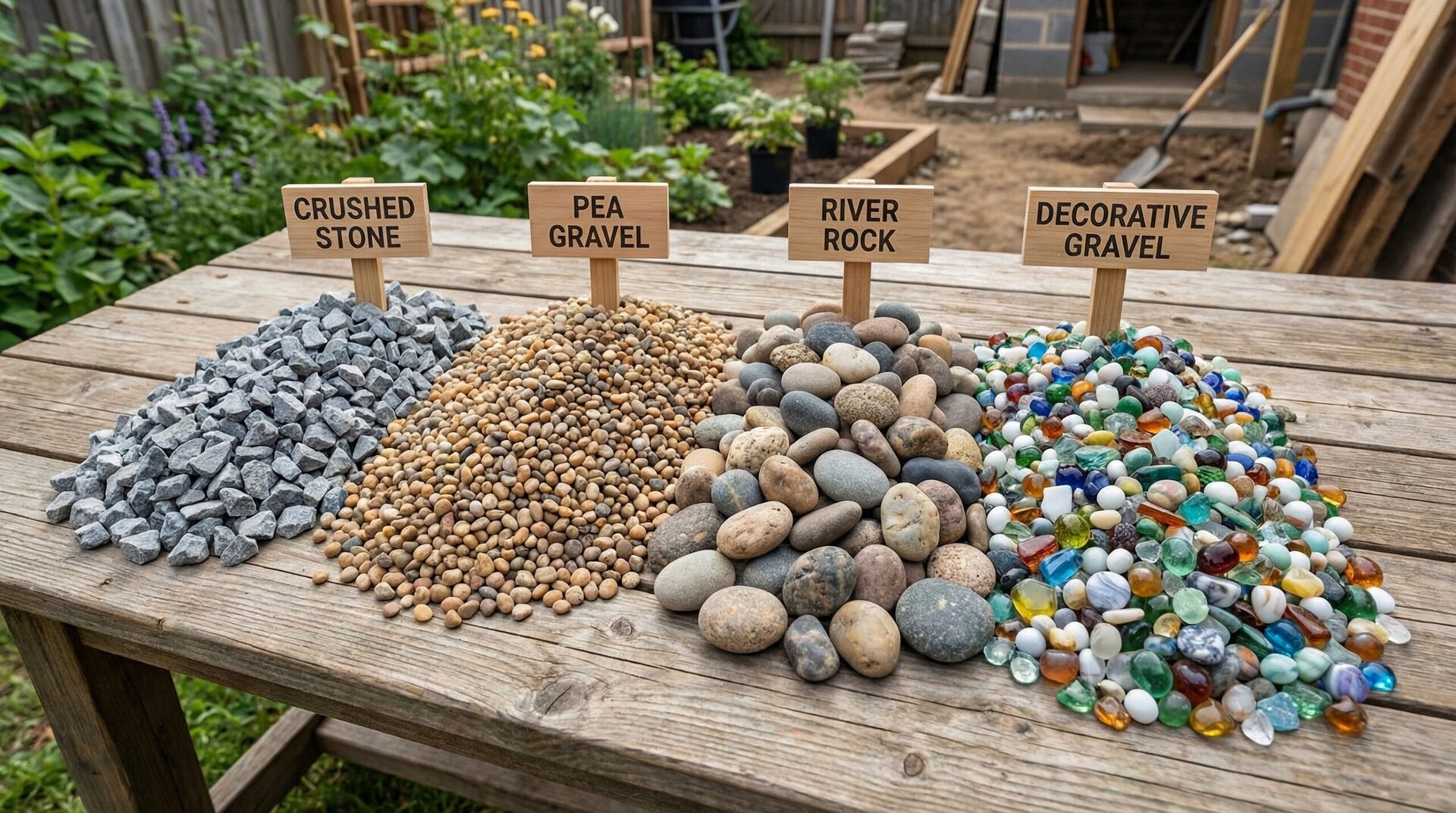
Gravel costs range from $15 to $100 per cubic yard in 2025, depending on the type and location. Crushed stone averages $25-60 per yard, while decorative options like river rock can reach $75-100 per yard. Understanding these price variations helps you budget accurately for driveways, patios, and landscaping projects.
Quick Fact: One cubic yard of gravel covers approximately 100 square feet at 3 inches deep, making it easy to calculate your project needs.
When you’re planning a gravel project, the cost per cubic yard becomes your most important number. This measurement covers a 3-foot by 3-foot area with a 1-yard depth, containing roughly 27 cubic feet of material. Most suppliers use this standard, making price comparisons straightforward across different vendors. For a broader perspective on pricing, check out our guide on the current price of gravel per yard.
Gravel pricing by type and grade
Different gravel types carry distinct price points based on their processing requirements and availability. Crushed stone, the most common choice for driveways and pathways, ranges from $25 to $60 per cubic yard. This material undergoes crushing and screening at quarries, creating angular pieces that compact well and provide excellent drainage.
Pea gravel costs between $35 and $60 per cubic yard, offering smooth, rounded stones perfect for decorative applications and walkways. Its natural appearance and comfortable texture under foot make it popular for garden paths and play areas.
River rock represents the premium end of the market at $50 to $100 per cubic yard. These naturally weathered stones create stunning visual appeal but command higher prices due to limited sourcing locations and transportation costs.

Decomposed granite and limestone screenings fall into the $30 to $50 range per cubic yard, providing budget-friendly options for pathways and base materials. These finer materials compact exceptionally well but may require more frequent maintenance than larger stone options. To understand how these prices translate to weight-based measurements, explore our comprehensive guide on the cost of gravel per ton.
Cost factors that affect your final price
Location plays a major role in gravel pricing, with transportation costs significantly impacting your total expense. If you live near quarries or gravel pits, expect lower prices due to reduced hauling distances. Urban areas typically see higher costs, while rural locations with local sources often offer competitive rates.
Quantity directly influences your per-yard cost, with bulk purchases offering substantial savings. Ordering 10 cubic yards or more typically reduces your price by $5 to $15 per yard compared to smaller quantities. However, you’ll need adequate storage space and access for delivery trucks. Learn more about the cost of bulk gravel and how volume discounts can benefit your project.
Money-Saving Tip: Timing your purchase during off-peak seasons (late fall through early spring) can save 10-20% on material costs when construction demand drops.
Delivery fees add $50 to $300 to your project cost, depending on distance and load size. Some suppliers waive delivery charges for orders exceeding specific minimums, typically 5-10 cubic yards. Consider pickup options if you have appropriate vehicle capacity and want to eliminate delivery expenses. For detailed information about transportation costs, read our guide on the cost of delivered gravel.
Project cost calculator and examples
Calculating your gravel needs starts with measuring your project area in square feet, then multiplying by your desired depth in feet. Divide this result by 27 to convert cubic feet to cubic yards. For example, a 12-foot by 20-foot driveway with 3-inch depth requires: (12 × 20 × 0.25) ÷ 27 = 2.2 cubic yards.
| Project Type | Typical Size | Cubic Yards Needed | Cost Range |
|---|---|---|---|
| Single car driveway | 10′ × 20′ | 1.9 yards | $300-$600 |
| Two car driveway | 20′ × 20′ | 3.7 yards | $550-$1,100 |
| Garden pathway | 3′ × 50′ | 1.4 yards | $225-$450 |
| Patio base | 12′ × 16′ | 1.8 yards | $275-$550 |
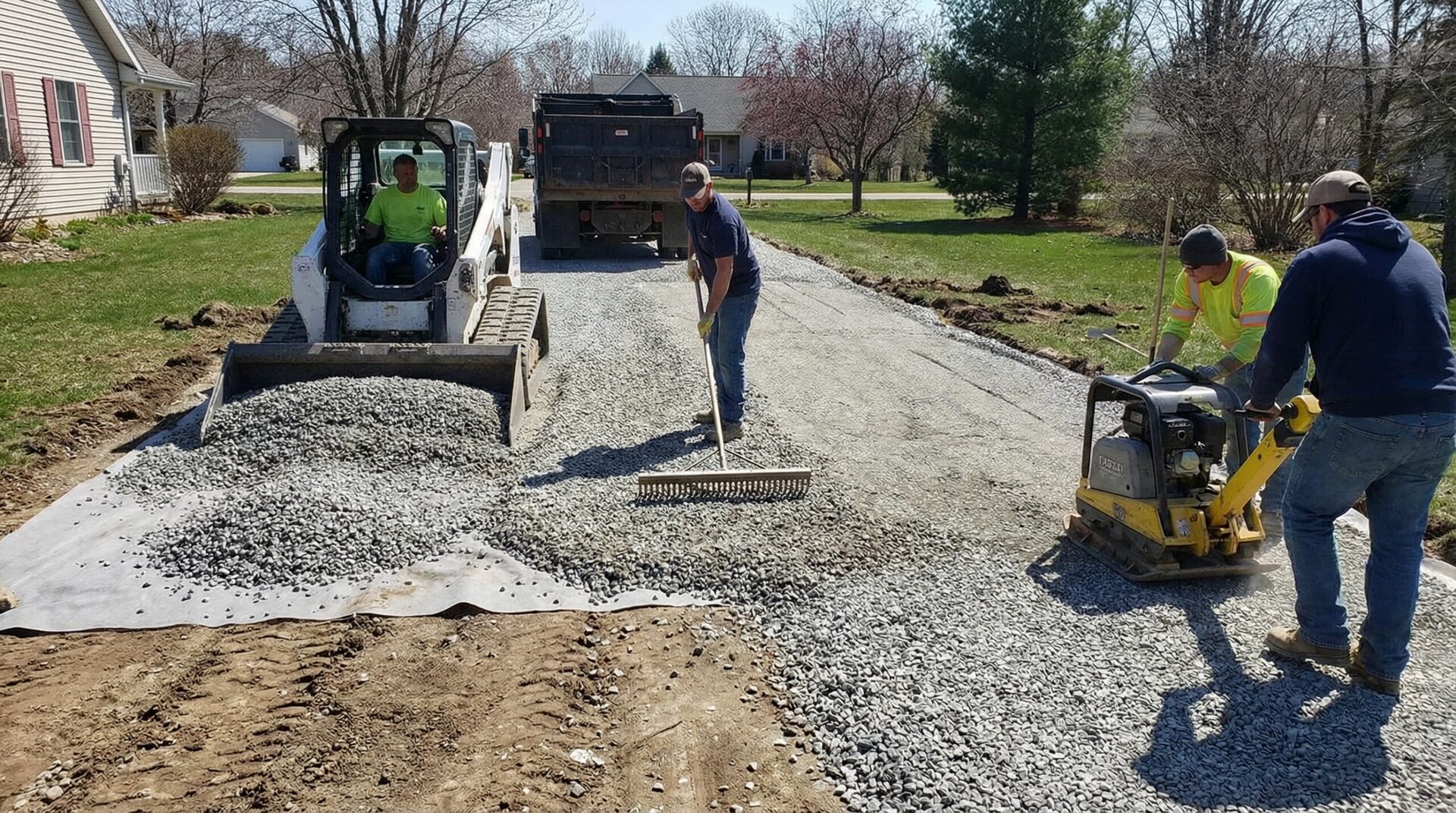
These estimates assume 3-inch depth for most applications, though driveways may benefit from 4-inch depth for heavy vehicle traffic. Always order 10% extra material to account for compaction and minor calculation variations.
Smart buying strategies and alternatives
Shopping multiple suppliers reveals significant price differences, often varying by $10-20 per cubic yard for identical materials. Request quotes from at least three vendors, comparing not just price but delivery terms, material quality, and customer service reputation. Understanding gravel delivery prices helps you evaluate the total cost accurately.
Consider seasonal timing for your purchase, as spring and summer demand drives prices higher. Fall and winter often offer better rates when construction activity slows. However, weather conditions may limit delivery and installation options during colder months.
Bagged gravel from home improvement stores costs significantly more per cubic yard, often $100-150 compared to bulk delivery. This option works for small projects under 1 cubic yard but becomes expensive for larger applications. Calculate the break-even point before choosing between bagged and bulk options.
Gravel offers excellent value compared to concrete or pavers, costing roughly $0.50-$4.00 per square foot installed versus $6-15 for concrete and $10-25 for pavers. While requiring periodic maintenance, gravel provides decades of service with proper installation and occasional refreshing. For larger projects, consider reviewing how much a dump truck load of gravel costs to optimize your purchasing strategy.
Understanding gravel costs per cubic yard empowers you to make informed decisions for your landscaping or construction project. By considering material type, quantity discounts, and timing strategies, you can achieve professional results while staying within budget. Remember to factor in delivery costs and always order slightly more material than calculated to ensure project completion without delays.

 igor
igor