Gravel Properties, Types and Uses Guide
Get an estimate for your project in 60 seconds
 Your information is secure

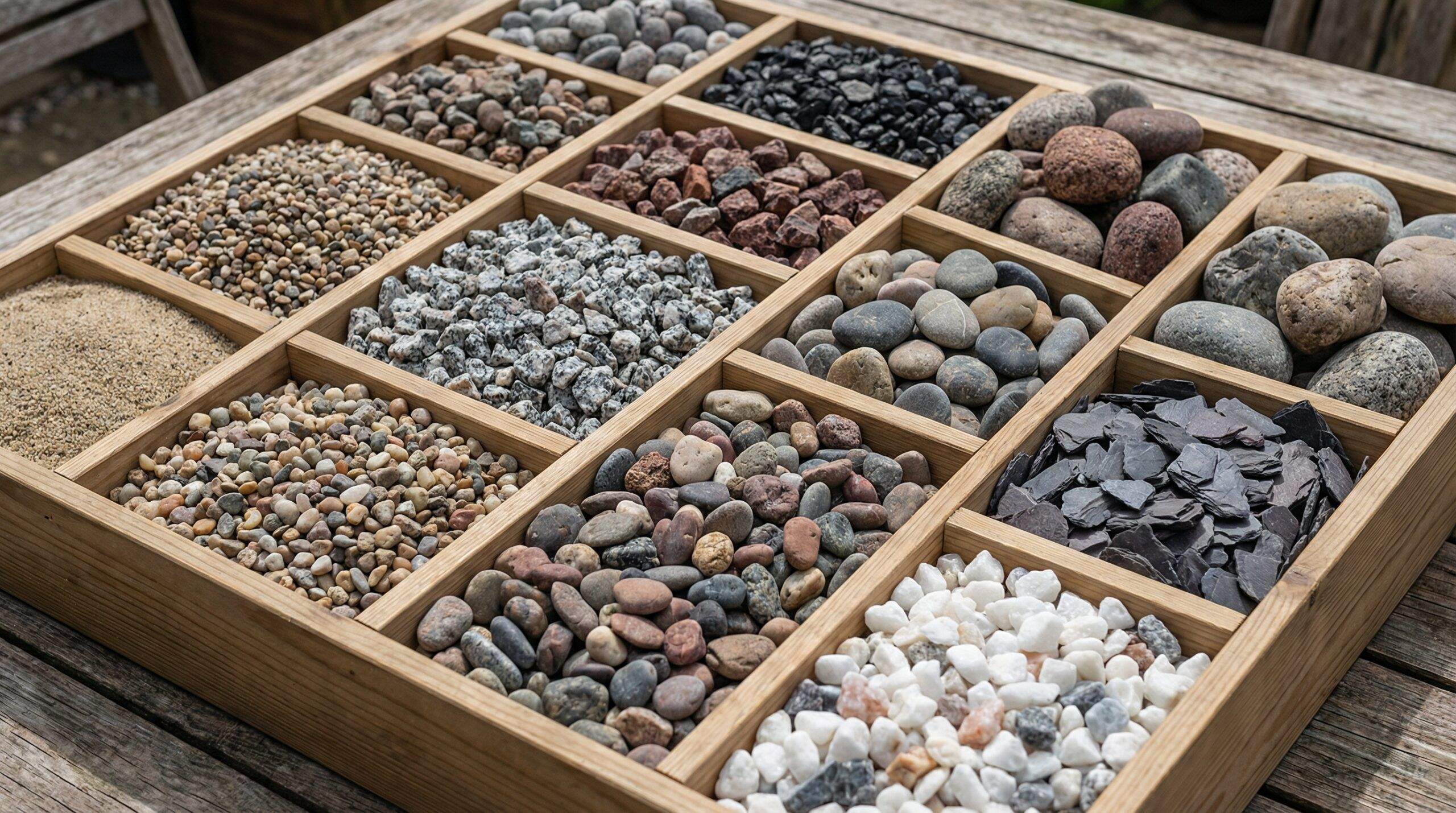
Gravel is a loose aggregation of small rock fragments ranging from 2 to 64 millimeters in diameter, formed through natural weathering and erosion processes. Understanding gravel properties, types, and applications helps you make informed decisions for construction projects, landscaping designs, and industrial applications. This guide covers everything from basic gravel formation to practical uses and environmental considerations.
Quick Fact: Gravel’s excellent drainage properties and load-bearing capacity make it essential for road construction, with over 2 billion tons used annually in the United States alone according to the U.S. Geological Survey.
What is gravel and how does it form
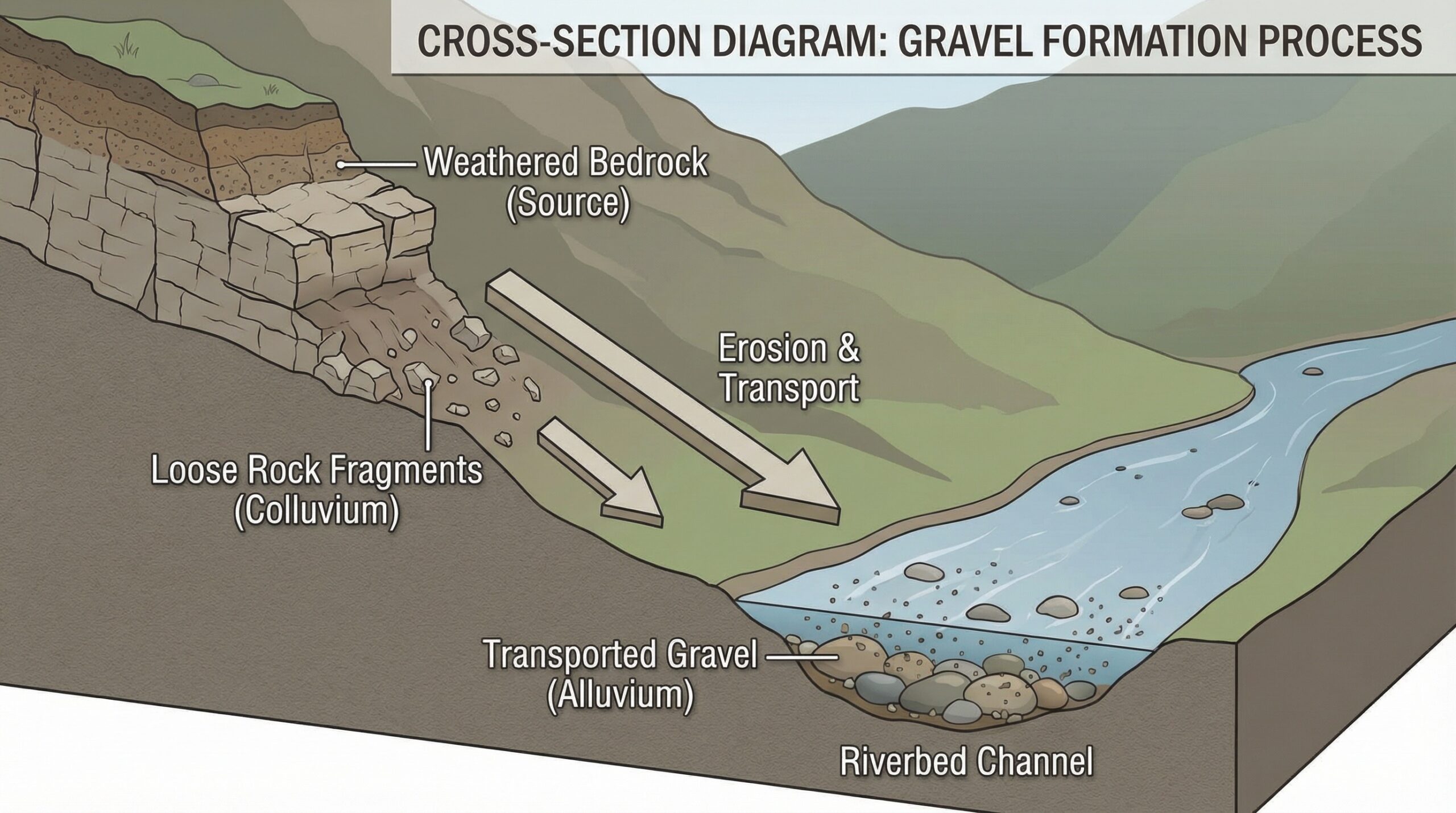
Gravel forms through millions of years of geological processes where larger rocks break down into smaller fragments. Wind, water, and temperature changes gradually weather solid rock formations, creating the rounded and angular pieces we recognize as gravel today.
The formation process begins when exposed bedrock experiences freeze-thaw cycles, chemical weathering, and physical erosion. Rivers and streams then transport these rock fragments, tumbling them against each other and smoothing their edges. This natural sorting process creates deposits in riverbeds, floodplains, and coastal areas where grava rocks accumulate over time.
Different geological environments produce distinct gravel characteristics. Mountain streams create angular fragments with sharp edges, while ocean waves produce smooth, rounded pebbles. Understanding this formation process helps explain why certain gravel types work better for specific applications.
Common types of gravel and their characteristics
Bank gravel
Bank gravel consists of naturally occurring deposits found in riverbanks and floodplains. These deposits contain mixed sizes and shapes, creating visually diverse material perfect for natural landscaping projects. The varied composition provides good drainage while maintaining an organic appearance that blends with outdoor environments.
Crushed stone gravel
Crushed stone gravel is mechanically produced by crushing larger rocks into uniform pieces. This process creates angular fragments with sharp edges that interlock tightly, providing excellent stability for construction applications. The controlled sizing makes it ideal for road bases, driveways, and foundation work where consistent performance matters. For specific construction needs,Number 3 gravel offers excellent versatility and load-bearing properties.
Pea gravel
Pea gravel features small, rounded stones typically measuring 2 to 8 millimeters in diameter. Its smooth texture and decorative appearance make it popular for garden pathways, playground surfaces, and decorative landscaping. The rounded shape provides comfortable walking surfaces while allowing excellent water drainage.
| Type | Size Range | Shape | Best Uses |
|---|---|---|---|
| Bank Gravel | Mixed 2-64mm | Varied | Natural landscaping |
| Crushed Stone | Uniform 5-40mm | Angular | Construction, roads |
| Pea Gravel | 2-8mm | Rounded | Pathways, drainage |
Physical and chemical properties of gravel
Gravel exhibits diverse physical characteristics that determine its suitability for different applications. Size variations range from fine pebbles to larger stones, with each size offering specific advantages. Understanding gravel rock size is crucial for selecting the right material for your project, as larger gravels provide superior load-bearing capacity and stability, making them essential for heavy-duty construction projects.
Shape significantly impacts gravel performance. Angular pieces with sharp edges lock together effectively, creating stable surfaces that resist shifting under pressure. Rounded gravels offer smoother textures and better drainage but may shift more easily under heavy loads.
Important Note: Gravel composition directly affects durability, with quartz-rich varieties offering superior hardness and weather resistance compared to softer mineral compositions.
Color and texture variations depend on the source rock composition. Common minerals include quartz, feldspar, and mica, each contributing different properties. Quartz provides hardness and durability, feldspar adds density and stability, while mica can enhance thermal properties. These mineral combinations create the wide range of colors and textures available in different gravel types.
The chemical composition influences long-term performance and compatibility with other materials. Understanding these properties helps ensure proper material selection for specific environmental conditions and project requirements. When comparing materials, it’s helpful to understand the difference between gravel and pebbles to make the best choice for your application.

Practical uses of gravel in construction and landscaping
Construction applications
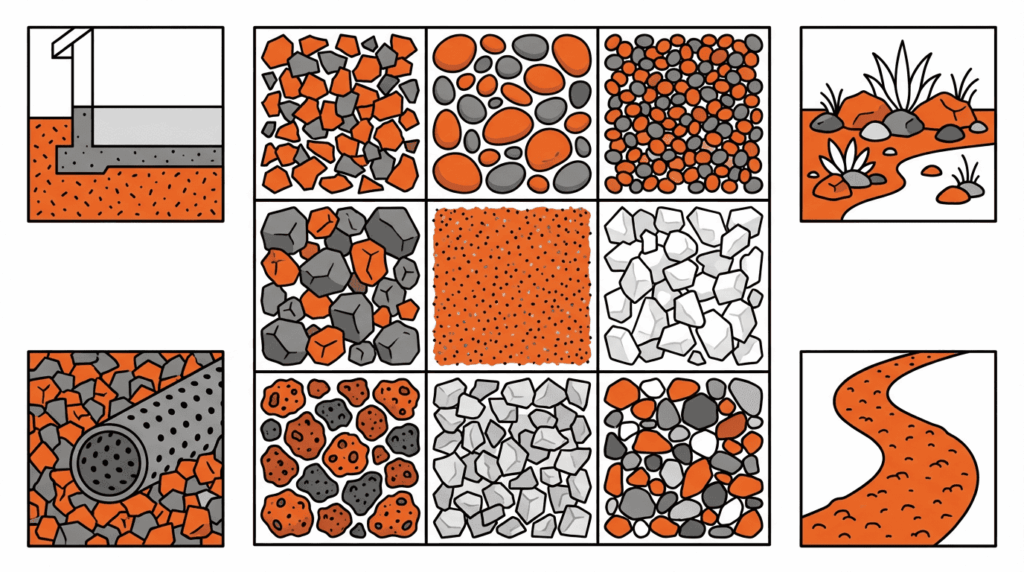
Gravel serves as a fundamental construction material for roads, driveways, and building foundations. Its load-bearing capacity and drainage properties make it essential for creating stable, long-lasting structures. Road construction relies heavily on graded gravel bases that distribute weight evenly and prevent pavement failure.
Foundation work benefits from gravel’s drainage capabilities, which prevent water accumulation that could compromise structural integrity. The material’s ability to compact while maintaining porosity creates ideal conditions for concrete placement and curing. When planning large-scale projects, understanding how much a tonne of stones weighs and its coverage capacity is essential for accurate material estimation.
Landscaping and decorative uses
Landscaping projects utilize gravel for both functional and aesthetic purposes. Garden pathways benefit from gravel’s natural drainage and low maintenance requirements. The material effectively suppresses weed growth while allowing water infiltration to plant roots.
Decorative applications include rock gardens, water features, and border definition. Different colors and textures enable creative design options that complement various architectural styles and natural environments.
Pro Tip: Choose angular gravel for high-traffic areas and rounded varieties for decorative applications where comfort and appearance matter most.
Industrial applications
Beyond construction and landscaping, gravel finds extensive use in industrial processes. Water treatment facilities use graded gravel as filtration media, taking advantage of its porosity and chemical stability. The material effectively removes particles while allowing water flow.
Concrete and asphalt production require specific gravel grades to achieve desired strength and workability characteristics. Manufacturing processes also utilize gravel in glass production and as aggregate in various composite materials.
Environmental considerations and sustainable practices
Gravel extraction through mining operations can significantly impact local ecosystems. These activities may alter natural water courses, disrupt wildlife habitats, and affect surrounding vegetation. Responsible extraction practices minimize environmental damage while meeting material demands.
Sustainable alternatives include recycled gravel from demolished structures and development of substitute materials. Recycling programs reduce the need for new extraction while diverting waste from landfills. These practices help balance economic needs with environmental protection.
Modern mining operations implement restoration programs that rehabilitate extraction sites after completion. These efforts restore natural habitats and create beneficial land uses such as wetlands or recreational areas. Understanding these environmental aspects helps inform responsible material choices.
The future of gravel use depends on balancing practical benefits with environmental stewardship. Continued development of sustainable practices and alternative materials will ensure this versatile resource remains available for future generations while protecting natural ecosystems.
Gravel’s versatility and essential properties make it indispensable across multiple industries. From providing stable road foundations to creating beautiful garden features, this natural material continues serving diverse needs while evolving toward more sustainable practices. Understanding gravel characteristics and applications enables informed decisions that benefit both projects and the environment.

 Chance Kittrell