Gravel Size Chart with Pictures: Find the Perfect Stone Size for Your Project
Get an estimate for your project in 60 seconds
 Your information is secure
Choosing the wrong gravel size can turn your dream driveway into a maintenance nightmare or make your garden path uncomfortable to walk on. The difference between #3 stone and pea gravel might seem small, but it can make or break your project’s success.
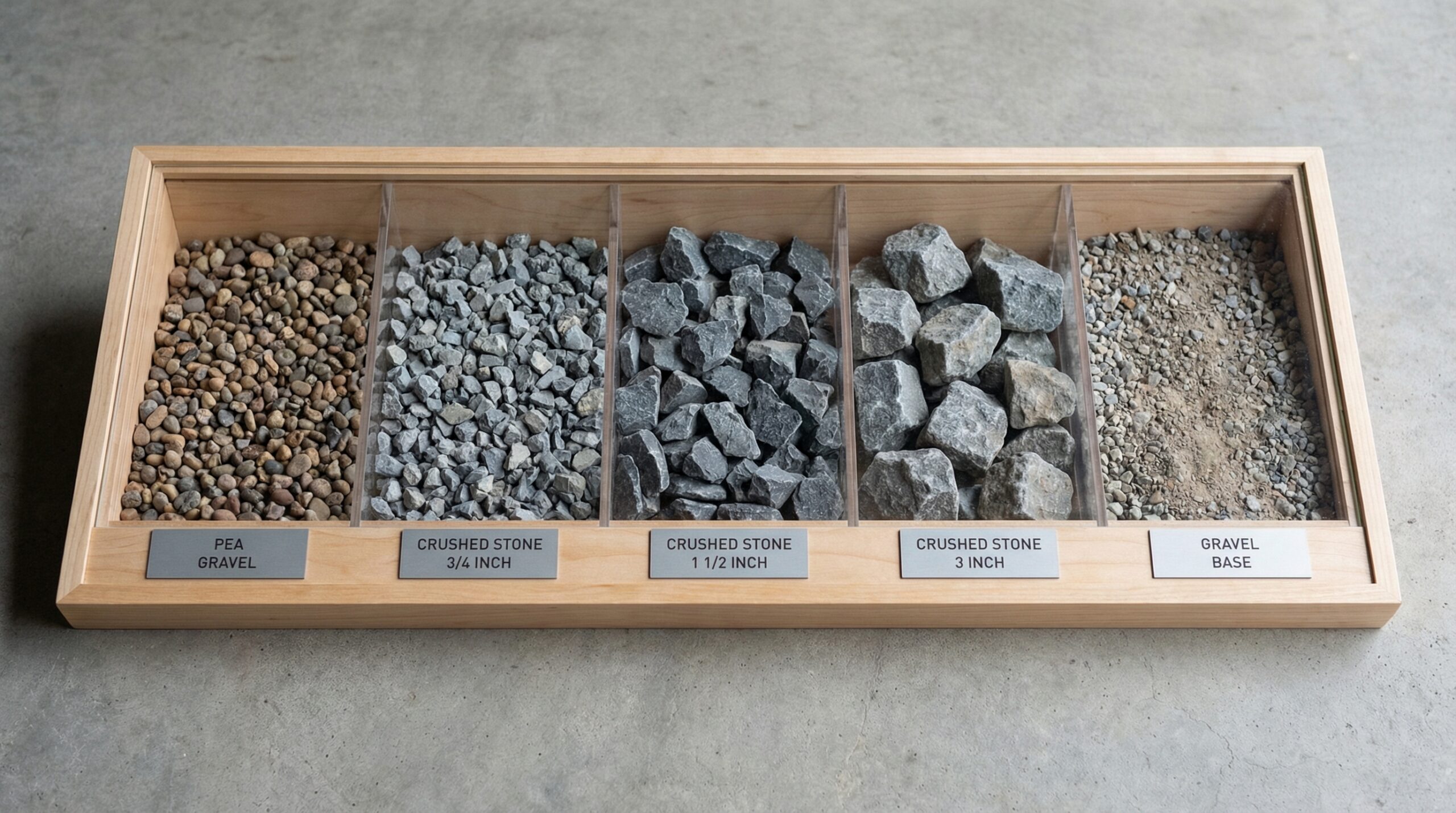
This comprehensive gravel size chart will help you select the perfect stone size for any project. You’ll learn how gravel sizes are measured, see visual comparisons of common grades, and get specific recommendations for driveways, walkways, drainage systems, and landscaping projects.
Quick Answer: For driveways, use #3 or #4 stone for the base and #57 stone for the surface. Walkways work best with pea gravel or #8 stone. French drains need #57 stone for optimal water flow.
Key takeaways from this guide:
– Gravel sizes range from fine screenings (under ¼ inch) to large riprap (12+ inches)
– Different projects require specific size ranges for stability and drainage
– The grading system uses numbers like #3, #57, and #89 to indicate stone size ranges
– Proper size selection prevents shifting, poor drainage, and premature wear
Understanding gravel sizes and grades
Gravel isn’t just crushed rock thrown together randomly. Each type goes through a careful sizing process called gradation, where stones are sorted by passing them through screens with different opening sizes.
The numbering system might seem confusing at first, but it’s actually straightforward. Smaller numbers like #3 indicate larger stones, while bigger numbers like #89 represent smaller stones. This system helps contractors and homeowners communicate exactly what size material they need. For a deeper dive into how this classification works, check out our guide on understanding the numbering system for gravel.
How gravel sizes are measured
The gradation process uses a series of screens stacked on top of each other, with the largest openings at the top. As material passes through, stones separate into different size categories. Each grade allows a range of stone sizes, not just one specific measurement.
For example, #57 stone typically ranges from ½ inch to 1 inch, with most stones falling around ¾ inch. This size variation actually helps with compaction and stability because smaller stones fill gaps between larger ones.
What do #3, #57, and #89 stone mean?
Here are the most common gravel grades you’ll encounter:
#3 Stone: 1-2 inches, used for driveway bases and heavy-duty applications
#57 Stone: ½-1 inch, perfect for driveways, drainage, and general construction
#8 Stone: ⅜-½ inch, ideal for walkways and decorative applications
#89 Stone: ¼-⅜ inch, great for pathways and around pavers
Gravel size chart with measurements and uses
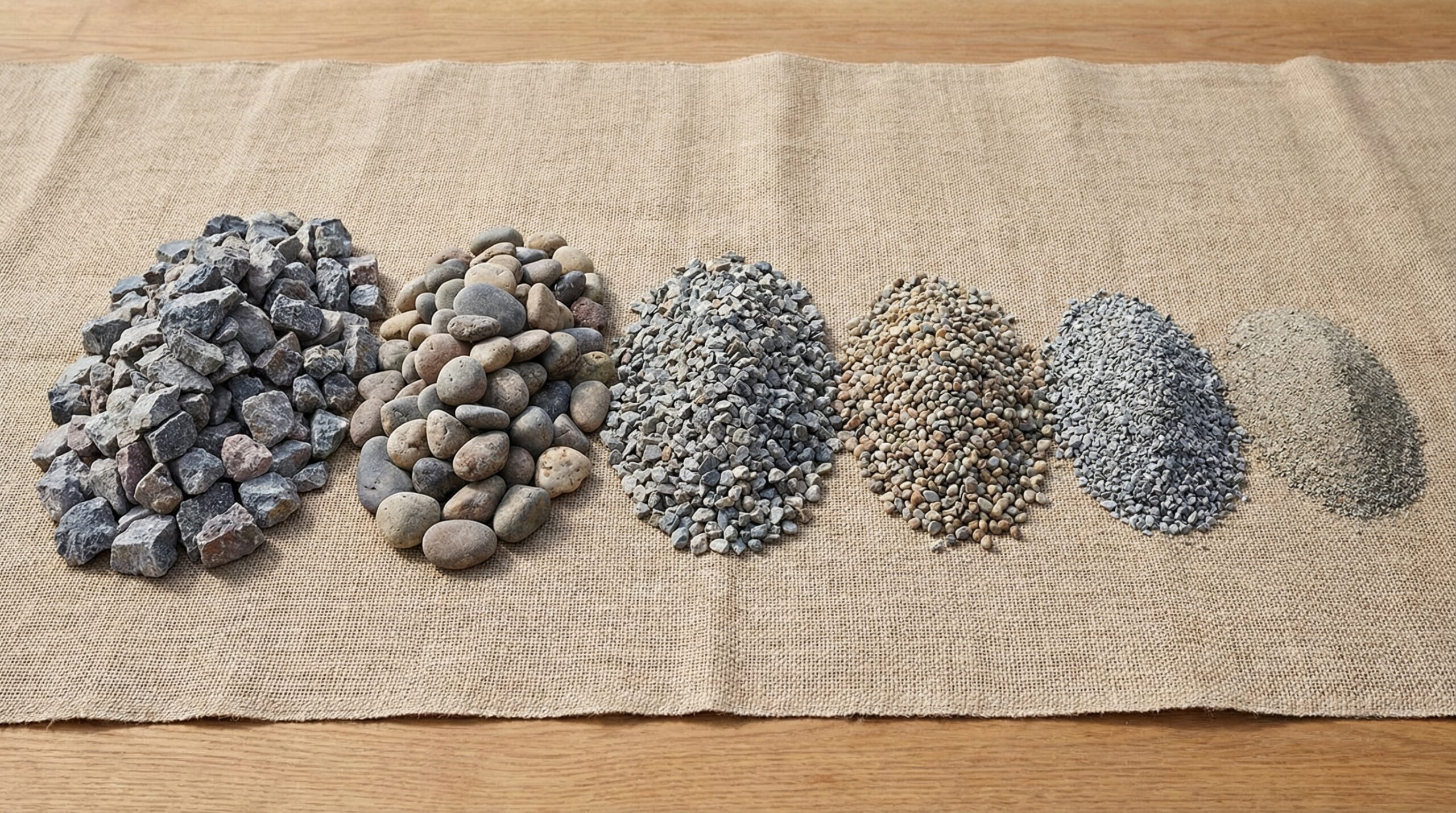
| Grade/Name | Size Range (inches) | Size Range (mm) | Shape/Type | Best Uses |
|---|---|---|---|---|
| #3 Stone | 1-2 | 25-50 | Angular crushed | Driveway base, heavy traffic areas |
| #57 Stone | ½-1 | 12-25 | Angular crushed | Driveways, drainage, general construction |
| #67 Stone | ¼-¾ | 6-19 | Angular crushed | Concrete mix, surface applications |
| #8 Stone | ⅜-½ | 9-12 | Angular crushed | Walkways, around pavers |
| #89 Stone | ¼-⅜ | 6-9 | Angular crushed | Pathways, decorative borders |
| Pea Gravel | ¼-½ | 6-12 | Rounded smooth | Garden paths, play areas, decorative |
| River Rock | 1-3 | 25-75 | Rounded smooth | Landscaping, erosion control |
| Screenings | Under ¼ | Under 6 | Fine particles | Base compaction, between pavers |
How to read this gravel size chart
Start by identifying your project type, then match it to the recommended size range in the chart. Consider your specific needs for drainage, traffic load, and appearance. Always confirm availability with your local supplier, as some regions may have slightly different sizing standards. For a more detailed breakdown of aggregate classifications, explore our comprehensive aggregate sizes chart.
Pro Tip: When in doubt between two sizes, choose the smaller option for better compaction and the larger option for better drainage.
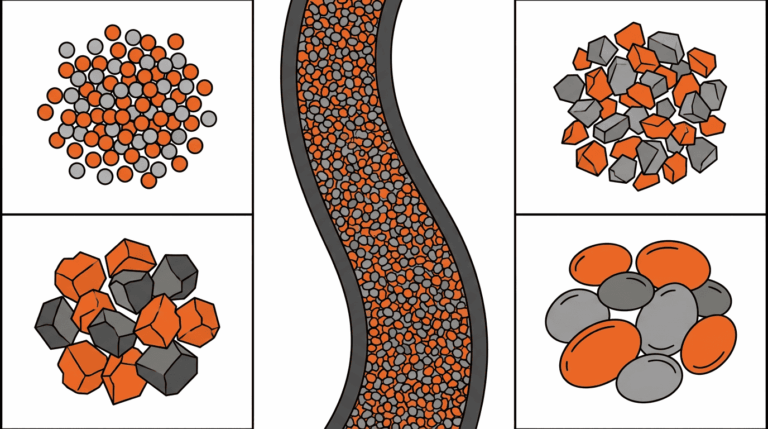
Common types of gravel and their size ranges
Understanding the different gravel types helps you make better decisions for your specific project needs. Each type has unique characteristics that make it suitable for particular applications. Our guide to common gravel sizes provides additional insights into these variations.
Pea gravel
Pea gravel gets its name from its small, rounded shape that resembles garden peas. Typically ranging from ¼ to ½ inch, these smooth stones are comfortable to walk on and create an attractive, natural appearance.
This gravel works perfectly for garden pathways, children’s play areas, and decorative landscaping beds. The rounded edges won’t hurt bare feet, making it ideal for areas around pools or patios where people might walk without shoes.
Crushed stone
Crushed stone features angular edges that help pieces lock together for superior stability. Available in multiple grades from fine screenings to 2-inch chunks, crushed stone forms the backbone of most construction projects.
The angular shape makes crushed stone excellent for driveways because it compacts well and resists shifting under vehicle weight. Popular sizes include #57 for general driveway use and #8 for walkway surfaces. For construction-specific applications, review our comprehensive guide to construction stone sizes.
River rock
River rock offers a more decorative option with its naturally rounded shape and varied colors. Ranging from 1 to 3 inches or larger, these stones create beautiful landscape features while providing practical benefits.
Use river rock for dry creek beds, garden borders, and erosion control on slopes. The larger size means less shifting, but it’s not ideal for areas requiring smooth, level surfaces.
How to choose the right gravel size for your project
Selecting the perfect gravel size involves balancing several factors that affect both function and appearance. The key is understanding how each factor influences your project’s success.
Key factors to consider
Traffic level determines much of your size selection. Heavy vehicle traffic requires larger, more stable stones like #3 or #57, while light foot traffic can use smaller, more comfortable options like pea gravel or #8 stone.
Drainage needs also influence size choice. Larger stones create more void space for water flow, making them perfect for French drains and areas with drainage concerns. Smaller stones compact tighter but may not drain as effectively.
Consider your local climate and soil conditions too. Areas with freeze-thaw cycles benefit from well-draining gravel that won’t shift when ground moisture changes. Slopes may need larger stones to resist erosion during heavy rains.
Common mistakes to avoid
Don’t use decorative pea gravel where you need structural stability. While beautiful, pea gravel shifts easily under vehicle weight and isn’t suitable for driveways or high-traffic areas.
Avoid ignoring your base layer requirements. Even the best surface gravel won’t perform well without proper foundation preparation using appropriate base materials like #3 stone or crusher run.
Recommended gravel sizes for common projects
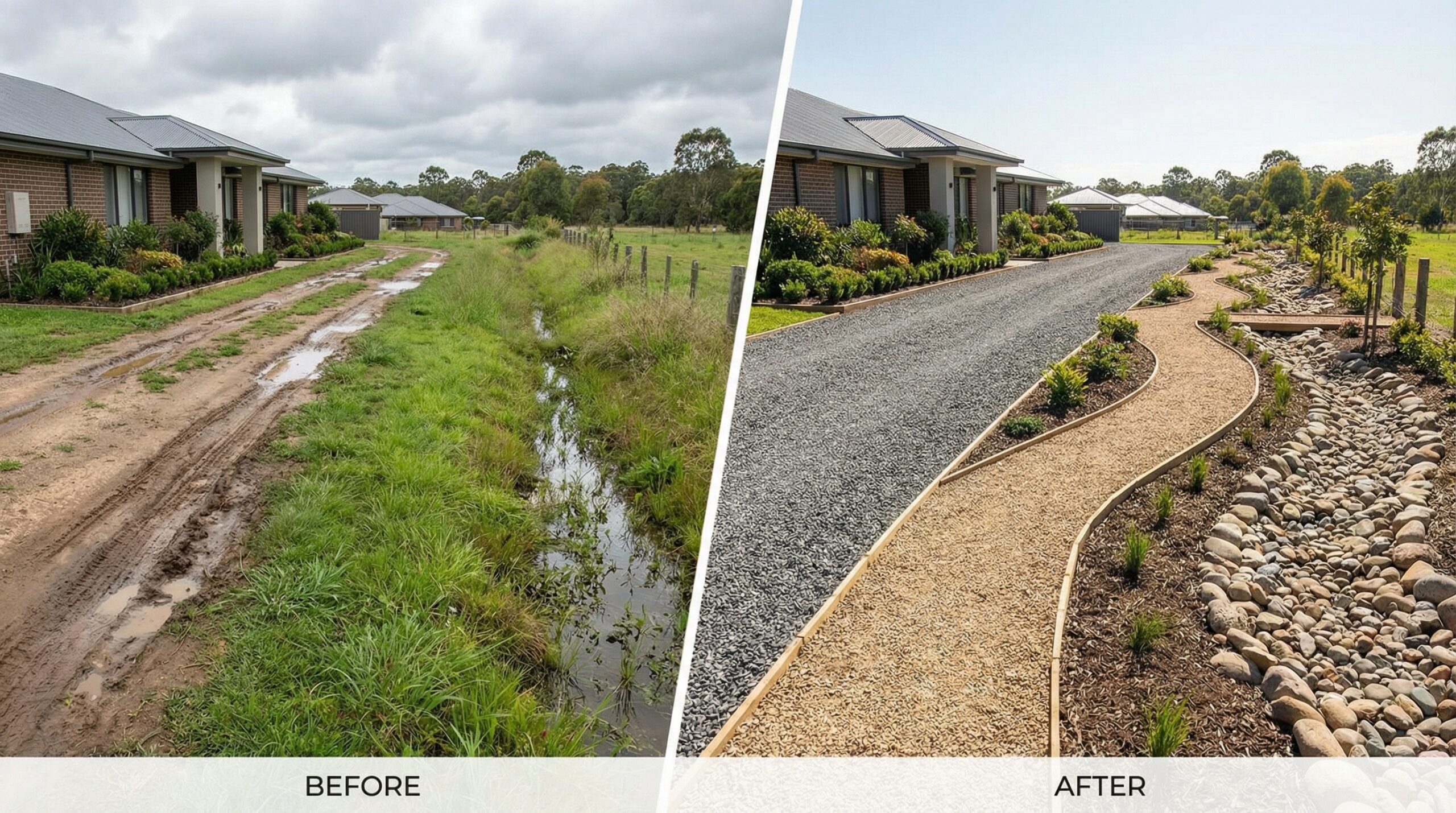
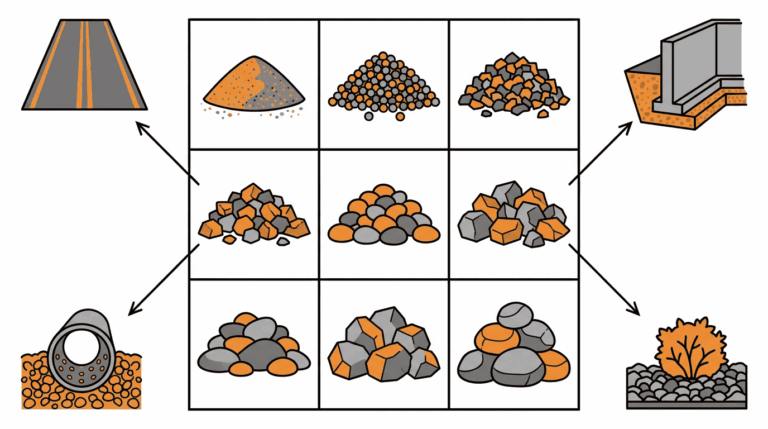
Different projects have specific requirements that determine the best gravel size for optimal performance and longevity.
Driveways and parking areas
Successful driveways use a layered approach with different gravel sizes. Start with a 4-6 inch base layer of #3 or #4 stone for stability, then add 2-3 inches of #57 stone for the driving surface.
This combination provides the structural strength to handle vehicle weight while creating a surface that’s comfortable to drive and walk on. The larger base stones won’t shift under load, while the smaller surface stones create a smoother finish. For more specific driveway recommendations, consult our ultimate driveway stone size chart.
Walkways and garden paths
Walkways need comfortable, stable surfaces that won’t shift underfoot. Pea gravel, #8 stone, or #89 stone work excellently for most pathway applications.
For formal pathways, consider #8 stone for its angular stability. For casual garden paths, pea gravel offers comfort and natural beauty. Both options provide good drainage while remaining easy to walk on.
Drainage and French drains
French drains require specific gravel characteristics for optimal water flow. #57 stone hits the sweet spot with enough void space for water movement while maintaining structural integrity.
Clean #57 stone without fines works best because smaller particles can clog drainage over time. The uniform size creates consistent void spaces that allow water to flow freely through the system.
Important: Always use clean gravel for drainage applications. Stone with too many fines will reduce water flow and defeat the purpose of your drainage system.
How much gravel do you need?
Calculating the right amount of gravel prevents costly overages or project delays from running short. The process is straightforward once you understand the basic formula.
Simple formula for calculating gravel volume
Multiply length times width times depth to get cubic feet, then divide by 27 to convert to cubic yards. Most gravel suppliers sell by the cubic yard, so this conversion is essential for accurate ordering.
For example, a 12-foot by 20-foot driveway with 3 inches of gravel needs: 12 × 20 × 0.25 = 60 cubic feet, or 60 ÷ 27 = 2.2 cubic yards.
Example calculation
Let’s calculate gravel for a typical two-car driveway measuring 16 feet wide by 40 feet long with a 3-inch gravel layer:
16 × 40 × 0.25 = 160 cubic feet
160 ÷ 27 = 5.9 cubic yards
Round up to 6.5 cubic yards to account for compaction and ensure you have enough material to complete the project properly.
Where to buy gravel and what to ask your supplier
Finding the right supplier ensures you get quality materials at fair prices with reliable delivery. Local landscape supply yards often offer the best combination of price, quality, and service for most homeowners.
When contacting suppliers, have your project details ready including total square footage, desired depth, and intended use. Ask about delivery options, minimum order quantities, and whether they offer installation services.
Quality suppliers will help you select the right gravel size and can often provide valuable local insights about what works best in your area’s climate and soil conditions. For landscape-specific projects, our comprehensive landscape stone size chart can help you make the best selection.
Order the right gravel size with Hello Gravel
Choosing the perfect gravel size doesn’t have to be complicated when you have expert guidance. Hello Gravel specializes in helping homeowners and contractors select the ideal materials for any project.
Our team understands how gravel size affects project success and can recommend the perfect grade for your specific needs. We offer convenient online ordering with delivery directly to your project site, taking the guesswork out of gravel selection.
Whether you’re building a new driveway, creating garden pathways, or installing drainage systems, we’ll help you choose the right size and calculate exactly how much you need.
With proper gravel size selection, your project will look great and perform reliably for years to come. The key is matching stone size to your specific application while considering factors like traffic, drainage, and local conditions. Take time to plan your gravel selection carefully, and you’ll enjoy the results for decades.

 igor
igor