Gravel vs. Pavers vs. Concrete: What’s the Best Base for Fire Pits?
Get an estimate for your project in 60 seconds
 Your information is secure
Gravel is the most affordable and easiest option for fire pit areas, costing $100–$300 for materials and requiring minimal installation skills. Pavers offer a more polished look at $400–$1,200, with better long-term durability but more complex installation. Concrete provides the most permanent solution at $500–$2,000, though it can crack over time and limits future redesigns. Most DIY homeowners choose gravel for fire pits because it drains well, prevents embers from spreading, and can be installed in a single weekend.
Planning a fire pit area means choosing the right base material. The three most common options are gravel, pavers, and concrete. Each has different costs, installation requirements, and long-term performance. This guide compares all three to help you decide which fits your project.
What Makes a Good Fire Pit Base?
A fire pit base needs to meet specific safety and practical requirements. The surface must be non-flammable. Grass, mulch, and wood decking are unsafe because stray embers can ignite them. The base should provide stable footing. Chairs and heavy fire pit structures need a level surface that won’t shift or settle over time.
Good drainage prevents water from pooling around your fire pit. Standing water can damage the base and create muddy conditions. The material should also be able to handle heat exposure. Fire pits can reach temperatures above 800°F, which can crack or damage some surfaces.
How Do the Materials Each Perform as a Fire Pit Base?

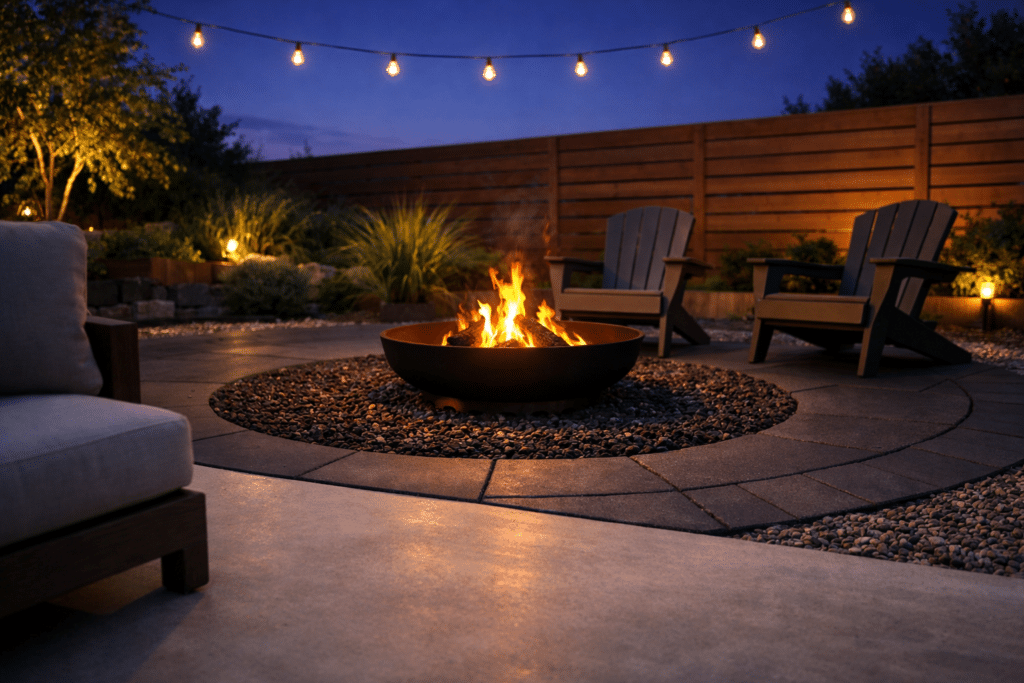
Gravel is the most popular choice for fire pit areas. Crushed limestone compacts well, creating a solid base for seating and heavy items, and it offers excellent drainage. For most fire pit projects, a 3 to 4-inch depth of gravel is standard. Gravel also provides a non-flammable ground cover that protects against stray embers. This makes it safer than grass or organic materials. Although gravel can feel rough underfoot compared to smooth pavers. Some homeowners find this less comfortable for barefoot use.
Pavers create a more finished appearance than gravel. Concrete pavers can withstand heat from fire pits and provide long-lasting durability. They come in various colors, shapes, and textures to match different design preferences. Its installation requires more skill than gravel. Poor base preparation can lead to settling and uneven surfaces. Pavers are also heavy and time-consuming to install. A 12-foot area might require moving several hundred pounds of material.
Concrete, however, creates a permanent, smooth surface. Concrete offers durability and can withstand high temperatures, though it is prone to hairline cracks that can expand over time. Proper installation and a secure base help prevent this issue. Although a crucial limitation is that once you choose a specific concrete design, you cannot change it, and this permanence can limit future redesign options. Concrete is the least forgiving option if you later want to relocate your fire pit or change your backyard layout.
Which Base Material Costs the Least?
Gravel is the most budget-friendly option for fire pit areas. For a typical 12-foot diameter space, material costs run between $100 and $300. Installation can be done DIY with basic tools, keeping total project costs under $400 for most homeowners.
Pavers represent a mid-range investment. Materials alone cost $400 to $1,200 for the same size area. Professional installation adds another $200 to $400 if you hire help, bringing total costs to somewhere between $600 and $1,600.
Concrete sits at the high end of the budget spectrum. Expect to spend $500 to $2,000 for materials and professional installation combined. DIY concrete work is possible but requires experience and specialized tools that most homeowners don’t have on hand.
Note: Labor costs vary by region and project complexity. Simple above-ground installations cost less than in-ground fire pits.
How Long Does Each Base Material Last?
Durability varies significantly between materials. Gravel is relatively low-maintenance, requiring occasional raking and periodic refilling as it settles or gets displaced. With proper maintenance, a gravel base can last 10 to 15 years before needing replacement.
Concrete pavers provide durability and can handle heat exposure with proper installation. Quality pavers last 20 to 30 years with minimal maintenance beyond cleaning and occasional re-leveling.
Concrete fire pit installations offer strength and weather resistance, lasting many years with proper care. Well-installed concrete can last 15 to 25 years, though cracking may occur sooner in freeze-thaw climates.
Which Base Works Best for Different Fire Pit Types?
Your fire pit style affects which base material works best. Portable metal fire pits work well on any of the three bases. Gravel is the easiest and most affordable choice. Place a few flat stones under the fire pit legs to prevent wobbling on gravel.
In-ground fire pits need a stable, non-shifting base. Pavers or concrete work better than gravel for these installations. The permanent nature of in-ground pits matches well with permanent base materials.
Large masonry fire pits require substantial support. Concrete provides the most stable foundation for heavy stone or brick structures. The weight of masonry fire pits can cause gravel or pavers to settle unevenly.
DIY fire pit kits typically specify base requirements in their instructions. Most work well with gravel or pavers. Check manufacturer guidelines before choosing your base material.
What Safety Considerations Apply to Fire Pit Bases?
All three base materials are non-flammable and safe for fire pit use. You should place your fire pit at least 10 to 20 feet from structures, trees, and flammable materials. Local fire codes may specify minimum distances.
Note: Always make sure to check local regulations before installation. Some municipalities require permits for permanent fire pit installations, especially those using gas lines.
Ensure the base is level to prevent logs from rolling out of the fire pit. An uneven surface creates tipping hazards for both the fire pit and seating. Use only dense, heat-resistant stones for any rock borders or decorative elements. Sedimentary rocks and river rocks can trap moisture and explode when heated.
Which Base Material Should You Choose?
The best choice depends on your budget, DIY skills, and long-term plans. Gravel makes the most sense when you want the most affordable option and need a project you can complete in one weekend. It works especially well when drainage is a primary concern or when you might relocate or redesign your backyard later. The flexibility and low cost make it the default choice for most DIY homeowners.
Pavers fit projects where you want a more polished appearance and you’re comfortable with a multi-day installation timeline. They work best when you plan to keep the fire pit in place long-term and you want easier maintenance than concrete provides. The ability to replace individual pavers also adds long-term value.
Concrete suits situations where you want the smoothest, most permanent surface and you’re hiring professional installers. It delivers maximum stability for heavy fire pit structures, though you’ll pay higher upfront costs. The permanence works well only when you’re certain about the location and design.
Material Tip: For most DIY homeowners, gravel offers the best balance of cost, ease of installation, and performance. It handles drainage well, installs quickly, and costs significantly less than pavers or concrete.
Once you’ve calculated how much gravel you need for your fire pit area, you can order the right amount of material through Hello Gravel. Accurate measurements and the right material type make the installation process much smoother. Contact Hello Gravel today to order all your construction, landscape, and DIY project materials in bulk.
Frequently Asked Questions
Can you put a fire pit directly on gravel?
Yes, gravel is non-flammable and provides a stable, heat-resistant surface for fire pits.
Can you combine different base materials?
Many homeowners use multiple materials for better results. A common approach uses crushed limestone as the primary base with a layer of decorative pea gravel on top. This combines the compaction benefits of limestone with the appearance of pea gravel.
How deep should gravel be for a fire pit base?
A depth of 3 to 4 inches is standard for most fire pit areas, with 6 to 8 inches of excavation including the gravel layer.
Do pavers crack from fire pit heat?
Quality concrete or stone pavers withstand fire pit heat when properly installed with expansion gaps between stones.
What type of gravel works best under fire pits?
Crushed limestone compacts well and provides excellent drainage for fire pit areas.
Can you install pavers over existing gravel?
Yes, existing gravel can serve as the base layer if it’s properly compacted and leveled before adding pavers.


 Chance Kittrell