How long does aggregate sealer take to dry
Get an estimate for your project in 60 seconds
 Your information is secure

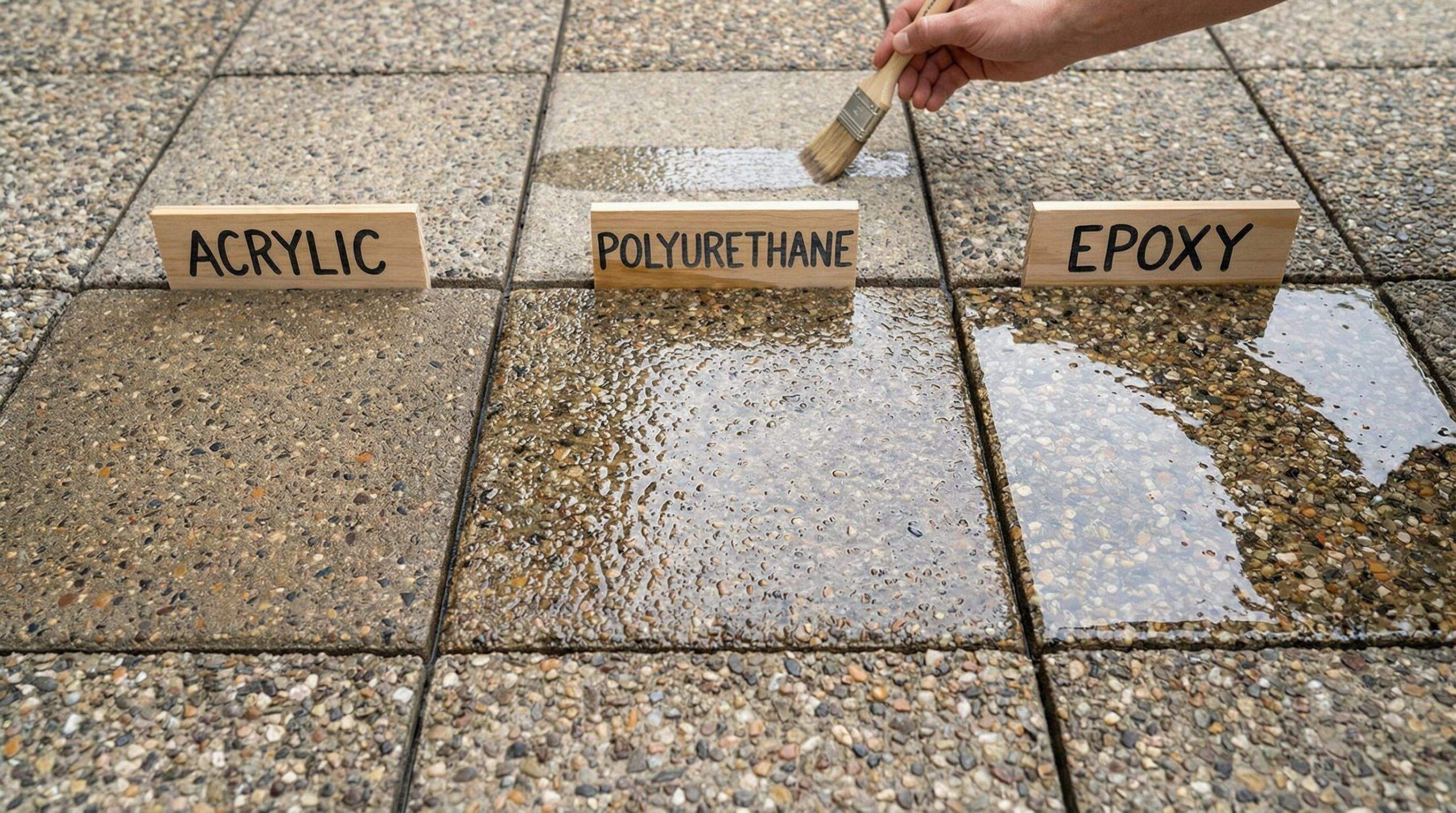
If you’re planning to seal your aggregate surface, you’re probably wondering exactly how long you’ll need to wait before using it again. The answer depends on several factors, but here’s what you need to know upfront: acrylic sealers typically dry in 2-4 hours, while polyurethane and epoxy sealers can take 12-48 hours to fully cure.
Understanding these timeframes helps you plan your project effectively and avoid the frustration of premature use that could damage your newly sealed surface. Let’s explore what affects these drying times and how you can ensure the best results for your specific situation.
Quick Fact: Weather conditions can cut drying time in half or double it entirely. Hot, dry conditions speed up the process, while high humidity and cool temperatures significantly extend cure times.
Understanding aggregate sealers and their drying characteristics
Aggregate sealer is essentially a protective coating that penetrates or sits on top of your concrete or stone surface. Think of it like sunscreen for your driveway – it creates a barrier that prevents damage from UV rays, moisture, and everyday wear.
The drying process involves two stages: initial surface drying and full cure. Surface drying means you can walk on it carefully, while full cure indicates the sealer has reached maximum strength and durability. According to concretedecor.net, proper curing is essential for long-term performance.
Different sealer types work differently. Penetrating sealers soak into the concrete pores and react chemically, while topical sealers form a protective film on the surface. This fundamental difference affects both application and drying characteristics, similar to how different types of aggregates for gardening require specific preparation methods.
Factors that influence sealer drying time
Several environmental and application factors directly impact how quickly your sealer will dry. Understanding these helps you choose the right timing for your project.
Weather plays the biggest role in drying time. High humidity can extend drying by 50% or more, while temperatures below 50°F can nearly stop the curing process entirely. Wind and direct sunlight generally speed things up, but extreme heat can cause the sealer to dry too quickly on the surface while remaining wet underneath.
Surface porosity matters significantly. A highly porous surface absorbs more sealer, requiring additional drying time. If your concrete is particularly absorbent, you might need multiple thin coats rather than one thick application, with drying time between each coat. This is especially true for washed aggregate surfaces that have more exposed texture.
Your application method also affects timing. Spray applications typically dry faster than roller applications because they create thinner, more even coats. However, brush applications often take the longest due to uneven thickness.
Pro Tip: Test a small, inconspicuous area first to gauge actual drying time for your specific conditions. This prevents surprises when sealing the entire surface.
Specific drying times by sealer type
Each type of aggregate sealer has distinct characteristics that determine its drying timeline. Here’s what you can expect from each option:
| Sealer Type | Initial Dry Time | Full Cure Time | Traffic Ready |
|---|---|---|---|
| Acrylic | 2-4 hours | 24 hours | 4-8 hours |
| Polyurethane | 12-24 hours | 48-72 hours | 24-48 hours |
| Epoxy | 24-48 hours | 5-7 days | 48-72 hours |
| Penetrating | 24-48 hours | 7-10 days | 24-48 hours |
Acrylic sealers are the speed champions of the sealing world. They’re water-based or solvent-based, with solvent versions typically drying slightly faster. You can usually walk on them within 4 hours and drive on them within 24 hours, making them ideal for quick turnaround projects.
Polyurethane sealers offer a middle ground between speed and durability. As noted by concretecoloursystems.com.au, they provide excellent protection for high-traffic areas but require patience during the curing process.
Epoxy sealers take the longest but provide the most durable protection. They’re typically used for garage floors and commercial applications where maximum durability justifies the extended downtime. If you’re working on driveway projects with drainage rock, understanding these cure times becomes even more critical for proper installation sequencing.
Application techniques for optimal drying
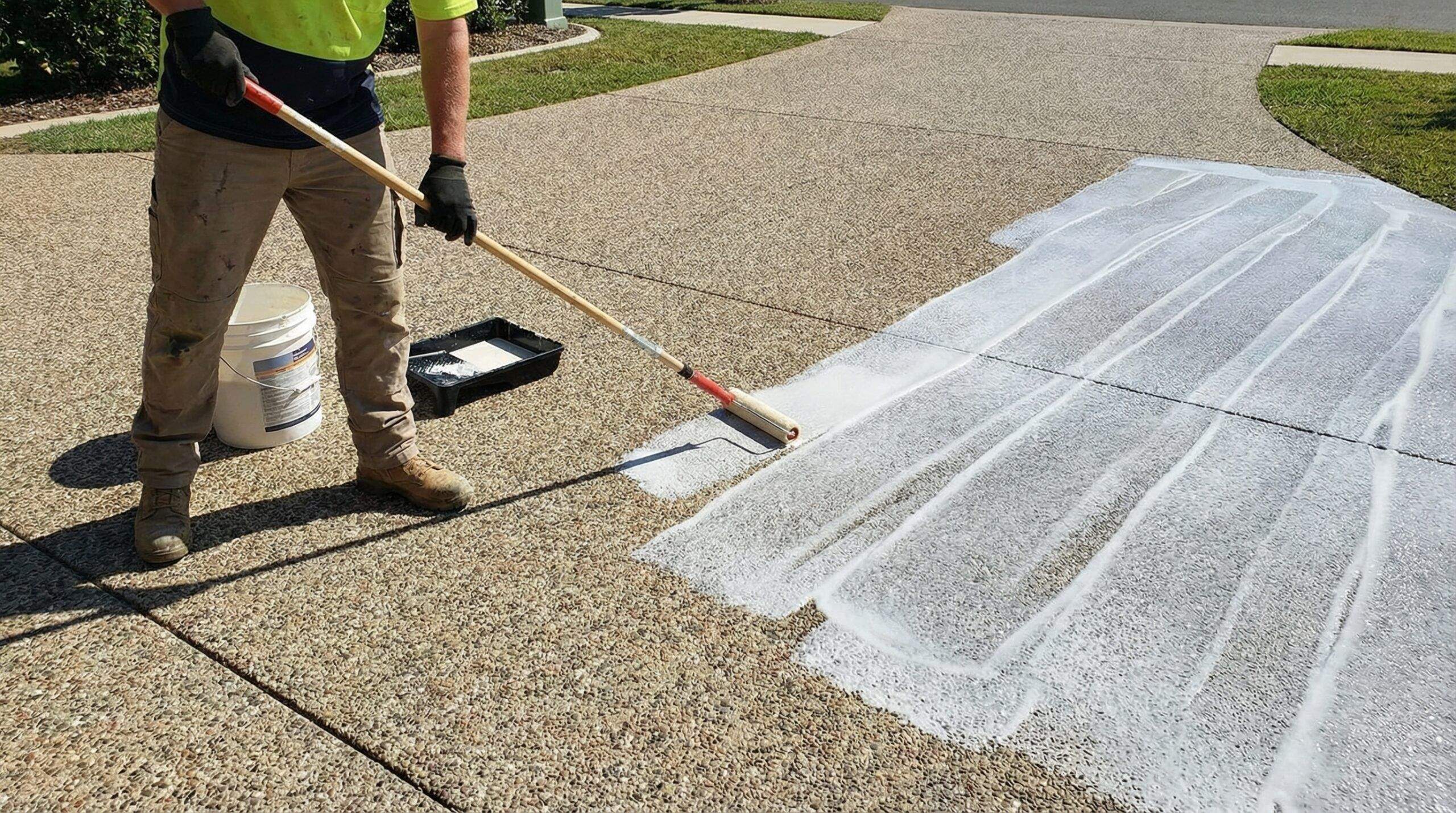
Proper application technique significantly impacts both drying time and final results. The key is achieving even coverage without over-application, which can create thick spots that take much longer to cure.
Start with thorough surface preparation. Clean your aggregate surface completely, removing all dirt, oil stains, and previous sealers. According to 3dev.hellogravel.com, pressure washing followed by a full day of drying typically provides the best foundation for sealer application.
Apply thin, even coats rather than trying to get full coverage in one pass. Use a high-quality roller or sprayer for consistent application. Work in manageable sections, maintaining a wet edge to avoid lap marks that can affect both appearance and drying uniformity.
Monitor weather conditions closely. Ideal conditions include temperatures between 50-85°F, humidity below 60%, and no precipitation forecast for at least 24 hours after application. If conditions aren’t ideal, wait for a better window rather than risking poor results. This is particularly important when working with ABC aggregate base materials that require proper curing for structural integrity.
Important: Never apply sealer to damp surfaces or when rain is expected within 24 hours. Moisture trapped under the sealer can cause clouding, poor adhesion, and extended cure times.
Planning your aggregate sealing project requires balancing drying time expectations with your specific sealer choice and environmental conditions. While acrylic sealers offer quick results for light-duty applications, more demanding surfaces benefit from the extended cure times of polyurethane or epoxy options. Remember that patience during the curing process pays dividends in long-term performance and appearance. When in doubt, always err on the side of longer cure times rather than rushing the process and compromising your investment. For those wondering about related timelines, you might also want to check out how long aggregate concrete takes to dry for comprehensive project planning.
 Chance Kittrell
