How Much Gravel Do I Need for a Driveway
Get an estimate for your project in 60 seconds
 Your information is secure

Planning a gravel driveway but unsure about quantities? You typically need 2.5 to 5 tons of gravel for a standard single-car driveway (10×20 feet) at 4-inch depth, while a double driveway requires 5 to 10 tons. The exact amount depends on your driveway’s dimensions, desired depth, and gravel type.
Getting the calculation right saves you from costly overorders or frustrating shortages mid-project. Whether you’re installing your first gravel driveway or replacing an existing one, understanding the measurement process helps you budget accurately and ensures a professional-looking result.
Quick tip: Most contractors recommend ordering 10% extra gravel to account for settling and future maintenance needs.
Understanding gravel types and their coverage
Different gravel types have varying densities, which directly affects how much you’ll need for your project. Crushed stone, the most popular choice for driveways, weighs approximately 2,700 pounds per cubic yard and compacts well due to its angular edges. This interlocking quality makes it ideal for high-traffic areas and provides excellent stability under vehicle weight.
Pea gravel offers a smoother, more decorative option at about 2,500 pounds per cubic yard. While comfortable to walk on and visually appealing, it doesn’t compact as tightly as crushed stone, making it better suited for walkways or decorative areas rather than main driveways. If you’re considering pea gravel, learn more about choosing the best pea gravel size for a driveway.
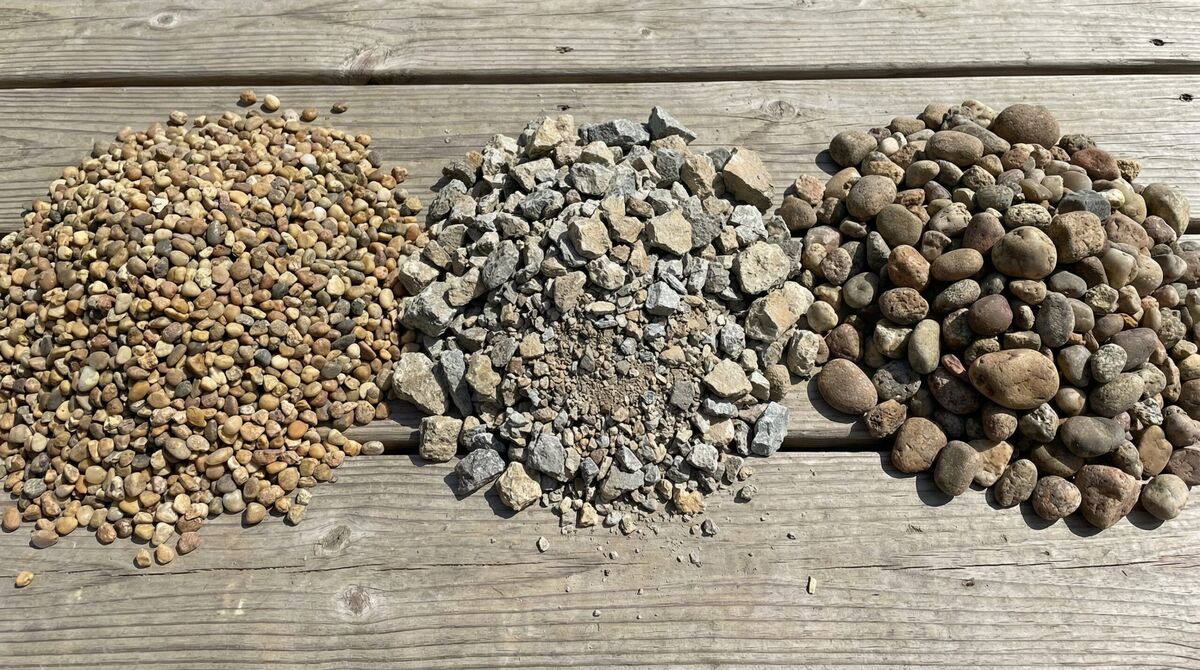
River rock and limestone fall somewhere between these options, with river rock being heavier at around 2,800 pounds per cubic yard but offering superior drainage. Limestone provides an elegant appearance while maintaining good compaction properties, making it a premium choice for homeowners prioritizing aesthetics alongside functionality. For more information on limestone options, check out our guide on how much limestone you need for a driveway.
Measuring your driveway accurately
Start by measuring your driveway’s length and width using a measuring tape or wheel. For rectangular driveways, this process is straightforward, but irregular shapes require breaking the area into smaller sections. Measure each section separately, then add the totals together for your final square footage.
Don’t forget to account for curves, slopes, and any areas where the driveway widens for parking. These variations can significantly impact your total gravel needs. If your driveway has a significant slope, you may need additional gravel to prevent erosion and maintain proper coverage.
Record all measurements carefully and double-check them before calculating. A measurement error of just a few feet can result in ordering several tons too much or too little gravel, both costly mistakes that are easily avoided with careful attention to detail.
Pro insight: Use spray paint to mark measurement points on your driveway, making it easier to verify dimensions and communicate with suppliers about delivery locations.
Calculating depth and volume requirements
The standard depth for gravel driveways ranges from 4 to 6 inches, depending on expected traffic and soil conditions. Light residential use typically requires 4 inches, while areas expecting heavier vehicles or frequent traffic benefit from 6-inch depth. Areas with poor drainage or soft soil may need even deeper gravel layers for stability. Understanding the best driveway base material is crucial for long-term durability.
To calculate volume, multiply length times width times depth (in feet) to get cubic feet, then divide by 27 to convert to cubic yards. For example, a 20-foot by 10-foot driveway with 4-inch depth equals 66.7 cubic feet, or about 2.5 cubic yards of gravel.
| Driveway Size | 4-inch Depth | 6-inch Depth |
|---|---|---|
| 10×20 feet | 2.5 cubic yards | 3.7 cubic yards |
| 12×24 feet | 3.6 cubic yards | 5.3 cubic yards |
| 20×20 feet | 5.0 cubic yards | 7.4 cubic yards |
Converting cubic yards to tons requires knowing your gravel’s weight per cubic yard. Most suppliers provide this information, but as a general rule, multiply cubic yards by 1.3 to 1.5 for most gravel types to get tonnage estimates.
Cost considerations and ordering tips
Gravel costs vary significantly by region and type, typically ranging from $25 to $50 per ton for basic crushed stone, with premium options like decorative river rock costing $50 to $75 per ton. Don’t forget to factor in delivery fees, which can range from $50 to $200 depending on distance and order size. If you’re budget-conscious, explore our guide on the cheapest gravel for driveways.
 Many suppliers offer discounts for larger orders, so if you’re planning multiple projects or have neighbors interested in gravel, coordinating orders can reduce per-ton costs. However, be realistic about storage capabilities and timeline, as gravel piles require space and can be difficult to move once delivered.When ordering, specify your intended use and ask about the supplier’s recommendations for your specific application. Experienced suppliers can suggest the best gravel for your driveway based on your soil conditions, climate, and expected traffic patterns, potentially saving you money and ensuring better long-term performance.
Budget saver: Order during off-peak seasons (late fall or winter) when demand is lower and suppliers may offer discounted rates or free delivery promotions.
Understanding these fundamentals puts you in control of your gravel driveway project. With accurate measurements, appropriate depth calculations, and smart purchasing decisions, you’ll have exactly the right amount of material for a durable, attractive driveway that enhances your property’s value and functionality for years to come. For comprehensive information on different options, review our guide to gravel sizes for driveways.

 Chance Kittrell