How to Build Outdoor Stairs with a Gravel Base Support System
Get an estimate for your project in 60 seconds
 Your information is secure
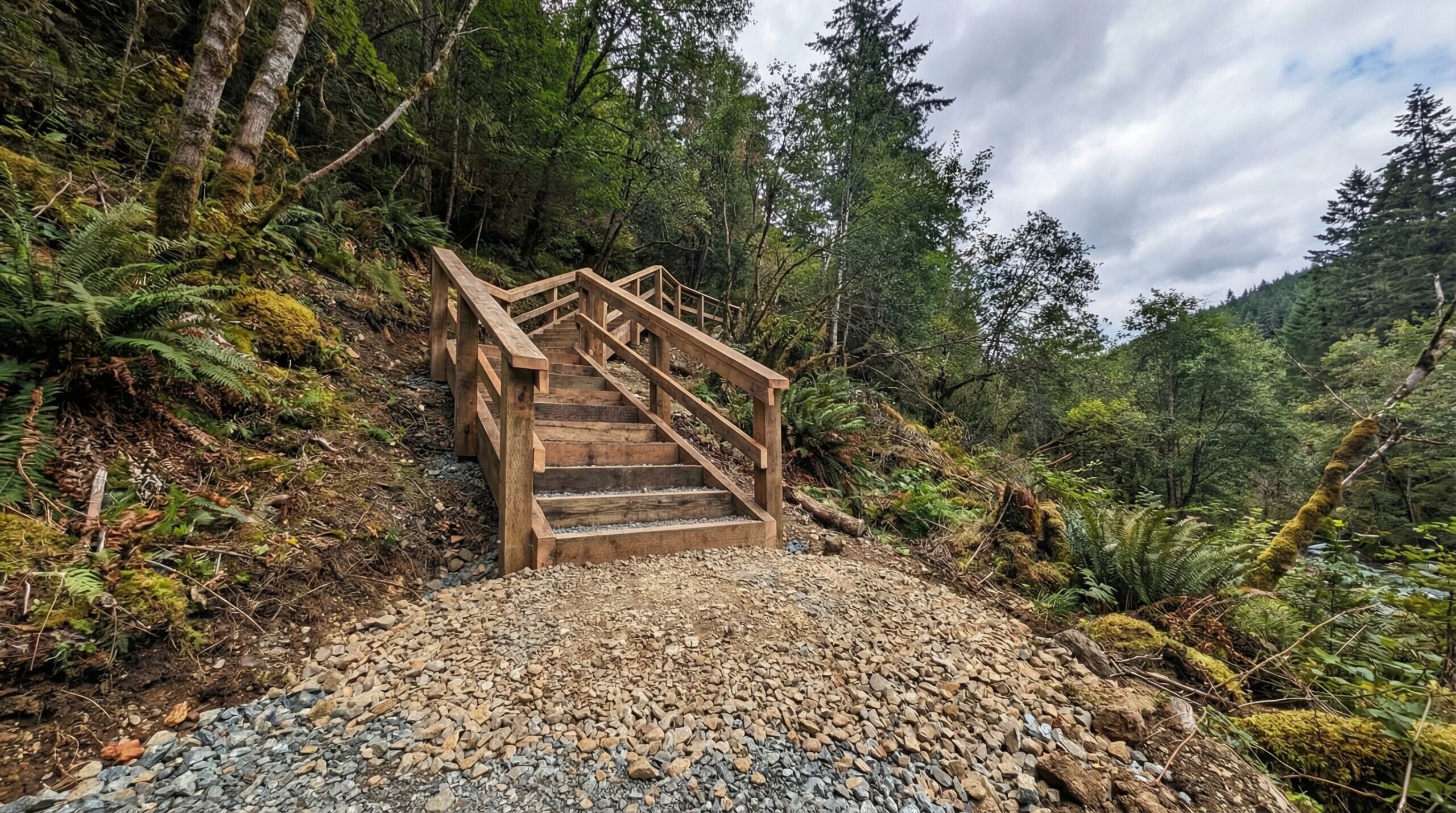
Building outdoor stairs on a slope can transform an unusable yard into accessible, attractive space. Whether you’re working with timber, stone, or concrete steps, a properly constructed gravel base provides the drainage and stability your staircase needs to last for years.
Quick Answer: Yes, gravel makes an excellent base for outdoor stairs when installed correctly. Angular crushed stone creates the foundation, while pea gravel can finish the treads for comfort and aesthetics.
The key to success lies in choosing the right gravel types, proper excavation, and systematic installation. You’ll save money compared to full concrete construction while creating stairs that handle weather changes and foot traffic beautifully.
Planning your gravel-base staircase
Before breaking ground, you need accurate measurements and a clear plan. Start by measuring the total rise from bottom to top of your slope and the total run or horizontal distance available.
For comfortable stairs, aim for a 6 to 7-inch rise per step with 12 to 16-inch treads. Divide your total rise by 6.5 inches to estimate the number of steps needed. If you get 8.5 steps, round to 9 and adjust each riser to about 6 inches.
Consider your local building codes, especially for handrail requirements on stairs with more than three steps. Most residential codes require 36-inch minimum width for comfortable passage, though you can go narrower for garden paths.
Mark your layout with stakes and string before excavating. This helps you visualize the finished project and catch any design issues early.
Choosing the right gravel and materials
Not all gravel works the same way in stair construction. You’ll need different types for different layers of your project.
For the structural base, choose angular crushed stone for outdoor staircase support or road base gravel. The sharp edges lock together when compacted, creating a stable foundation that won’t shift under load. Common sizes range from 3/4-inch down to fine particles.
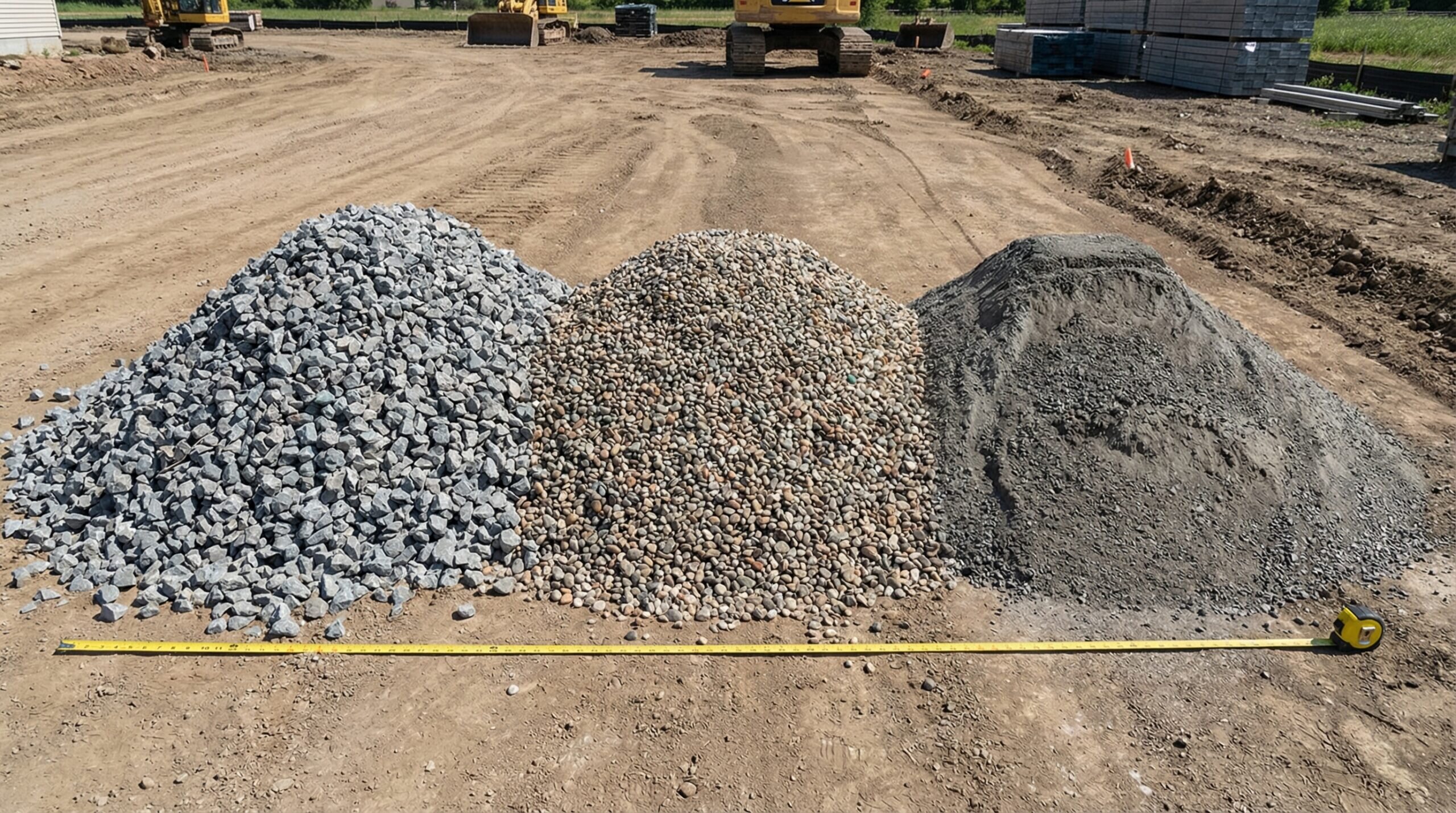
Pea gravel works well as a surface material on treads because it’s comfortable to walk on and provides good traction. However, its rounded shape makes it unsuitable for structural support. If you’re considering using pea gravel for a shed foundation, the same principles apply—it’s better as a surface layer than structural support.
| Gravel Type | Best Use | Particle Size | Key Benefit |
|---|---|---|---|
| Crushed stone | Base layer | 3/4″ to fines | Locks together when compacted |
| Road base | Structural support | Mixed sizes | Excellent compaction |
| Pea gravel | Surface finish | 1/4″ to 3/8″ | Comfortable walking surface |
You’ll also need landscape fabric to separate gravel from soil, preventing mixing and reducing weed growth. For timber stairs, gather pressure-treated lumber, galvanized screws, and a drill. Stone stairs require larger flat stones and possibly mortar for stability.
Step-by-step construction process
Start construction from the bottom step and work your way up the slope. This approach ensures proper drainage and makes it easier to level each step.
Step 1: Mark your stair locations with spray paint and excavate each tread area. Dig 6 to 8 inches deep for the gravel base, plus the thickness of your step material.
Step 2: Remove all loose soil, roots, and organic matter from the excavated areas. Compact the remaining soil with a hand tamper to create a firm subgrade.
Step 3: Install landscape fabric over the entire excavated area. Overlap seams by 6 inches and secure with landscape pins or small stones.
Pro Tip: Compact your gravel base in 2-inch layers rather than dumping it all at once. This creates much better stability and prevents future settling.
Step 4: Add crushed stone in thin layers, compacting each lift thoroughly. Use a hand tamper for small projects or rent a plate compactor for larger installations. The base should be 4 to 6 inches thick when fully compacted. This same technique works well when using crushed stone as a sub-base for deck projects.
Step 5: Install your first step material on the compacted base. For timber, level the frame and secure it. For stone, choose flat pieces and adjust the gravel underneath until they sit level and stable.
Step 6: Backfill behind each step with soil or additional gravel for support. This prevents the step from tipping forward under use.

Step 7: Repeat the process moving up the slope. Each step should overlap the one below slightly to prevent gaps where water could collect.
Step 8: Fill tread surfaces with pea gravel or leave them as installed material. Lightly compact surface gravel and add more as needed to achieve the desired depth.
Drainage and long-term maintenance
Proper drainage prevents the most common problems with gravel-base stairs. Water that can’t escape will freeze in winter, causing heaving and instability.
Slope your stairs slightly forward so water runs off rather than pooling. A 1/4-inch drop per foot of tread depth usually works well. In areas with heavy rainfall or poor soil drainage, consider adding a French drain at the base of your staircase. The same drainage principles that make gravel excellent for parking areas apply to outdoor staircases.
Maintenance Schedule: Check your stairs each spring for loose gravel, settled areas, or damaged step materials. Top off gravel as needed and re-compact any soft spots.
Annual maintenance keeps your stairs safe and attractive. Look for areas where gravel has washed away or compacted unevenly. Add fresh material and compact it to match the surrounding surface.
Weeds occasionally grow through landscape fabric, especially around step edges. Pull them promptly and add more gravel to discourage future growth.
The beauty of gravel-base construction is its repairability. Unlike concrete stairs that crack and require professional repair, you can easily adjust gravel levels or replace individual step components as needed. This flexibility also makes gravel ideal for other projects like garden paths or patio bases.
With proper planning and installation, your gravel-base outdoor staircase will provide safe, attractive access to sloped areas of your property for many years. The combination of good drainage, stable materials, and straightforward maintenance makes this approach ideal for most residential applications.

 Chance Kittrell