How to Calculate Aggregate Tonnage for Construction Projects
Get an estimate for your project in 60 seconds
 Your information is secure
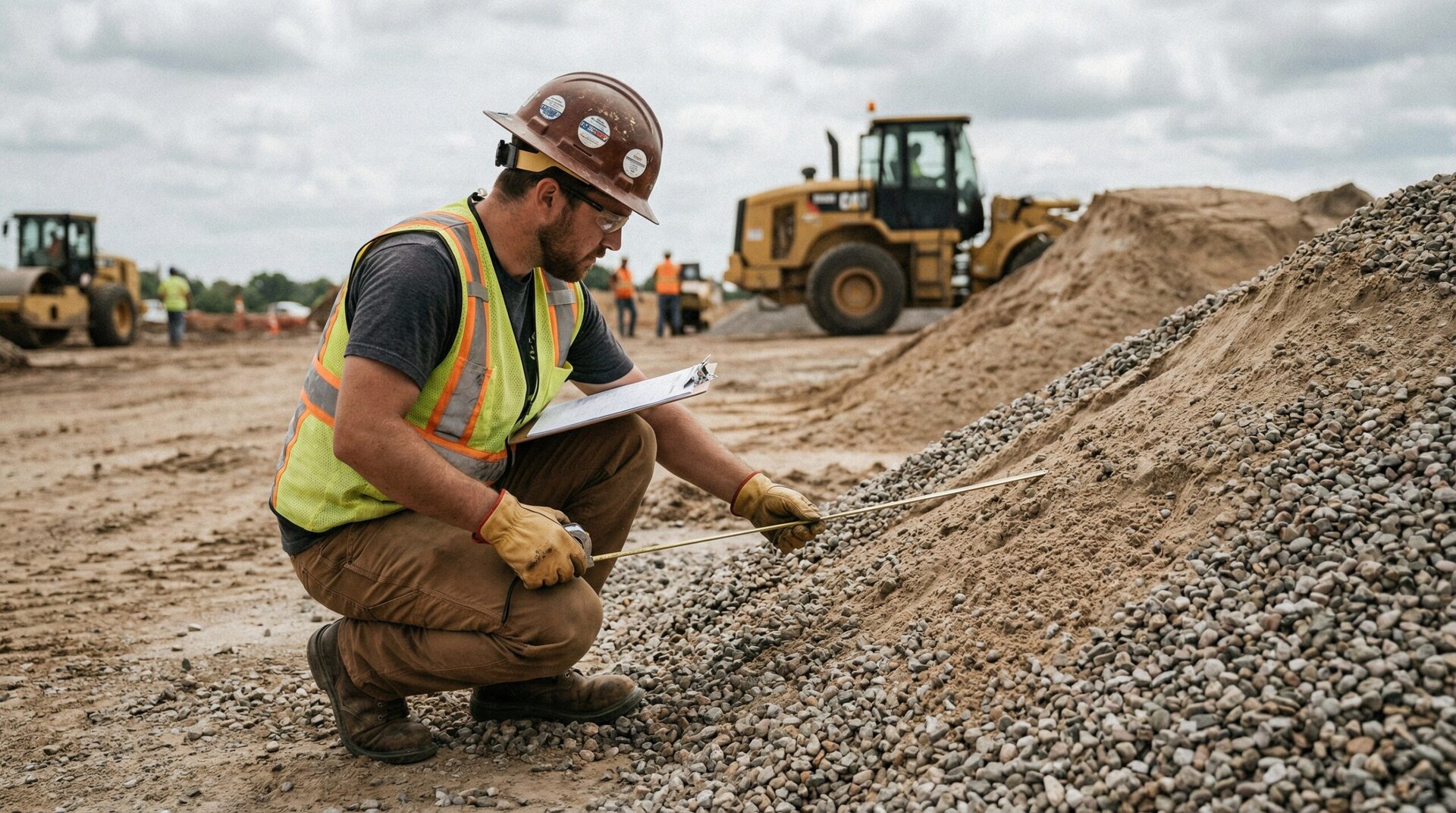
Calculating the right amount of aggregate for your construction project can save you thousands of dollars and prevent costly delays. The formula is straightforward: Tonnage = (Length × Width × Depth × Density) ÷ 2000. This calculation ensures you order exactly what you need, whether you’re building a driveway, foundation, or large-scale infrastructure project.
Getting your aggregate calculations wrong means either running out of materials mid-project or paying for excess materials you’ll never use. Most construction professionals use this proven method to estimate tonnage accurately, and you can master it in just a few minutes.
Quick Fact: A typical driveway requires 2-3 tons of gravel per 100 square feet, but this varies significantly based on depth and aggregate type.
Understanding aggregate density basics
Different aggregate materials have vastly different weights, which directly affects your tonnage calculations. Sand typically weighs around 100 pounds per cubic foot, while crushed stone can weigh 150-170 pounds per cubic foot. This means the same volume of crushed stone weighs nearly twice as much as sand.
The density of your chosen aggregate determines the final weight calculation. Gravel usually falls around 105 pounds per cubic foot, making it lighter than crushed stone but heavier than sand. These density differences explain why you can’t simply estimate tonnage by volume alone.
Moisture content also affects aggregate weight. Wet materials weigh more than dry ones, so factor in weather conditions and storage methods when making your calculations. Professional contractors often add a 5-10% buffer to account for these variables, especially when calculating fill dirt with compaction considerations.
The step-by-step calculation process
Start by measuring your project area carefully. For rectangular areas like driveways or foundations, multiply length times width times depth to get cubic feet. If you’re working with circular areas, use the formula π × radius² × depth.

Once you have your volume in cubic feet, multiply by your aggregate’s density in pounds per cubic foot. This gives you the total weight in pounds. Finally, divide by 2000 to convert pounds to tons.
Here’s a practical example: A 20-foot by 30-foot driveway with 4-inch depth needs 200 cubic feet of material. Using crushed stone at 160 pounds per cubic foot, you’d calculate 200 × 160 = 32,000 pounds, which equals 16 tons. If you’re working specifically with crushed stone, our guide on how to calculate how much crushed stone you need provides additional project-specific examples.
Always double-check your measurements and units. Converting inches to feet incorrectly is one of the most common mistakes that throws off entire calculations.
Common calculation mistakes to avoid
Many people forget to convert all measurements to the same units before calculating. Mixing feet and inches or using different density units creates massive errors in your final tonnage estimate.
Pro Tip: Always convert depth measurements from inches to feet by dividing by 12 before using the tonnage formula.
Another frequent mistake is using generic density values instead of specific ones for your aggregate type. River rock, crushed concrete, and limestone all have different densities, so using the wrong value can result in ordering 20-30% too much or too little material. For crushed concrete projects specifically, understanding crushed concrete cubic yards to tons conversions is essential for accurate ordering.
Failing to account for compaction is equally problematic. Loose aggregate settles and compacts over time, so many contractors add 10-15% extra material to ensure adequate coverage after settling occurs. This is particularly important when calculating fill dirt on a slope, where settling and erosion can significantly impact material needs.
Factors that affect your final tonnage
Particle size and shape significantly impact how much aggregate you actually need. Angular crushed stone packs more tightly than rounded river rock, meaning you might need less volume but similar weight for the same coverage area.
The intended use of your aggregate also matters. Load-bearing applications like foundations require more compaction, which affects your tonnage calculations. Decorative applications might need less material since appearance matters more than structural integrity.
| Aggregate Type | Density (lbs/cu ft) | Common Uses |
|---|---|---|
| Sand | 100 | Concrete, mortar base |
| Gravel | 105 | Driveways, walkways |
| Crushed Stone | 160 | Foundations, roads |
| River Rock | 95 | Landscaping, drainage |
Weather conditions during installation can change your material needs. Rain can wash away loose aggregate, while extreme heat can cause expansion that affects coverage. Plan accordingly based on your local climate and project timeline.

Cost Saver: Ordering 5-10% extra aggregate costs much less than emergency deliveries when you run short during construction.
Understanding these calculation principles helps you make informed decisions about material orders and project budgets. The tonnage formula works reliably across different project types, from small residential jobs to major commercial construction. Whether you’re calculating cubic yards of gravel for a landscaping project or determining tonnage for a commercial foundation, accurate measurements and the right density values ensure you confidently order the exact amount of aggregate your project requires, avoiding both shortages and waste while keeping your construction timeline on track.


 Chance Kittrell
