How to Store Gravel Properly Essential Tips for Long-Term Quality
Get an estimate for your project in 60 seconds
 Your information is secure

Storing gravel correctly can save you hundreds of dollars and prevent project delays. Whether you’re working on a small driveway or a major construction project, improper storage leads to contaminated materials, moisture damage, and wasted resources that could have been easily avoided.
Quick Answer: Store gravel in covered areas or under tarps, keep it dry and organized by type, and inspect regularly for contamination. Proper drainage and temperature control are essential for maintaining quality.
You might think gravel storage is straightforward, but the reality is more complex. Moisture can turn your perfectly sized aggregate into unusable clumps. Contamination from leaves and debris affects both appearance and performance. Temperature extremes can cause expansion and cracking that compromises structural integrity.
The good news is that with the right approach, you can maintain gravel quality for months or even years. This guide walks you through proven storage methods that protect your investment and ensure your materials perform as expected when you need them.
Why proper gravel storage matters for your projects
Poor storage practices create problems that extend far beyond the storage area itself. When gravel becomes compacted from moisture, it loses the drainage properties that make it valuable for construction projects according to 3dev.hellogravel.com.
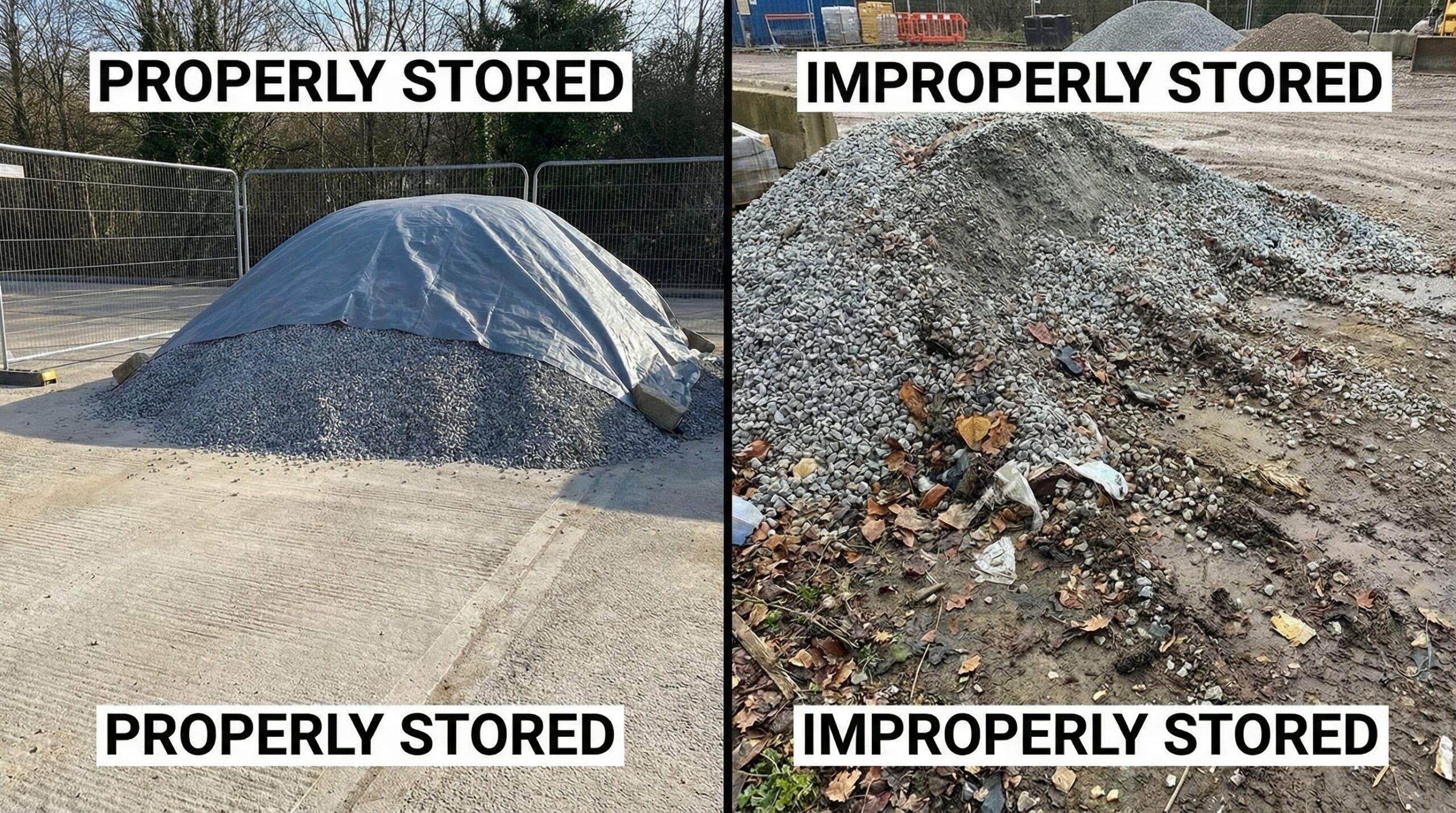
Contaminated gravel affects both function and appearance. Leaves, twigs, and organic matter that accumulate in uncovered piles don’t just look unprofessional. They can lead to uneven surfaces and provide growing medium for weeds that will plague your finished project for years.
Temperature fluctuations present another challenge. Freezing and thawing cycles cause gravel particles to expand and contract, leading to cracks and breakage. Excessive heat makes some types of gravel brittle and prone to crumbling under pressure.
Cost Impact: Replacing damaged gravel can cost 30-50% more than the original purchase when you factor in delivery fees and project delays.
Water damage represents the most common storage problem. Saturated gravel becomes heavy and difficult to work with. More importantly, it can develop drainage issues that defeat the primary purpose of using gravel in drainage systems.
Essential storage fundamentals you need to know
Different gravel types require specific storage approaches based on their characteristics. Angular gravel with sharp edges needs careful handling to prevent injury and equipment damage. Rounded gravel like pea gravel tends to shift and roll, requiring containment strategies that prevent spillage.
Temperature control forms the foundation of effective gravel storage. Your storage location should protect materials from extreme temperature swings. Indoor storage works best, but covered outdoor areas can work if properly ventilated and protected from direct sunlight.
Moisture protection requires multiple layers of defense. Even in covered areas, humidity can cause problems over time. Proper ventilation prevents moisture buildup while tarps or sealed containers provide additional protection during wet weather.
Organization saves time and prevents mixing of different gravel types. Use clearly marked storage areas or containers for each type and size. This prevents contamination between different materials and makes it easier to access what you need quickly. Understanding the different types of gravel can help you organize your storage more effectively.
| Storage Factor | Indoor Storage | Covered Outdoor | Uncovered Outdoor |
|---|---|---|---|
| Temperature Control | Excellent | Good | Poor |
| Moisture Protection | Excellent | Good | Poor |
| Contamination Risk | Low | Medium | High |
| Cost | High | Medium | Low |
Proven storage techniques for different project needs
Short-term storage during active projects requires flexibility and quick access. Plastic covers or tarps work well for periods of a few weeks to several months. Position covers to shed water while allowing air circulation underneath to prevent condensation buildup.
Long-term storage demands more robust solutions. Purpose-built storage sheds provide the best protection but require significant investment. Covered storage containers offer a middle ground with good protection at moderate cost.
Pro Tip: Elevate stored gravel slightly off the ground using pallets or gravel beds to improve drainage and prevent ground moisture from wicking up into your materials.
Bulk storage works best for large projects where you need easy access to substantial quantities. Create designated stockpile areas with proper drainage and consider installing permanent covers for frequently used materials. For major construction needs, understanding bulk aggregate options can help you plan better.
Small-scale storage suits residential projects and specialty applications. Gravel bags and sacks provide convenient portion control while protecting materials from contamination. These work particularly well for decorative gravels where appearance matters most.
Preparation before storage significantly impacts long-term quality. Remove debris, organic matter, and excess moisture before placing gravel in storage. Clean, dry materials store better and maintain their properties longer than contaminated or wet materials.

Maintaining quality through regular monitoring
Regular inspection prevents small problems from becoming major headaches. Check stored gravel monthly for signs of moisture accumulation, contamination, or shifting. Early detection allows for quick corrections before damage becomes extensive.
Moisture management requires ongoing attention even in covered storage. Remove standing water immediately and improve ventilation if condensation appears. Consider using moisture-absorbing materials in enclosed storage areas during humid periods.
Contamination removal should happen as soon as you notice debris accumulation. Remove organic matter, weeds, and foreign materials promptly. The longer contamination remains, the more difficult it becomes to remove and the greater the impact on gravel quality. Learning how to clean gravel properly can extend its usable life.
Shifting and settling occur naturally over time, especially with rounded gravels. Redistribute materials periodically to prevent uneven compaction and maintain consistent quality throughout your stored materials.
Weather protection needs adjustment based on seasonal conditions. Increase coverage during wet seasons and ensure adequate ventilation during hot, humid periods. Your storage system should adapt to changing environmental conditions.
Proper gravel storage protects your investment and ensures project success. By implementing these proven techniques, you maintain material quality while avoiding costly replacement and delays. The time invested in proper storage pays dividends through better project outcomes and reduced material waste.
Ready to source high-quality gravel for your next project? Hello Gravel delivers premium aggregates nationwide with convenient online ordering and exceptional customer service. From small residential projects to large commercial developments, we provide the materials you need with the reliability you expect.

 Chance Kittrell