Is Gravel ADA-Friendly? Best Accessible Gravel Options for Wheelchair Mobility
Get an estimate for your project in 60 seconds
 Your information is secure
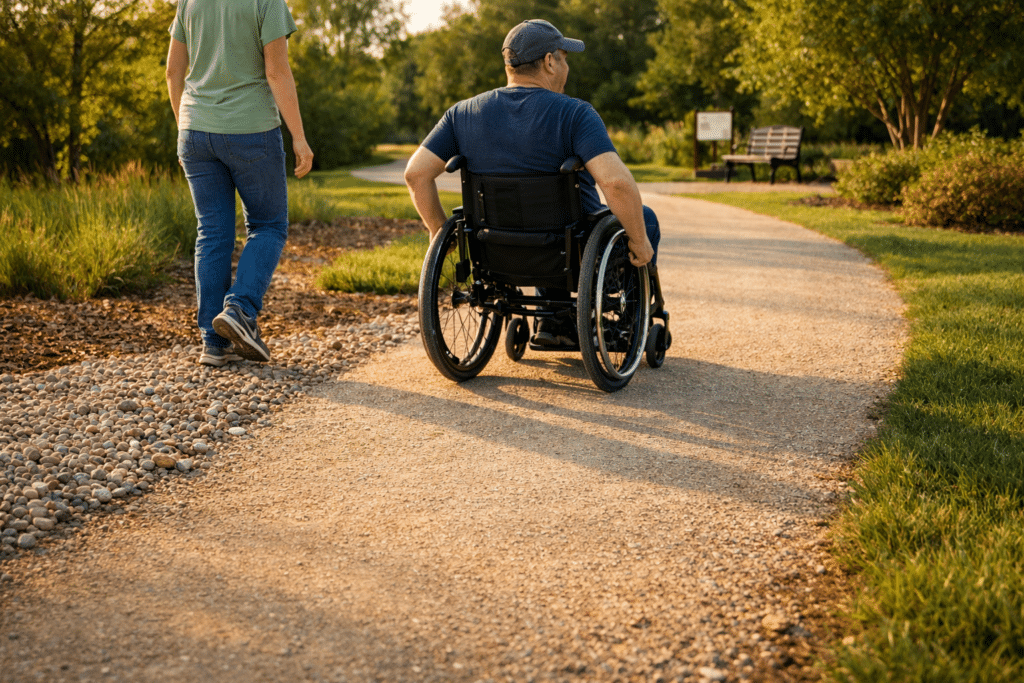
Gravel can meet ADA accessibility standards when properly installed with the right materials and techniques. Accessible surfaces must be firm, stable, and slip-resistant. The most wheelchair-friendly option is crusher fines (also called quarter-inch minus crushed stone or crusher dust) laid over a compacted base and properly maintained. Standard loose gravel like pea gravel is not ADA-compliant because it shifts and creates unstable surfaces that impede wheelchair movement.
What Makes a Surface ADA-Compliant?
The Americans with Disabilities Act requires outdoor surfaces to be stable, firm, and slip-resistant. These three qualities determine whether a material can support wheelchair users and people with other mobility devices safely.
A stable surface does not shift or move underfoot. A firm surface resists deformation when weight is applied. A slip-resistant surface provides adequate traction in dry and wet conditions. Gravel surfaces can meet these standards, but only specific types installed with proper construction methods.
In addition, note that accessible gravel surfaces require regular maintenance to remain compliant. Fill low spots that develop from traffic or weather. Re-compact areas that become loose. Remove debris and vegetation that disrupts the surface. Gravel pathways should be refilled every few years as material degrades over time.
Which Gravel Types Work for Wheelchair Access?
Not all gravel is created equal when it comes to accessibility. The key difference is whether the material can compact into a firm, stable surface or remains loose and shifting.
Crusher Fines (Quarter-Inch Minus Crushed Stone)
Crusher fines are considered an accessible surface when properly compacted and maintained. This material contains crushed angular rock pieces sized quarter-inch and smaller, along with fine particles that help the material compact.
The angular shape allows individual pieces to lock together when compacted. The fines fill gaps between larger particles, creating a dense, stable surface. Some regions use three-eighths-inch minus crusher dust as a coarser alternative for the same application.
Stabilized Decomposed Granite
Stabilized decomposed granite pathways blended with a stabilizing binder can qualify as ADA-accessible surfaces when installed correctly. The stabilizing agent binds particles together, reducing erosion and maintaining surface firmness over time. This option provides a more natural appearance than asphalt or concrete while still meeting accessibility requirements.
On the flipside to the above materials, pea gravel and sand are not ADA-compliant materials. Pea gravel consists of small, rounded stones that roll and shift under wheelchair wheels, creating an unstable surface. Crushed limestone with large particles also obstructs wheelchair access because the oversized pieces create an uneven, difficult surface to navigate. The same is the case with clean gravel without fines because it lacks the binding material needed to create a firm surface.
How Do You Install Accessible Gravel Surfaces?
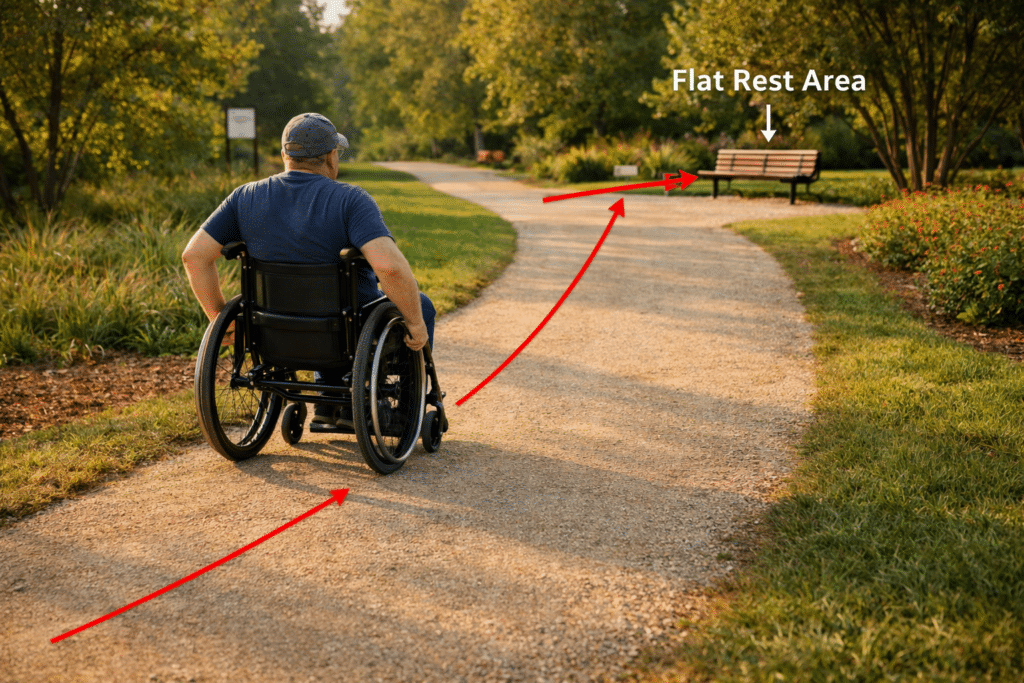
In general, accessible pathways must be at least 36 inches wide, with allowances to narrow to 32 inches for a maximum length of 24 inches every 48 inches. Routes narrower than 60 inches must provide passing spaces at intervals of 200 feet. Where 180-degree turns are required, turning space must be either 48 or 60 inches depending on pathway width.
Pathways are also expected to follow ADA slope guidelines to ensure wheelchair users can navigate independently. Extended slopes require flat rest areas because pushing a wheelchair on any incline becomes tiring over distance. Proper installation (as described in the below methods) determines whether gravel meets accessibility standards. Poor installation can turn suitable materials into inaccessible surfaces.
Standard Installation Method
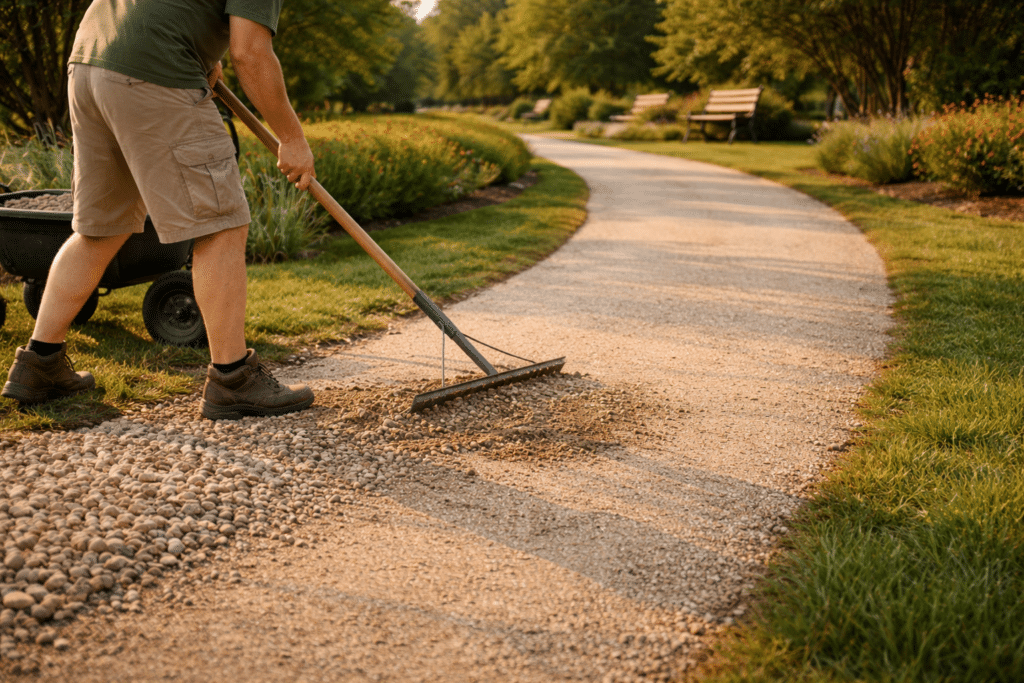
For areas with heavy foot traffic or soft ground, excavate the project area to 6 inches deep and compact the base with a plate compactor to create a smooth, level surface. For pedestrian applications, spread and compact a crushed angular road base to 4-6 inches depth, allowing for 20-25% compaction. Then add the crusher fines surface layer.
Apply the surface layer in 2-3 inch lifts. Water the material lightly to help fines settle between larger particles. Compact each layer thoroughly with a plate compactor.
Light Installation Method
For areas with light foot traffic and firm existing ground, the excavation depth can be reduced. The compaction step remains critical for creating a stable surface.
What Are Alternatives to Gravel?
Gravel is not the only option for creating accessible outdoor surfaces. Several alternatives offer different benefits depending on project requirements and budget.
Porous Paver Systems
Gravel paver systems can create ADA-compliant surfaces by stabilizing gravel within a structural grid. These systems hold gravel in place while allowing water infiltration. For ADA applications, fill the paver rings to the top only and avoid using pea gravel; angular aggregate provides better traction.
Concrete and Asphalt
Concrete and asphalt provide the smoothest, most consistently accessible surfaces. They require minimal maintenance and offer reliable long-term accessibility. The upfront cost is higher than gravel, and the aesthetic lacks the natural appearance of stone pathways.
Temporary Access Mats
Portable access mats create ADA-compliant pathways over sand, grass, gravel, and snow for temporary installations or events. These modular panels install quickly and require no permanent ground modification.
How Much Does ADA-Compliant Gravel Cost?
Cost varies based on project size, material choice, excavation requirements, and delivery distance. Expect to factor in costs for base material, surface material, equipment rental for compaction, and labor. Stabilized decomposed granite typically costs more than standard crushed stone due to the binding agents. Adding paver systems increases material costs but reduces ongoing maintenance.
Projects requiring extensive excavation or specialized site preparation will increase total costs. Obtaining accurate measurements before ordering prevents material shortages or excess.
Does Residential Property Need ADA-Compliant Gravel?
Private homeowners generally don’t need to meet accessibility standards beyond what residential construction laws require. However, these standards provide useful guidelines for improving accessibility at home.
Creating accessible pathways benefits household members with mobility devices, visitors with disabilities, and aging residents planning for future needs. The same installation principles that meet ADA standards create durable, low-maintenance pathways for any property.
Once you’ve determined your project measurements and the amount of crusher fines needed, Hello Gravel makes it easy to compare options and arrange delivery for your accessible pathway project. Contact Hello Gravel today to make seamless bulk orders for your needed materials.
Frequently Asked Questions
How do I prevent weeds in accessible gravel pathways?
Proper compaction reduces weed growth, though periodic maintenance to remove vegetation helps maintain accessibility.
Can accessible gravel pathways handle vehicle traffic?
For vehicular use, increase the compacted base depth to 8-12 inches instead of the 4-6 inches used for pedestrian paths.
Do you need a base layer under accessible gravel?
Yes, a compacted crushed rock base of 4-6 inches depth is recommended for pedestrian pathways.
How often does accessible gravel need maintenance?
Pathways should be inspected regularly and refilled every few years as material degrades.
What makes gravel wheelchair-friendly?
Angular crushed particles that lock together when compacted, combined with fine material that fills gaps and creates a firm, stable surface.

 Chance Kittrell