Limestone Bocce Ball Courts: Pros, Cons, and Complete Installation Guide
Get an estimate for your project in 60 seconds
 Your information is secure
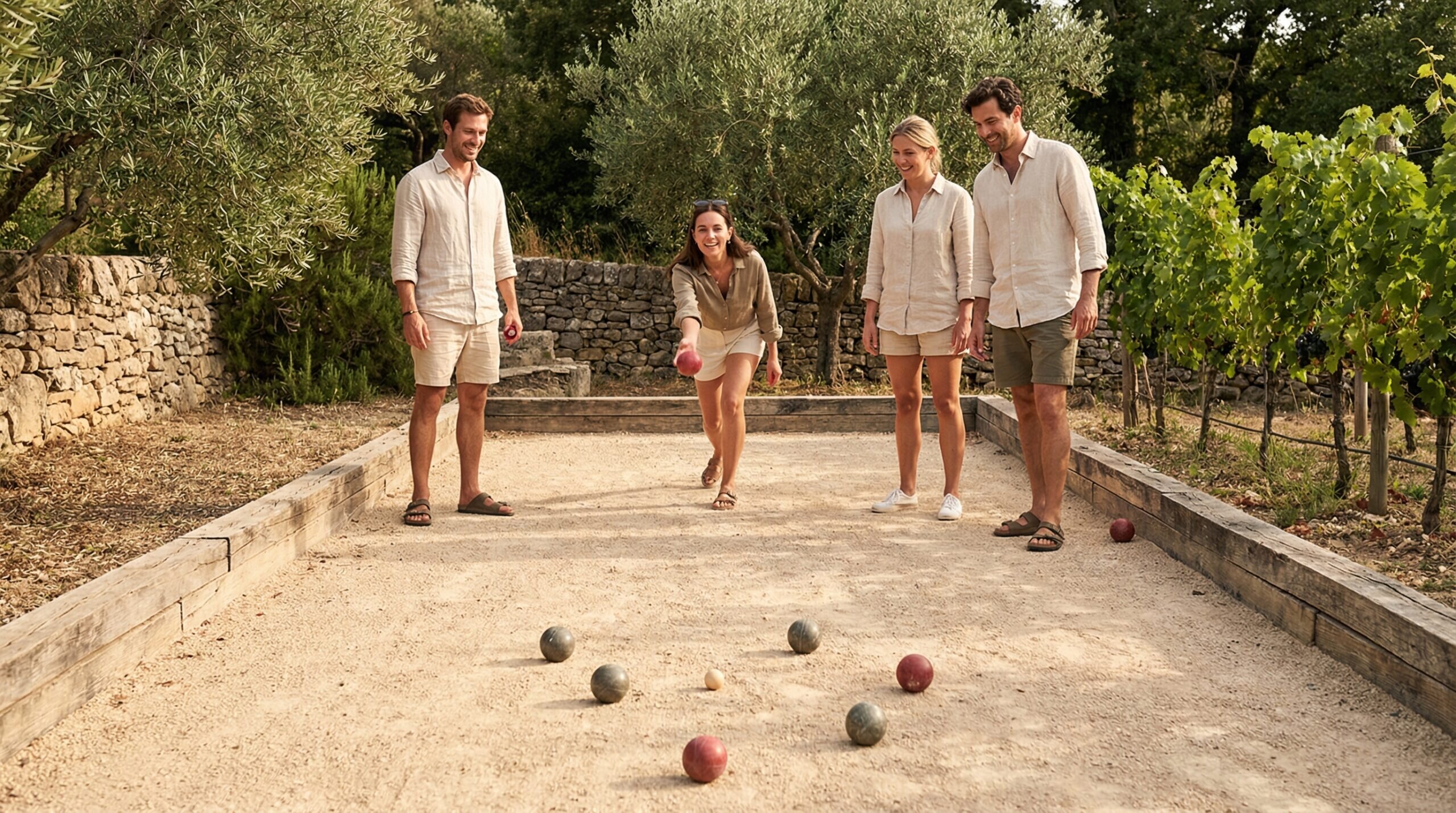
Can limestone be used for a bocce ball court surface? Yes, limestone is an excellent choice that provides a firm, well-draining surface when properly installed. As a type of crushed stone, limestone offers better durability than sand while remaining more affordable than synthetic alternatives like artificial turf.
Quick Answer: Limestone works well for bocce courts because it compacts into a smooth, consistent playing surface with excellent drainage properties, making it ideal for both residential and commercial installations.
The key to a great bocce court lies in choosing the right surface material. Your choice affects everything from ball roll consistency to long-term maintenance costs. While traditional options like oyster shell and modern alternatives like artificial turf each have their place, limestone strikes an appealing balance between performance, cost, and maintenance requirements.
What makes an ideal bocce ball court surface
Before diving into limestone specifics, you need to understand what makes any bocce court surface successful. The best surfaces share several critical characteristics that directly impact your playing experience.
First, firmness matters most. Your bocce balls need a consistent, smooth roll without unexpected bounces or direction changes. Soft or uneven surfaces create frustrating gameplay where skill takes a backseat to surface inconsistencies.
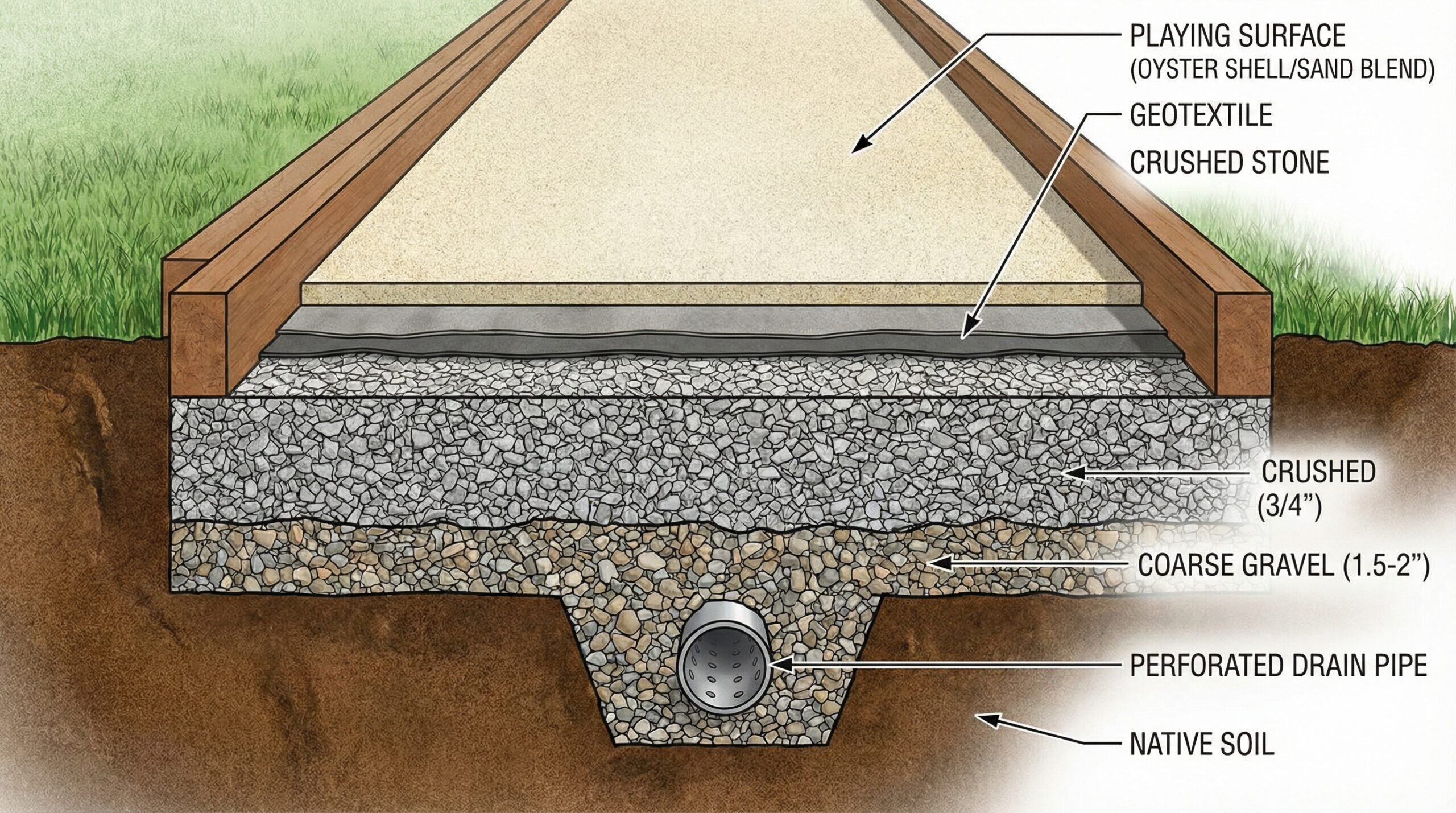
Drainage comes next. Courts that hold water after rain become unplayable and can develop soft spots that ruin ball roll. Proper drainage keeps your court ready for play year-round and prevents long-term structural problems.
Maintenance requirements determine your long-term satisfaction. High-maintenance surfaces might seem appealing initially but can become burdensome over time. The best surfaces need minimal ongoing care while maintaining their playing characteristics.
Finally, longevity protects your investment. Quality surface materials resist erosion, contamination from organic debris, and weather damage. This means fewer repairs and replacements over your court’s lifetime.
Common bocce court surfaces and how limestone compares
Understanding your options helps you make the right choice for your specific situation. Each surface type offers distinct advantages and trade-offs.
Crushed oyster shell represents the traditional gold standard. It provides exceptional ball roll and natural drainage but requires regular maintenance including raking and periodic replacement. The material can be expensive and difficult to source in some regions.
Decomposed granite and crushed stone (including limestone) offer excellent middle-ground solutions. These materials compact well, drain effectively, and provide consistent playing surfaces. Limestone falls into this category and shares many benefits with decomposed granite while often being more locally available. If you’re considering alternatives, you might also explore using crushed stone for a bocce ball court surface, which offers similar compaction and drainage properties.
Sand and pea gravel appeal to budget-conscious builders. While inexpensive and widely available, these loose materials require frequent raking and can create messy conditions. They also tend to shift during play, affecting ball roll consistency. For those curious about gravel options, learn more about whether gravel can be used for a bocce ball court surface.
Artificial turf delivers the ultimate low-maintenance solution. Modern bocce-specific turf systems provide excellent ball roll and virtually eliminate ongoing maintenance. However, the high upfront cost puts this option beyond many budgets.
| Surface Type | Drainage | Maintenance | Upfront Cost | Ball Roll Quality |
|---|---|---|---|---|
| Limestone | Excellent | Low-Medium | Medium | Very Good |
| Oyster Shell | Excellent | High | High | Excellent |
| Sand/Pea Gravel | Poor-Medium | High | Low | Fair |
| Artificial Turf | Excellent | Very Low | Very High | Excellent |
Why limestone works well for bocce courts
Limestone brings several advantages that make it particularly suitable for bocce court construction. As a crushed stone material, it compacts into a firm, stable surface that supports consistent ball roll.
The material’s natural drainage properties prevent water accumulation that can ruin playing conditions. When properly graded and installed over an appropriate base, limestone courts shed water quickly and return to playable condition faster than many alternatives.
Cost Advantage: Limestone typically costs 30-50% less than imported oyster shell while providing similar drainage and durability benefits.
Durability sets limestone apart from looser materials like sand. Once compacted, limestone resists erosion and maintains its shape through regular play and weather exposure. This translates to fewer repairs and less frequent surface renewal compared to softer alternatives.
The material’s neutral color provides good contrast with bocce balls, making them easier to spot during play. This practical benefit enhances the playing experience without requiring special lighting or marking systems.
However, limestone isn’t perfect for every situation. In extremely dry climates, the surface can generate dust that some players find objectionable. Proper installation and occasional light watering typically solve this issue.
The material also requires correct gradation and compaction during installation. Poorly installed limestone can develop ruts or soft spots that affect ball roll. Working with experienced contractors or following detailed installation guidelines prevents these problems.
Step-by-step limestone bocce court installation
Building a limestone bocce court requires careful planning and systematic execution. Following the proper sequence ensures your court performs well and lasts for years.
Planning and layout starts your project. Standard bocce courts measure 12 feet wide by 60 feet long, though smaller backyard versions work well at 10 by 50 feet. Choose a location with good drainage and minimal slope, ideally with morning sun exposure to help dry the surface after rain.
Excavation and base preparation creates your foundation. Remove all vegetation and excavate to a depth of 6-8 inches below your planned surface level. Compact the subgrade thoroughly and establish a gentle slope (about 1% grade) for drainage.
Base layer installation provides stability and drainage. Install 4-6 inches of larger crushed stone (3/4-inch minus) and compact in 2-inch lifts. This base layer prevents the limestone surface from sinking into soft subgrade while providing excellent drainage. For similar base preparation techniques, check out using limestone for a patio base project.
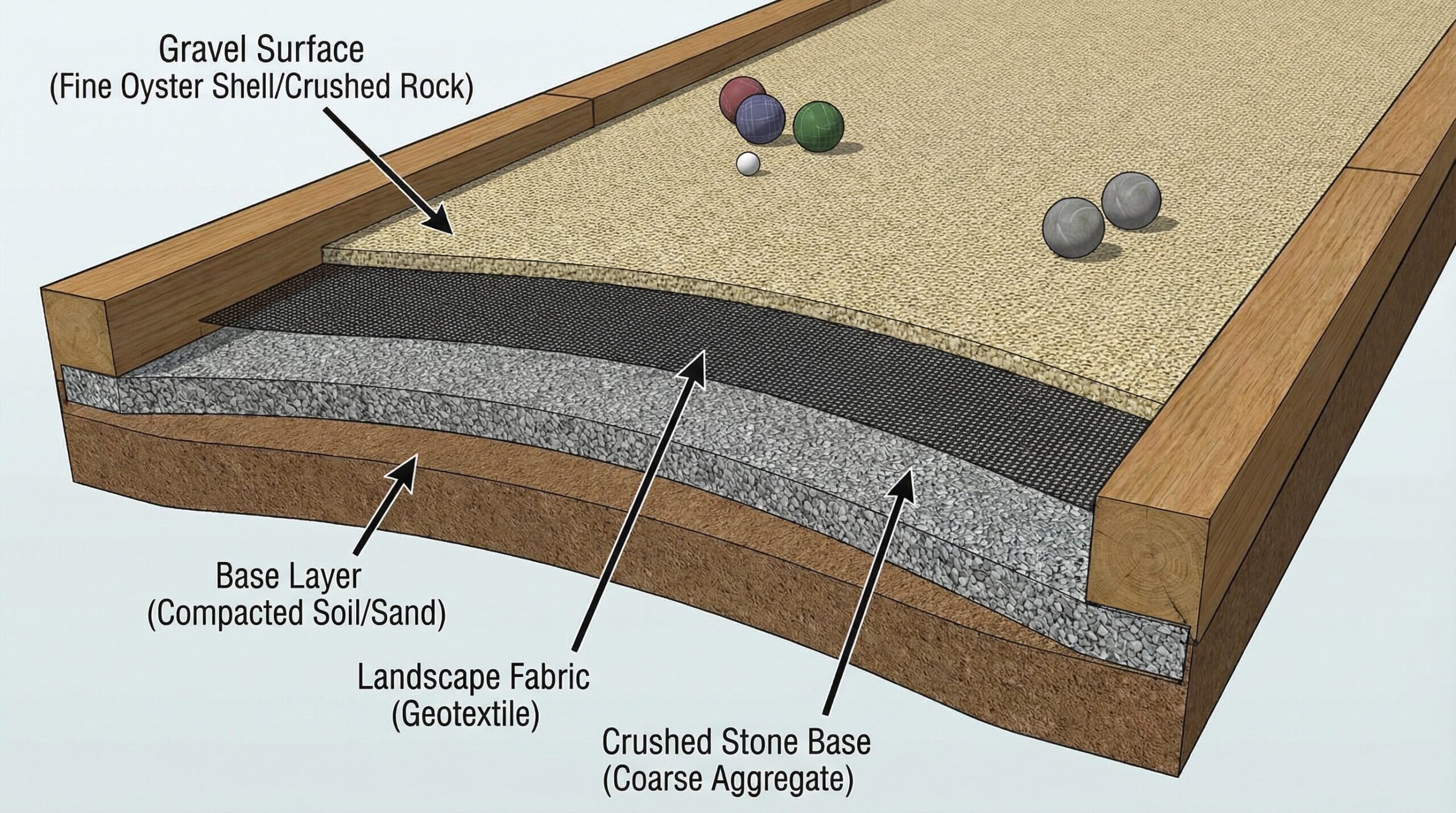
Limestone surface application completes your playing surface. Spread 2-3 inches of fine crushed limestone (1/4-inch minus or limestone dust) evenly across the base. Lightly moisten the material if needed and compact thoroughly using a plate compactor or hand tamper.
Edging and finishing keeps everything in place. Install permanent edging using treated lumber, concrete, or stone to contain the limestone. Check the surface level using a long straightedge and make final adjustments before your first game. If you’re working on other outdoor projects, you might find limestone for garden paths uses similar edging techniques.
Pro Tip: Allow your new limestone surface to settle for a week before heavy play. Light use during this period helps identify any areas that need additional compaction.
Proper installation takes time but creates a court that performs well for years. Rushing the base preparation or skipping compaction steps often leads to problems that require expensive fixes later.
The investment in quality materials and careful installation pays dividends through reduced maintenance and better playing conditions. Your limestone court should provide excellent service with minimal ongoing care when built correctly. For those interested in other limestone applications, explore using limestone for a shed foundation which shares similar installation principles.
Getting started with your limestone bocce court project becomes much easier when you work with experienced aggregate suppliers who understand the specific requirements for recreational surfaces. Hello Gravel offers high-quality limestone materials specifically graded for bocce court applications, along with delivery services that get your project moving quickly. Our team can help you determine the right limestone gradation for your local conditions and provide guidance on quantities needed for your court size.


 Chance Kittrell