Pea Gravel for Outdoor Exercise Areas: Safety, Installation, and Cost Guide
Get an estimate for your project in 60 seconds
 Your information is secure

Creating the perfect outdoor exercise space starts with choosing the right ground surface. Whether you’re building a backyard gym or setting up a commercial training area, your flooring choice affects safety, comfort, and long-term maintenance costs.
Pea gravel offers excellent drainage, natural cushioning, and affordable installation for outdoor workout spaces. This small, rounded stone typically costs 40-60% less than rubber surfacing while providing good impact absorption when installed at proper depths. However, it’s not ideal for heavy weightlifting or wheelchair accessibility.
Quick Answer: Pea gravel works well for bodyweight exercises, circuit training, and yoga areas when installed 2-4 inches deep over a proper base. It excels in drainage and comfort but requires stabilization for high-intensity workouts.
Let’s explore everything you need to know about using pea gravel for your outdoor exercise area, from safety considerations to installation costs.
What is pea gravel and why use it outdoors
Pea gravel consists of small, naturally rounded stones ranging from 1/8 to 3/8 inches in diameter. The smooth, weathered surface feels comfortable underfoot while the varied stone sizes create natural drainage channels.
You’ll find pea gravel commonly used in pathways, patios, playgrounds, and dog run areas because it stays in place better than angular crushed stone while providing excellent water permeability. For exercise areas, these same characteristics translate to a surface that drains quickly after rain and offers some cushioning during movement.
The rounded shape means less sharp edges compared to crushed gravel, making it safer for activities where you might kneel, sit, or accidentally fall. Most pea gravel comes in neutral colors like gray, tan, or brown that blend naturally with outdoor landscapes.

Pros and cons of pea gravel for workout spaces
Understanding both advantages and limitations helps you make the right choice for your specific exercise needs and space requirements.
Advantages for exercise areas
Pea gravel excels in several key areas that matter for outdoor workouts. The natural drainage prevents puddles and mud, keeping your exercise space usable even after heavy rain. The stone surface stays relatively cool compared to rubber mats or concrete, making summer workouts more comfortable.
Installation costs typically run $2-4 per square foot including base preparation, significantly less than rubber surfacing at $8-12 per square foot. The material requires minimal ongoing maintenance beyond occasional raking and adding fresh gravel every few years.
Drawbacks to consider
The main limitation involves stability during dynamic movements. Pea gravel can shift underfoot during explosive exercises like burpees or jumping movements, potentially affecting balance. Heavy equipment may sink slightly into the surface over time.
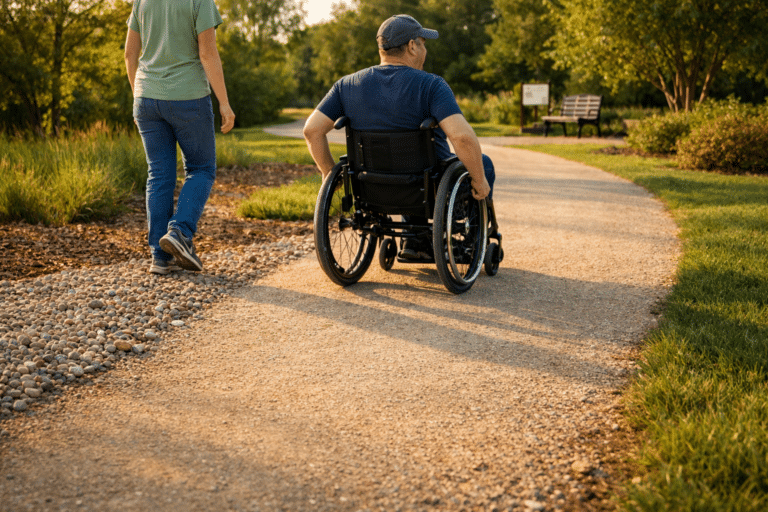
Accessibility presents another concern. Wheelchairs, walkers, and strollers don’t roll smoothly over loose gravel surfaces. If you need ADA compliance or plan to accommodate mobility devices, pea gravel alone won’t meet those requirements.
Safety Note: Pea gravel provides impact cushioning similar to playground equipment bases when installed at proper depths, but it’s not suitable for activities involving heavy weight drops or equipment that requires perfectly stable footing.
Installation depth and safety considerations
Getting the depth right makes the difference between a safe, functional surface and one that creates problems. Playground safety guidelines offer useful benchmarks for exercise applications.
Recommended depths by activity type
For walking paths and light stretching areas, 2-3 inches of pea gravel over compacted base rock provides adequate coverage. Circuit training and bodyweight exercises benefit from 3-4 inches to improve impact absorption and comfort.
High-impact activities like plyometrics or martial arts may require 4-6 inches, though at this depth you’ll notice more instability during lateral movements. Consider adding rubber mats in specific zones where you need both cushioning and stability.
Base preparation matters
Proper installation starts below the gravel layer. Excavate 6-8 inches total depth, then install 3-4 inches of compacted crushed stone base. This prevents the pea gravel from sinking into soft soil and creates better drainage.
Landscape fabric between the base and pea gravel helps prevent weeds while allowing water to pass through. Border edging keeps the gravel contained and maintains clean lines around your exercise area.
Cost comparison with other exercise surfaces
Understanding the full cost picture helps you budget effectively and compare options fairly.
| Surface Type | Cost per sq ft | Pros | Cons |
|---|---|---|---|
| Pea Gravel | $2-4 | Drainage, comfort, DIY-friendly | Shifting, accessibility |
| Rubber Tiles | $8-12 | Stable, accessible, impact absorption | Heat retention, higher cost |
| Artificial Turf | $6-10 | Appearance, stable surface | Poor drainage, maintenance |
| Concrete | $4-8 | Permanent, equipment-friendly | Hard surface, poor drainage |
Material and labor breakdown
For a typical 200 square foot exercise area, expect to spend $150-250 on pea gravel, $100-150 on base rock, and $50-75 on landscape fabric and edging. DIY installation saves $300-500 in labor costs compared to hiring professionals.
Long-term costs favor pea gravel due to minimal maintenance requirements. You might add a half-inch of fresh gravel every 3-4 years at about $0.50 per square foot, but there are no ongoing expenses like watering, fertilizing, or equipment repairs.
Getting accurate quotes
Calculate your gravel needs by multiplying length × width × depth in feet, then dividing by 27 to get cubic yards. Most suppliers provide online calculators and can deliver directly to your location, saving time and transportation costs.
Planning zones and combining materials
Smart planning creates a more functional and safer exercise space by using different materials where they work best.
Creating functional workout zones
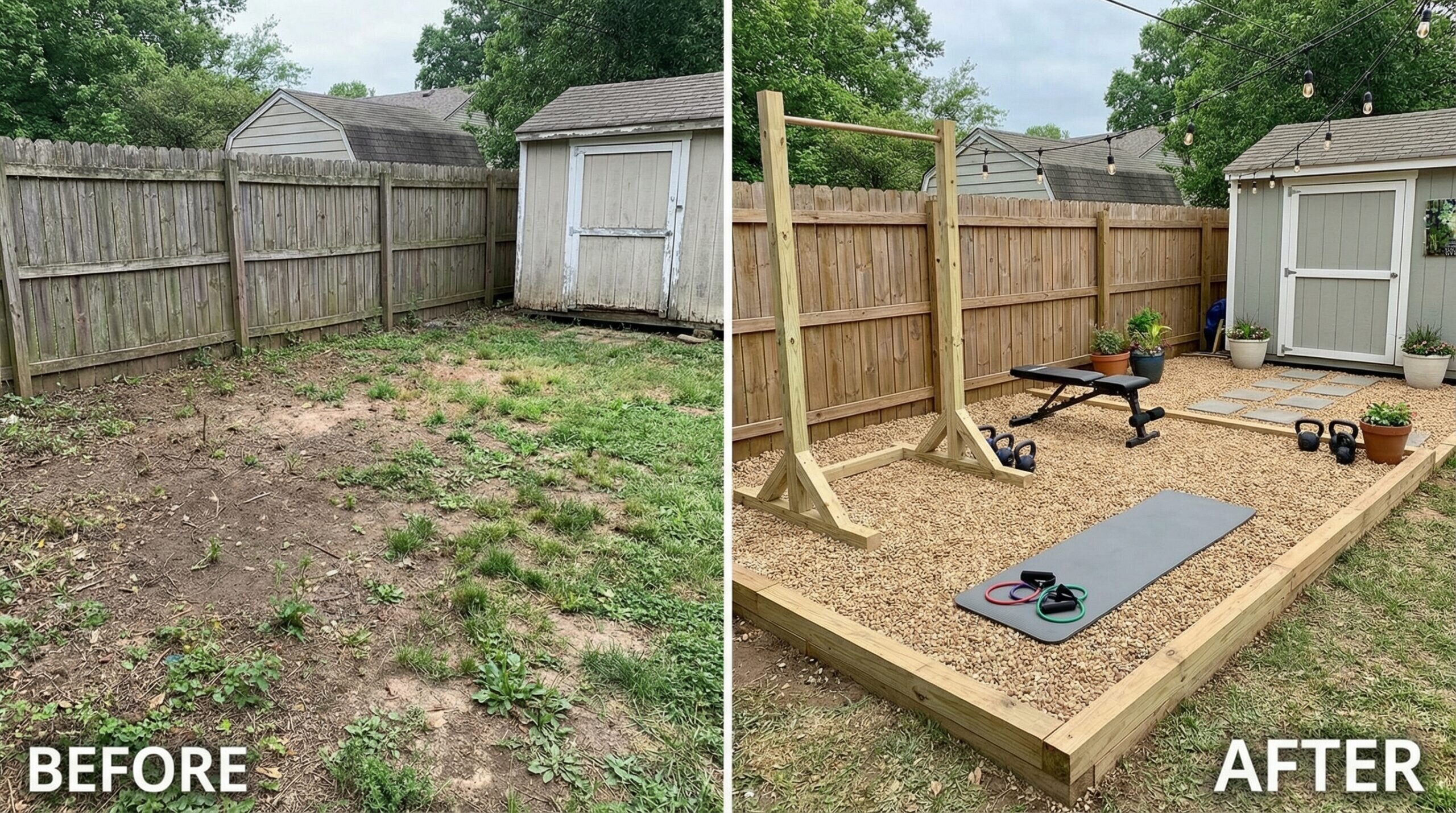
Design your space with specific activities in mind. Use deeper pea gravel (4+ inches) for open areas where you’ll do bodyweight circuits or stretching. Install rubber mats over shallow gravel (2 inches) where you’ll place equipment or do exercises requiring stable footing.
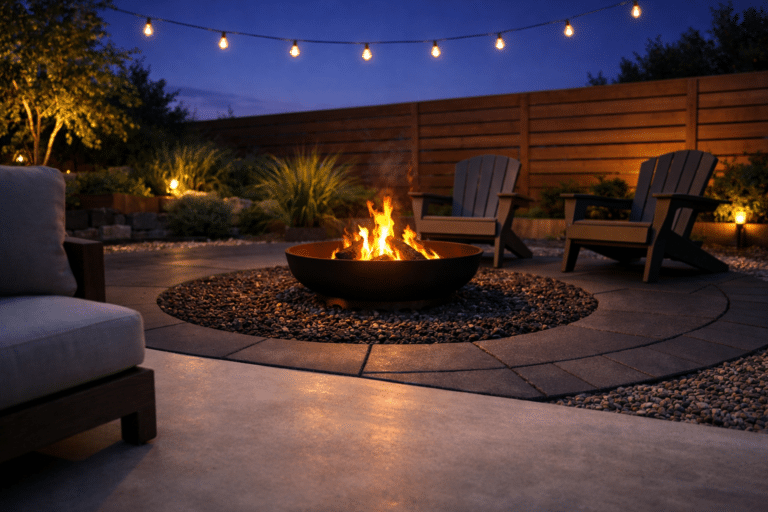
Consider a central pathway of pavers or concrete for moving equipment and ensuring wheelchair access to at least part of your exercise area. This hybrid approach gives you the drainage benefits of pea gravel while maintaining functionality for different users and activities. If you’re also planning other outdoor projects, you might want to explore pea gravel for fire pit areas or shed foundations to create a cohesive backyard design.
Maintenance and seasonal care
Regular raking every few weeks keeps the surface level and redistributes gravel that gets displaced during workouts. After heavy rains or freeze-thaw cycles, check for low spots that might create tripping hazards or areas where the base layer becomes exposed.
Pro Tip: Keep a small stockpile of matching pea gravel for quick touch-ups. High-traffic areas like equipment zones typically need fresh gravel added once or twice per year.
Plan for seasonal drainage by ensuring water flows away from your exercise area toward appropriate drainage points. Proper grading during installation prevents standing water that can undermine your base layer over time. For those considering alternative materials, crushed stone for outdoor exercise areas offers a more stable option with different characteristics.
Pea gravel offers an excellent balance of affordability, comfort, and functionality for many outdoor exercise applications. While it may not suit every workout style or accessibility need, it provides a practical solution for creating attractive, well-draining exercise spaces that require minimal ongoing maintenance.
Ready to start your project? Measure your space, calculate your material needs, and request quotes from local suppliers who can deliver the right amount of pea gravel and base materials directly to your location. You might also consider using pea gravel for raised garden beds or as edging for flower beds to extend the aesthetic throughout your outdoor space.

 Chance Kittrell