River Rock Parking Pads: Design Guide, Pros, Cons, and Installation Tips
Get an estimate for your project in 60 seconds
 Your information is secure
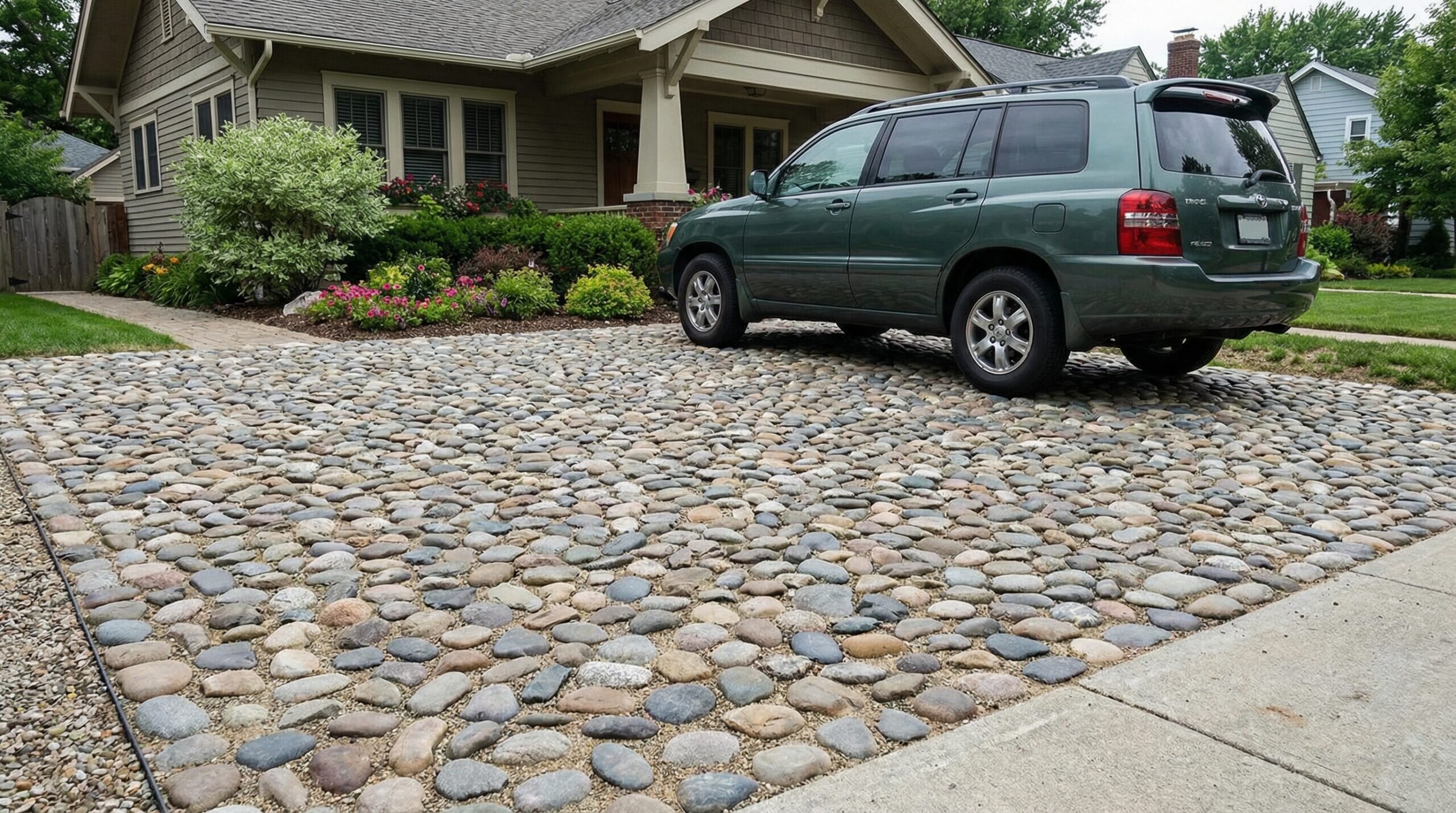
Yes, you can use river rock for parking pads and driveways, but success depends on proper base preparation, correct rock sizing, and adequate edge containment. River rock offers excellent drainage and natural aesthetics, but requires more careful installation than crushed gravel to prevent stone migration and maintain stability under vehicle traffic.
Quick Answer: River rock works well for light residential parking when installed over a compacted crushed stone base with proper edging. It’s ideal for areas prioritizing drainage and natural appearance over maximum load-bearing capacity.
This guide covers everything you need to know about designing, installing, and maintaining river rock parking areas, including when to choose river rock over alternatives and how to ensure long-term performance.
What is river rock and when does it work for parking
River rock consists of naturally rounded stones smoothed by flowing water over time. Unlike angular crushed gravel, these smooth stones create attractive surfaces but can shift more easily under load.
River rock works best for residential driveways, guest parking areas, and overflow parking where vehicles move slowly and park temporarily. The rounded shape provides excellent drainage between stones, making it ideal for areas with heavy rainfall or poor soil drainage.
However, river rock isn’t suitable for every situation. Steep slopes, heavy commercial traffic, or areas requiring maximum traction should use angular crushed stone instead. The smooth surface can become slippery when wet, and individual stones may migrate under frequent turning or braking.
For most homeowners creating a secondary parking area or decorative driveway, river rock offers an appealing middle ground between functionality and natural beauty.
Pros and cons of river rock for driveways and parking pads

River rock brings several advantages to parking projects. The natural appearance complements landscaping better than industrial materials, potentially increasing property value. Excellent drainage prevents puddles and ice formation, while the permeable surface helps manage stormwater runoff.
Maintenance requirements stay relatively low once properly installed. Unlike asphalt, river rock won’t crack or require seal coating. Individual stones can be easily replaced if damaged, and the surface naturally self-levels to some degree.
Drainage Benefit: River rock parking surfaces can absorb up to 80% more rainfall than solid pavement, reducing runoff and helping prevent flooding in surrounding areas.
The drawbacks require honest consideration. Stone migration remains the biggest challenge – rocks will gradually spread beyond their intended boundaries without proper edging. Snow removal becomes more difficult since plowing can displace stones. Initial installation costs typically exceed basic gravel but remain less than concrete or asphalt.
Traction on wet or icy surfaces doesn’t match angular gravel. For households with elderly residents or mobility concerns, the uneven surface may pose accessibility challenges.
| Factor | River Rock | Crushed Gravel | Asphalt |
|---|---|---|---|
| Drainage | Excellent | Good | Poor |
| Aesthetics | High | Medium | Low |
| Maintenance | Low | Low | High |
| Initial Cost | Medium | Low | High |
| Traction | Fair | Good | Excellent |
Choosing the right river rock for parking areas
Rock size significantly impacts performance and appearance. For parking applications, stones between 1-3 inches work best. Smaller stones (under 1 inch) tend to scatter and stick to tires, while larger stones (over 4 inches) create an uncomfortable driving surface.
Mixing river rock with crushed stone improves stability. A popular approach uses 70% river rock for appearance with 30% angular gravel for binding. This combination reduces migration while maintaining the natural aesthetic.
Color selection depends on your property’s style and heat considerations. Lighter colors reflect more heat and stay cooler in summer, while darker stones absorb heat and may help with ice melting in winter.
For a typical single-car parking pad (10×20 feet), you’ll need approximately 6-8 cubic yards of material including base preparation. Always order 10-15% extra to account for compaction and future maintenance needs.

Designing a river rock parking area
Proper design prevents most long-term problems. Standard parking spaces measure 9×18 feet minimum, though 10×20 feet provides more comfortable maneuvering room. Allow additional space for door opening and walking paths.
Slope management is critical for both drainage and stone retention. Ideal slope ranges from 1-3% (1-3 inches of drop per 10 feet) to promote drainage without encouraging stone migration. Slopes exceeding 5% require additional stabilization measures or alternative materials.
Edge restraints keep stones contained and maintain clean boundaries. Options include treated lumber, concrete curbing, or metal edging. The restraint should extend 2-3 inches above the finished rock surface to prevent spillover.
Design Tip: Plan for a 6-inch deep excavation – 4 inches for crushed stone base plus 2 inches for river rock surface layer. This depth provides adequate support for passenger vehicles while maintaining proper drainage.
Consider drainage patterns around your parking area. Direct runoff away from foundations and toward appropriate drainage areas or rain gardens. The permeable nature of river rock helps, but proper grading remains essential.
Installation steps for river rock parking pads
Start by marking your parking area boundaries and calling utility location services. Remove existing vegetation and organic material, then excavate to your planned depth. Compact the exposed soil using a plate compactor or hand tamper.
Install your chosen edge restraints before adding base materials. This prevents base stone from spreading during installation and provides a guide for proper depth.
Add and compact your crushed stone base in 2-inch lifts. Use angular crushed stone for the base layer, as it compacts better and provides superior load distribution. Water lightly during compaction to achieve maximum density.
Spread river rock evenly over the compacted base, maintaining consistent depth. Rake smooth and compact lightly – avoid over-compaction which can break stones or create an overly rigid surface.
Final grading should leave the rock surface slightly above surrounding grade to account for settling. Add marking stones or reflectors if the parking area will be used at night.
Hello Gravel simplifies this process by delivering properly sized materials directly to your project site. Our online quote system helps you calculate exact quantities needed, and our experienced team can recommend the best rock combinations for your specific application and local conditions.
Creating a successful river rock parking area requires attention to design details and proper installation techniques. When done correctly, you’ll enjoy years of attractive, functional parking with minimal maintenance requirements. The natural drainage and aesthetic appeal make river rock an excellent choice for homeowners prioritizing both function and curb appeal in their parking solutions. If you’re also planning other outdoor projects, consider exploring how river rock works for patio bases, walkway foundations, or even fire pit areas to create a cohesive landscape design.


 Chance Kittrell