Rock and Gravel Sizes Chart Complete Guide for Your Next Project
Get an estimate for your project in 60 seconds
 Your information is secure
Choosing the right rock and gravel size can make or break your project. Whether you’re building a driveway, creating garden pathways, or installing drainage systems, understanding material sizes helps you achieve better results and avoid costly mistakes.
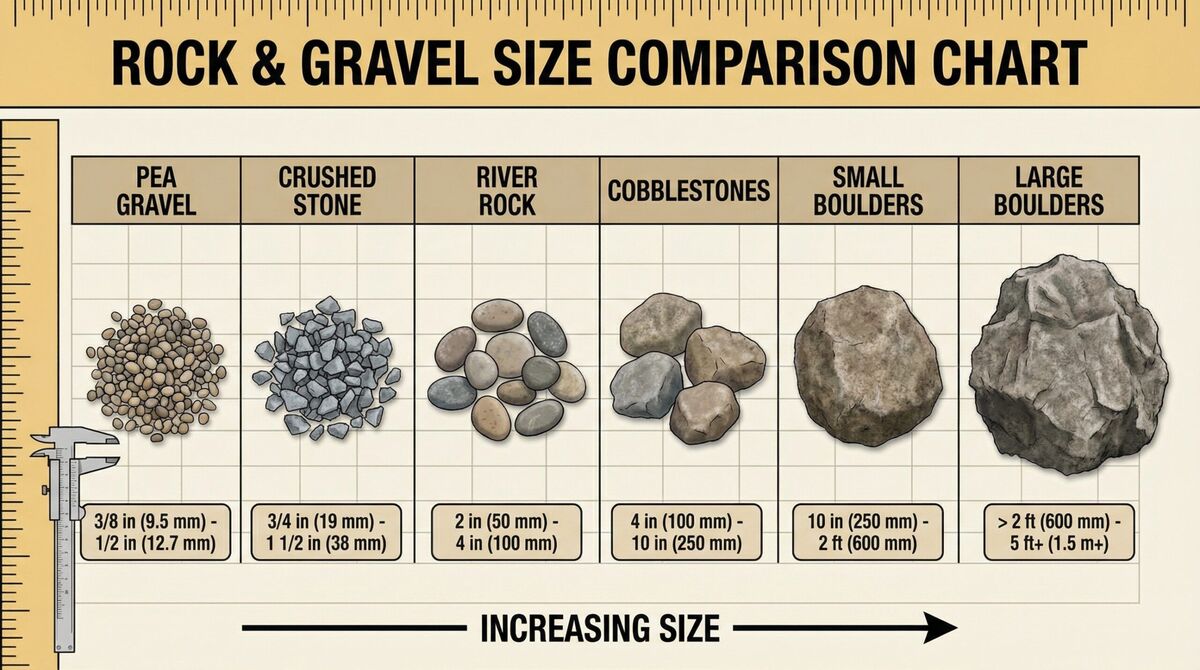
Rock and gravel sizes typically range from 1/8 inch pea gravel to massive boulders measuring several feet across. The size you choose directly impacts drainage, stability, and visual appeal. Small materials like pea gravel work perfectly for walkways, while larger stones provide erosion control and structural support.
Quick Answer: Pea gravel (1/8-3/8 inch) works best for pathways and decorative areas. Crushed stone (3/8-3/4 inch) suits driveways and construction bases. Boulders (3+ inches) provide erosion control and landscaping focal points.
This guide breaks down rock and gravel sizes, their specific applications, and how to select the perfect material for your needs. You’ll learn which sizes work for different projects and why size matters for long-term success.
Understanding rock and gravel size classifications
Rock and gravel materials follow standard size classifications that help you compare options and make informed decisions. These classifications consider both diameter measurements and intended applications.
The construction industry uses consistent sizing standards. Fine materials measure less than 3/8 inch, medium sizes range from 3/8 to 3 inches, and large materials exceed 3 inches in diameter. Each category serves specific purposes based on drainage needs, load-bearing requirements, and aesthetic goals.
Understanding these classifications saves time and money. When you know that 3/4-inch crushed stone provides excellent compaction for driveways, you can confidently specify materials without guesswork. Similarly, recognizing that pea gravel offers superior drainage helps you choose appropriate materials for water management projects. For a more detailed breakdown of stone aggregate size classifications, you can explore industry-standard measurements and applications.
Size also affects installation methods and costs. Smaller materials spread easily by hand or with basic tools, while larger stones may require machinery for placement. Planning ahead based on size requirements helps you budget accurately and schedule appropriate equipment.
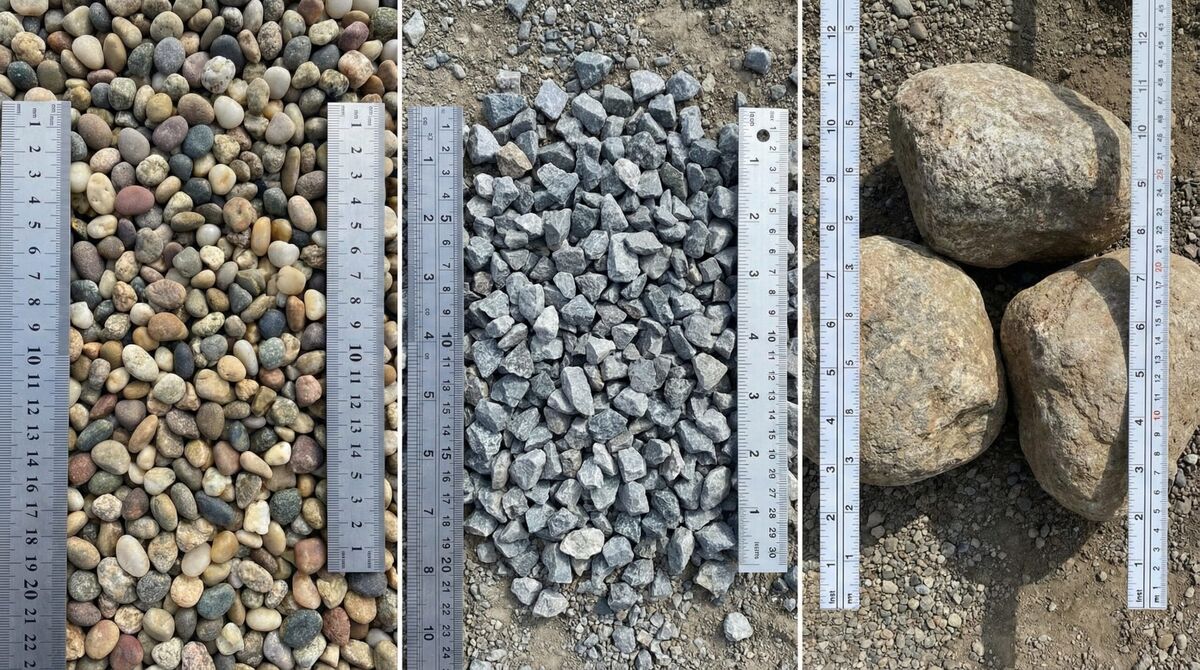
Small rocks and gravel for detailed work
Small rocks and gravel, measuring 1/8 to 3/8 inch, excel in applications requiring smooth surfaces and precise drainage. These materials create comfortable walking surfaces while maintaining excellent water flow characteristics.
Pea gravel represents the most popular small rock option. Its naturally rounded shape and smooth texture make it ideal for pathways, playground surfaces, and decorative garden borders. The small size allows easy installation without heavy equipment, making it perfect for DIY projects.
River rocks in this size range offer similar benefits with enhanced visual appeal. Their water-polished surfaces create attractive accents around water features, in plant beds, and as mulch alternatives. The natural color variations add depth and interest to landscaping designs.
Pro Tip: Small rocks require edge restraints to prevent spreading. Install landscape edging or borders to maintain clean lines and prevent material migration into adjacent areas.
These materials drain exceptionally well due to the spaces between individual pieces. This characteristic makes them valuable for areas prone to standing water or where moisture management is critical. However, their small size means they can shift under heavy traffic, so they work best in low-impact applications.
| Rock Type | Size Range | Best Uses | Drainage Rating |
|---|---|---|---|
| Pea Gravel | 1/8-3/8 inch | Pathways, playgrounds | Excellent |
| River Rock | 1/4-3/8 inch | Decorative, water features | Excellent |
| Fine Crushed Stone | 1/8-1/4 inch | Base material, concrete mix | Good |
Medium-sized materials for versatile applications
Medium-sized rocks and gravel, ranging from 3/8 to 3 inches, provide the perfect balance between stability and workability. These materials handle moderate traffic while offering good drainage and attractive appearance.
Crushed stone in this range serves as the workhorse of construction and landscaping projects. The angular edges create excellent compaction, making it ideal for driveway bases, walkway foundations, and structural applications. Its irregular shape allows pieces to lock together, creating stable surfaces that resist shifting. To better understand crushed stone size options for quarry applications, consult detailed sizing charts that match your project needs.
Cobblestones fall into the larger end of this category, typically measuring 2.5 to 10 inches. These naturally rounded stones create charming, old-world aesthetics perfect for formal pathways, edging, and decorative features. Their substantial size provides good stability while maintaining visual appeal.
Medium gravels work well for French drains and other drainage applications. The size allows adequate water flow while providing structural support for pipes and surrounding materials. This makes them valuable for foundation drainage, retaining wall backfill, and erosion control projects.
Installation of medium-sized materials requires more effort than small rocks but remains manageable for most homeowners. The materials spread evenly with rakes and can be compacted with hand tools or small mechanical compactors for enhanced stability.
Large rocks for structural and aesthetic impact
Large rocks and boulders, measuring 3 inches and above, provide maximum stability and create dramatic visual impact. These materials excel in applications requiring erosion control, structural support, and landscape focal points.
Riprap represents the most common large rock application. These carefully sized stones, typically 6 to 24 inches in diameter, protect shorelines, control erosion, and stabilize slopes. Their weight and interlocking characteristics create durable barriers that withstand water flow and weather extremes.
Boulders serve dual purposes as functional and decorative elements. In landscaping, they create natural-looking retaining walls, define garden borders, and serve as striking focal points. Their massive size and unique shapes add character and permanence to outdoor spaces. For comprehensive information on various rock sizes and their applications, explore detailed charts that help you select the right materials.
Important Note: Large rocks require professional installation for safety and proper placement. Their weight demands appropriate equipment and expertise to position correctly and safely.
Large materials offer superior drainage due to the significant gaps between pieces. This characteristic makes them valuable for subsurface drainage systems, where rapid water movement is essential. However, their size limits applications where smooth surfaces or detailed work is required.
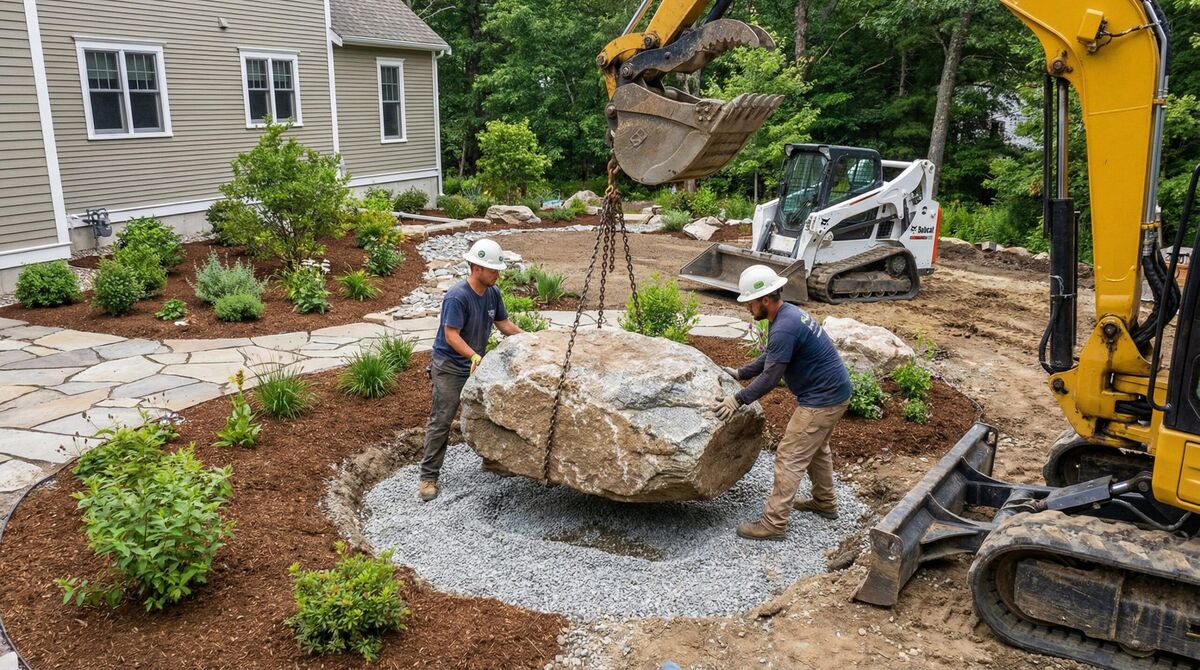
The permanence of large rocks makes them cost-effective long-term solutions. While initial installation costs may be higher, their durability and minimal maintenance requirements provide excellent value over time. They resist weathering, require no replacement, and often improve with age as they settle naturally into the landscape.
Selecting the right size for your specific project
Choosing appropriate rock and gravel sizes requires considering multiple factors including intended use, traffic patterns, drainage needs, and aesthetic preferences. The right selection ensures project success and long-term satisfaction.
Start by identifying your primary project goal. Decorative applications prioritize appearance and texture, while functional projects focus on drainage, stability, or load-bearing capacity. Understanding your main objective helps narrow size options and guides decision-making. If you’re working on a driveway project, refer to the ultimate driveway stone size chart for specific recommendations.
Consider traffic patterns and usage intensity. High-traffic areas like driveways need larger, more stable materials that resist displacement. Low-traffic decorative areas can use smaller, more attractive options that prioritize visual appeal over durability.
Evaluate drainage requirements carefully. Areas with heavy rainfall or poor natural drainage benefit from larger materials that promote rapid water movement. Conversely, areas requiring moisture retention might use smaller materials that slow water flow.
Budget considerations affect size selection since larger materials typically cost more to purchase and install. However, they often provide better long-term value through reduced maintenance and replacement needs. Balance initial costs against long-term benefits when making final decisions. For a complete overview of common gravel sizes and their uses, review comprehensive guides that detail pricing and application information.
Consult with local suppliers about material availability and regional preferences. Some areas have abundant local stone that offers cost advantages, while others may require imported materials. Understanding local options helps optimize both cost and performance for your specific location and project requirements.
The right rock and gravel size transforms ordinary projects into successful, long-lasting improvements. By understanding size classifications, applications, and selection criteria, you can confidently choose materials that meet your needs and exceed your expectations. Take time to evaluate your specific requirements, and don’t hesitate to consult with professionals when dealing with complex or large-scale projects.