Complete guide to ordering stone for your landscaping project

Get an estimate for your project in 60 seconds
 Your information is secure
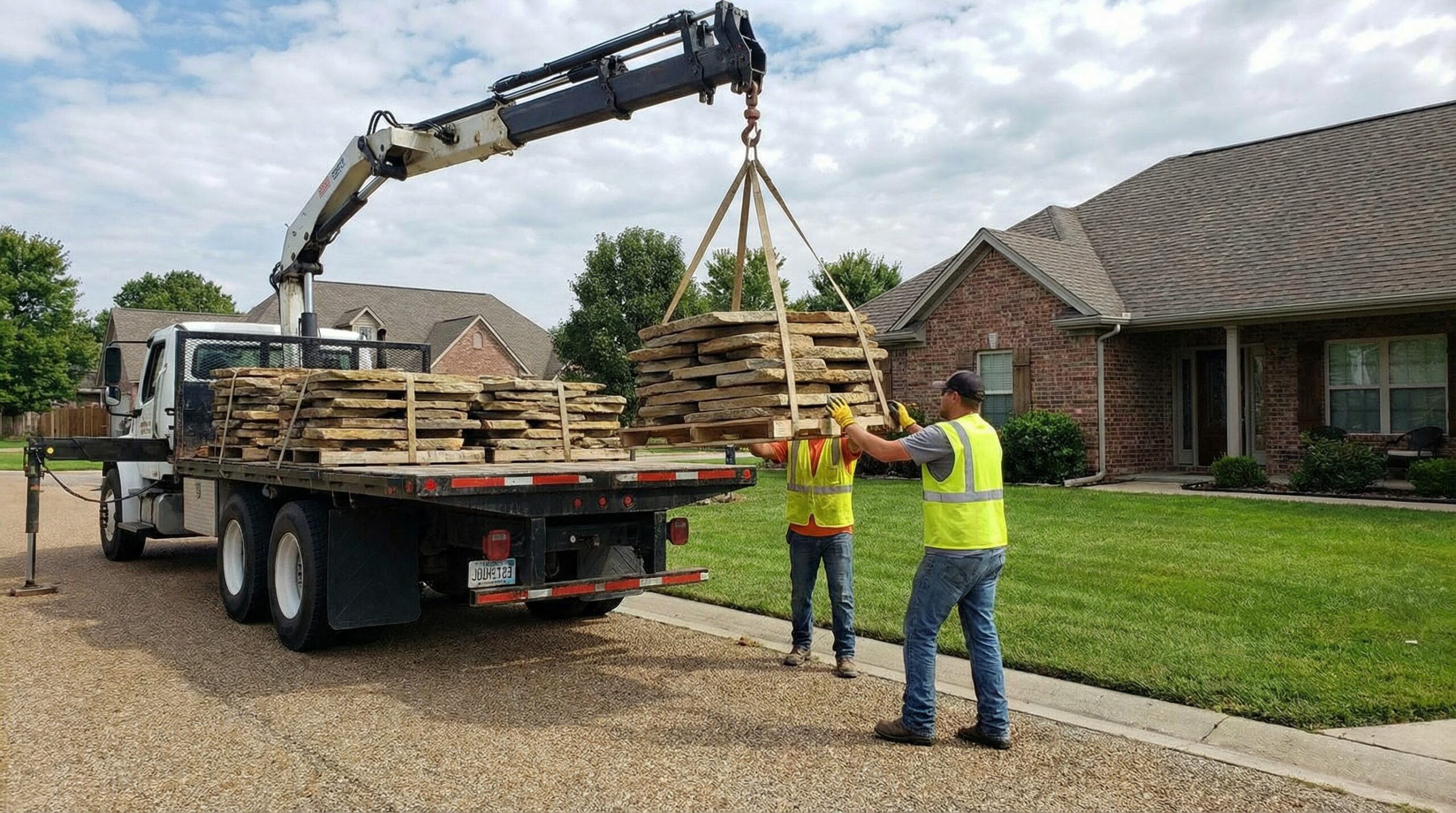
Planning a new patio, garden pathway, or retaining wall? Ordering stone for your landscaping project doesn’t have to be overwhelming. With the right knowledge about stone types, delivery logistics, and preparation steps, you can transform your outdoor space efficiently and cost-effectively.
Most residential stone orders range from 3 to 20 tons, with delivery costs typically between $300 to $800 depending on stone type, quantity, and distance. Professional delivery services handle the logistics, ensuring your materials arrive safely and on schedule for your project timeline.
Quick tip: Most stone suppliers require a minimum order of 3 tons for delivery, making it cost-effective for medium to large projects but potentially expensive for small garden accents.
This guide walks you through everything you need to know about ordering stone, from selecting the right materials to preparing for delivery day. You’ll discover how to calculate quantities accurately, choose reliable suppliers, and avoid common pitfalls that can delay your project.
Understanding your stone options
When ordering stone for landscaping, you’ll encounter two main categories that serve different purposes and budgets. Understanding these options helps you make informed decisions that align with your project goals and aesthetic preferences.
Natural stones like granite, limestone, and slate offer timeless beauty and exceptional durability. Granite provides superior strength and comes in various colors, making it ideal for high-traffic areas like driveways and walkways. Limestone offers excellent workability and develops a beautiful patina over time, perfect for garden walls and decorative features.

Manufactured stones present a cost-effective alternative that mimics natural stone appearance. These products combine cement, aggregates, and pigments to create consistent colors and textures. They’re lighter than natural stones, making installation easier, and often cost 30-50% less than their natural counterparts.
Consider your project’s specific requirements when choosing between options. Natural stones excel in durability and unique character but require higher investment. For those seeking versatile decorative options, landscape decorative stone offers predictable results and easier handling while maintaining attractive appearance for most residential applications.
Calculating quantities and planning delivery
Accurate quantity calculation prevents costly mistakes and project delays. Start by measuring your project area in square feet, then determine the appropriate depth based on your application. Pathways typically need 2-3 inches of stone, while driveways require 4-6 inches for proper stability.
Most suppliers provide coverage charts showing how many square feet one ton covers at different depths. For example, one ton of crushed stone typically covers 100 square feet at 2 inches deep. Always order 10-15% extra material to account for compaction and future maintenance needs. If you’re planning a garden path, understanding how much river rock you need for a garden path can help ensure accurate ordering.
Planning insight: Delivery timing matters significantly. Schedule delivery 1-2 days before you plan to start installation, ensuring materials stay dry and accessible while preventing extended storage issues.
Coordinate with your supplier about delivery logistics early in the planning process. Discuss access routes, placement preferences, and any site restrictions that might affect delivery. Clear communication prevents delays and ensures stones are positioned where you need them most.
Preparing your property for stone delivery
Proper preparation makes the delivery process smooth and protects your property from potential damage. Start by clearing the delivery area of vehicles, outdoor furniture, and any obstacles that might impede truck access or stone placement.
Delivery trucks typically need 12 feet of width and adequate overhead clearance to maneuver safely. Mark underground utilities if delivery involves heavy equipment, and consider protecting nearby plants or delicate surfaces with tarps or plywood sheets.
Communicate specific placement instructions to your delivery service beforehand. Most companies can place stones within reasonable distance of the truck, but steep slopes or narrow passages may require additional arrangements or equipment.
| Preparation Task | Timeline | Why Important |
|---|---|---|
| Clear delivery area | 1 day before | Ensures safe truck access |
| Mark utilities | 2-3 days before | Prevents damage to underground lines |
| Protect landscaping | Morning of delivery | Avoids damage to existing plants |
| Arrange site access | During booking | Prevents delivery delays |
Weather conditions can significantly impact delivery schedules, especially for unpaved access routes. Wet conditions may make certain areas inaccessible, so maintain flexibility in your timeline and have backup dates available during rainy seasons.
Managing costs and choosing suppliers
Stone delivery costs vary based on several key factors that you can influence through smart planning. Distance from the supplier represents the largest variable cost, with local deliveries typically costing $50-150 while longer distances can add $200-400 to your total.

Order size affects per-ton pricing significantly. Larger orders often qualify for volume discounts, making it economical to coordinate with neighbors or plan multiple projects simultaneously. When purchasing in large quantities, exploring bulk landscape rock options can provide substantial savings. Some suppliers offer seasonal pricing advantages during slower periods.
Compare quotes from multiple suppliers, but don’t focus solely on price. Consider delivery reliability, stone quality, and customer service reputation. Working with a reputable landscape rock company often proves worthwhile when it includes better service and guaranteed delivery windows.
Cost-saving strategy: Many suppliers offer pickup discounts of 20-30% if you can transport materials yourself. This works well for smaller quantities or when you have access to appropriate vehicles and equipment.
Factor in additional services like precise placement or removal of old materials when budgeting. These services typically cost extra but can save significant time and labor during your project execution. For comprehensive planning, consider reviewing landscape material delivery options to understand all available services.
Stone delivery transforms challenging landscaping projects into manageable endeavors when approached with proper planning and preparation. By understanding your options, calculating needs accurately, preparing your site thoroughly, and choosing reliable suppliers, you set the foundation for successful project completion. Take time to research local suppliers, compare services, and communicate your requirements clearly to ensure your stone delivery experience meets your expectations and timeline.
Remember that quality materials and professional delivery service represent investments in your property’s long-term value and your project’s success. With the knowledge from this guide, you’re equipped to make informed decisions that will result in beautiful, durable landscaping that enhances your outdoor space for years to come.


