Complete landscape stone size chart for perfect project planning

Get an estimate for your project in 60 seconds
 Your information is secure
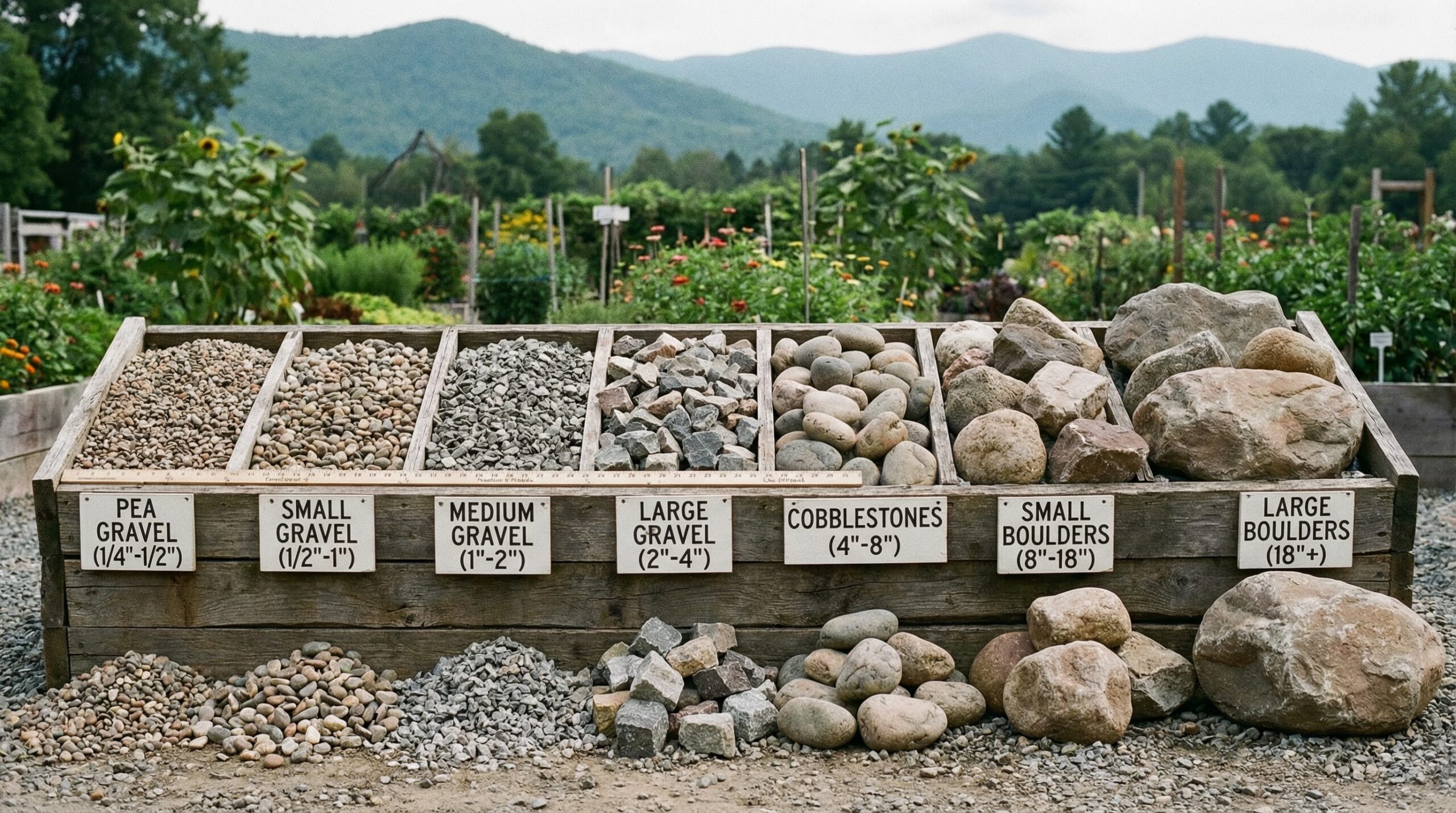
Choosing the right stone size for your landscaping project can transform your outdoor space from ordinary to extraordinary. The difference between a professional-looking patio and one that feels unfinished often comes down to selecting stones with the proper dimensions for your specific application.
Stone sizes typically range from 1/8 inch pea gravel for comfortable walkways to 24-inch boulders for dramatic focal points. Each size category serves distinct functional and aesthetic purposes in landscape design. Understanding these differences helps you create outdoor spaces that look polished and perform well for years to come.
Quick Answer: Most walkways work best with 1/4 to 3/8 inch pea gravel, driveways need 3/4 inch crushed stone for stability, and French drains require 3/4 to 1.5 inch clean stone for proper water flow.
Understanding stone size categories and their impact
Stone classification starts with three main categories that determine how you’ll use them in your landscape. Small stones measure under 1 inch and excel in detailed applications where comfort and precision matter most. These compact pieces create smooth walking surfaces and work beautifully for filling spaces between larger landscape elements.
Medium stones range from 1 to 6 inches and bridge the gap between decorative and structural applications. You’ll find these versatile stones in many residential projects where you need both durability and visual appeal. They’re substantial enough to stay in place during weather events but manageable enough for DIY installation.
Large stones and boulders exceed 6 inches and can weigh hundreds of pounds. These impressive pieces serve as statement elements in landscape design while providing substantial structural support when needed. The weight factor becomes crucial as stone size increases, impacting both your project timeline and budget considerations.

Essential stone size chart for project planning
Here’s your reference guide for matching stone dimensions to specific landscaping applications:
| Stone Size | Common Names | Best Applications | Coverage per Ton |
|---|---|---|---|
| 1/8″ – 3/8″ | Pea gravel, #8 stone | Walkways, patios, playgrounds | 100-120 sq ft |
| 3/8″ – 3/4″ | #57 stone, crushed gravel | Driveways, base material | 80-100 sq ft |
| 3/4″ – 1.5″ | #4 stone, river rock | French drains, decorative borders | 70-90 sq ft |
| 2″ – 6″ | River rocks, cobblestones | Water features, edging, focal points | 60-80 sq ft |
Coverage estimates assume a 2-3 inch depth and may vary based on stone type and compaction. The numbering system might seem backward, but smaller numbers actually indicate larger stones due to the screening process used in quarries.
Pro Tip: Always order 10-15% more material than your calculations suggest to account for compaction and future maintenance needs.
Choosing the right size for specific applications
Your project’s intended use should drive your stone size selection more than aesthetic preferences alone. Walkways and patios perform best with stones between 1/4 and 3/8 inches because these sizes create comfortable surfaces for bare feet while providing excellent drainage. The rounded edges of decorative gravel feel pleasant underfoot and won’t shift excessively under normal foot traffic.
Driveways require more substantial stones in the 3/8 to 3/4 inch range to handle vehicle weight without displacement. These medium-sized stones interlock naturally, creating a stable surface that distributes load effectively. The angular nature of crushed stone provides better compaction than rounded alternatives, though river rock gravel driveways can work well with proper preparation.
Drainage applications need careful size selection to balance water flow with structural stability. French drains work optimally with 3/4 to 1.5 inch clean stone that allows rapid water movement while preventing soil infiltration. Smaller stones can clog with debris, while larger ones may not provide adequate surface area for water collection.

Practical considerations for installation and maintenance
Installation methods vary significantly based on stone size and can impact your project’s overall success. Small stones like garden pebbles spread easily by hand and require minimal equipment, making them ideal for DIY projects. You can level and adjust these materials with simple tools like rakes and hand tampers.
Medium stones often require wheelbarrows for transport and may need mechanical compaction for optimal performance. The increased weight means more physical effort during installation, but the result is typically more durable and requires less ongoing maintenance than smaller alternatives. Working with a reliable landscape rock supply company can ensure you get the right materials delivered directly to your site.
Large stones and boulders usually demand professional equipment for safe placement. A single 12-inch boulder can weigh over 100 pounds, requiring careful planning for delivery and positioning. However, once properly installed, these substantial pieces rarely need adjustment or replacement.
Maintenance Reality: Smaller stones require more frequent maintenance as they can shift during heavy rains or freeze-thaw cycles, while larger stones stay put but may need occasional cleaning to maintain their appearance.
The cost factor extends beyond initial material prices to include installation and long-term maintenance expenses. While larger stones cost more upfront, they often prove more economical over time due to reduced maintenance needs and longer lifespan. For larger projects, consider purchasing decorative stones in bulk to reduce overall costs.
Understanding these stone size fundamentals helps you make informed decisions that balance aesthetic goals with practical requirements. Whether you’re creating an intimate garden path or a grand entrance driveway, selecting the appropriate stone dimensions ensures your landscape investment delivers lasting beauty and functionality. For comprehensive guidance on selecting the perfect materials, explore our guide to landscape decorative stone.
Ready to start your landscaping project with confidence? Consider your specific needs, local climate conditions, and long-term maintenance preferences when making your final stone size selection. The right choice will serve your outdoor space beautifully for decades to come.


