Gravel #5 Cost Guide – Prices, Installation & Best Uses 2025
Get an estimate for your project in 60 seconds
 Your information is secure
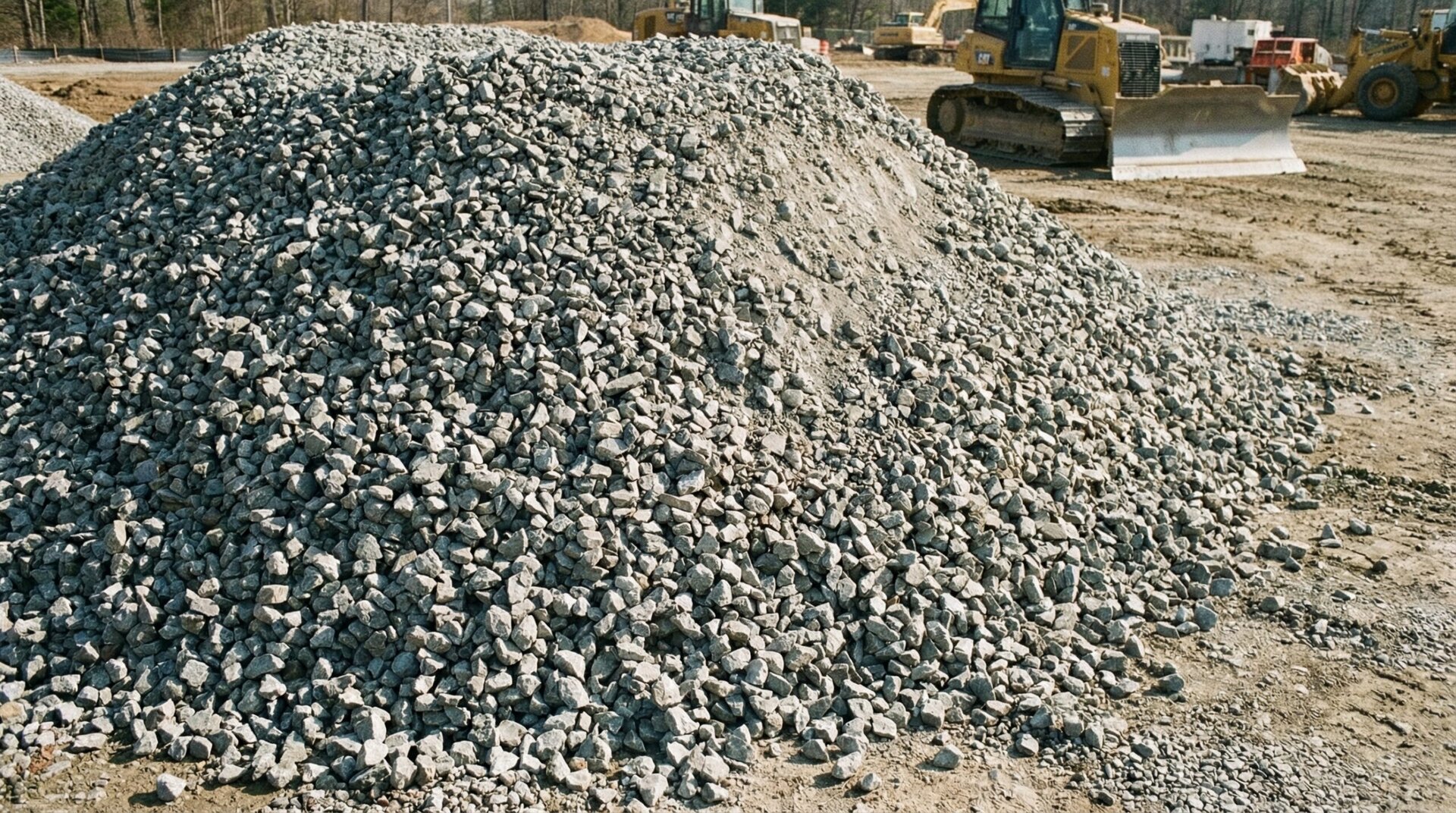
Looking to buy Gravel #5 for your next project? You’re looking at costs between $30 to $40 per ton for the material itself, or roughly $1 to $3 per square foot when professionally installed. This versatile crushed stone has become a go-to choice for driveways, road bases, and construction projects thanks to its durability and excellent drainage properties.
Gravel #5, also known as crushed stone, consists of angular rocks ranging from 1 to 2 inches in diameter. The material typically includes limestone, granite, and trap rock that’s been crushed and screened to uniform specifications. Whether you’re planning a new driveway or need base material for a construction project, understanding the costs and applications will help you make the right choice.
Quick Fact: A typical single-car driveway (12×25 feet) requires about 9 tons of Gravel #5, costing between $270 to $360 for materials alone.
What determines Gravel #5 pricing
Several factors influence how much you’ll pay for Gravel #5. Your location plays the biggest role since transportation costs can significantly impact the final price. If you live in a remote area or far from quarries, expect to pay more due to delivery fees.
The quantity you need also affects pricing. Buying in bulk typically reduces the per-ton cost, while smaller orders often carry premium pricing. Most suppliers offer better rates for orders over 10 tons, making it worthwhile to coordinate with neighbors or plan multiple projects together.
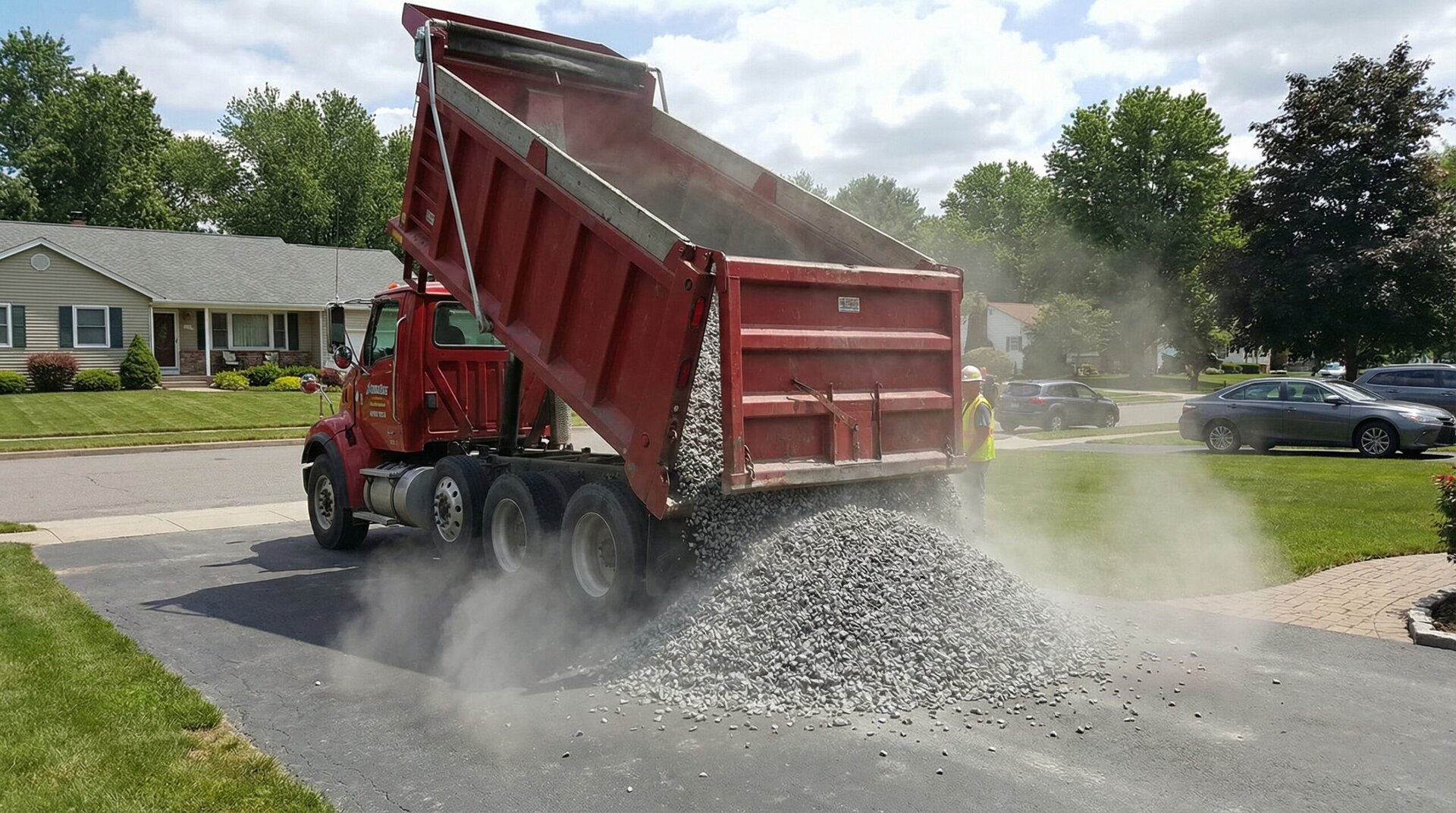
Seasonal demand creates price fluctuations too. Spring and early summer see the highest demand as construction projects ramp up, potentially pushing prices higher. Planning your project for late fall or winter might save you money, though weather conditions could complicate installation.
Your chosen supplier matters as well. Some companies include delivery and spreading services in their pricing, while others charge separately for these services. Always ask for a complete breakdown to compare total project costs accurately.
Installation costs and project breakdown
Professional installation adds $1 to $2 per square foot to your material costs. This includes site preparation, proper grading, and compaction to ensure long-lasting results. For a standard driveway, you’re looking at total installed costs between $2 to $5 per square foot.
Site preparation represents a significant portion of installation costs. Excavation and grading typically run $1 to $3 per square foot, depending on your terrain and existing conditions. Rocky or sloped areas require more work and higher costs.
| Project Size | Material Cost | Installation Cost | Total Range |
|---|---|---|---|
| Single car (300 sq ft) | $270-$360 | $300-$600 | $570-$960 |
| Double car (600 sq ft) | $540-$720 | $600-$1,200 | $1,140-$1,920 |
| Long driveway (1,000 sq ft) | $900-$1,200 | $1,000-$2,000 | $1,900-$3,200 |
The thickness of your Gravel #5 layer affects both material quantities and costs. Most applications require 4 to 6 inches of compacted material, though heavy-duty applications might need up to 8 inches. Each additional inch increases material costs by roughly 25%.
Pro Tip: Adding a geotextile fabric underneath your Gravel #5 costs an extra $0.50 per square foot but significantly improves longevity by preventing mixing with underlying soil.
Best applications for Gravel #5
Gravel #5 excels as a base material for various construction projects. Its angular shape allows pieces to interlock, creating a stable foundation that resists shifting under load. This makes it perfect for driveway bases, road construction, and parking areas. For projects requiring a more compact base layer, consider using ABC Gravel which combines crushed stone with fines for superior compaction.
The material works exceptionally well for septic system leach fields due to its excellent drainage properties. The spaces between stones allow water to flow freely while providing structural support for pipes and tanks. Many local codes specifically require Gravel #5 or septic rock for septic applications.
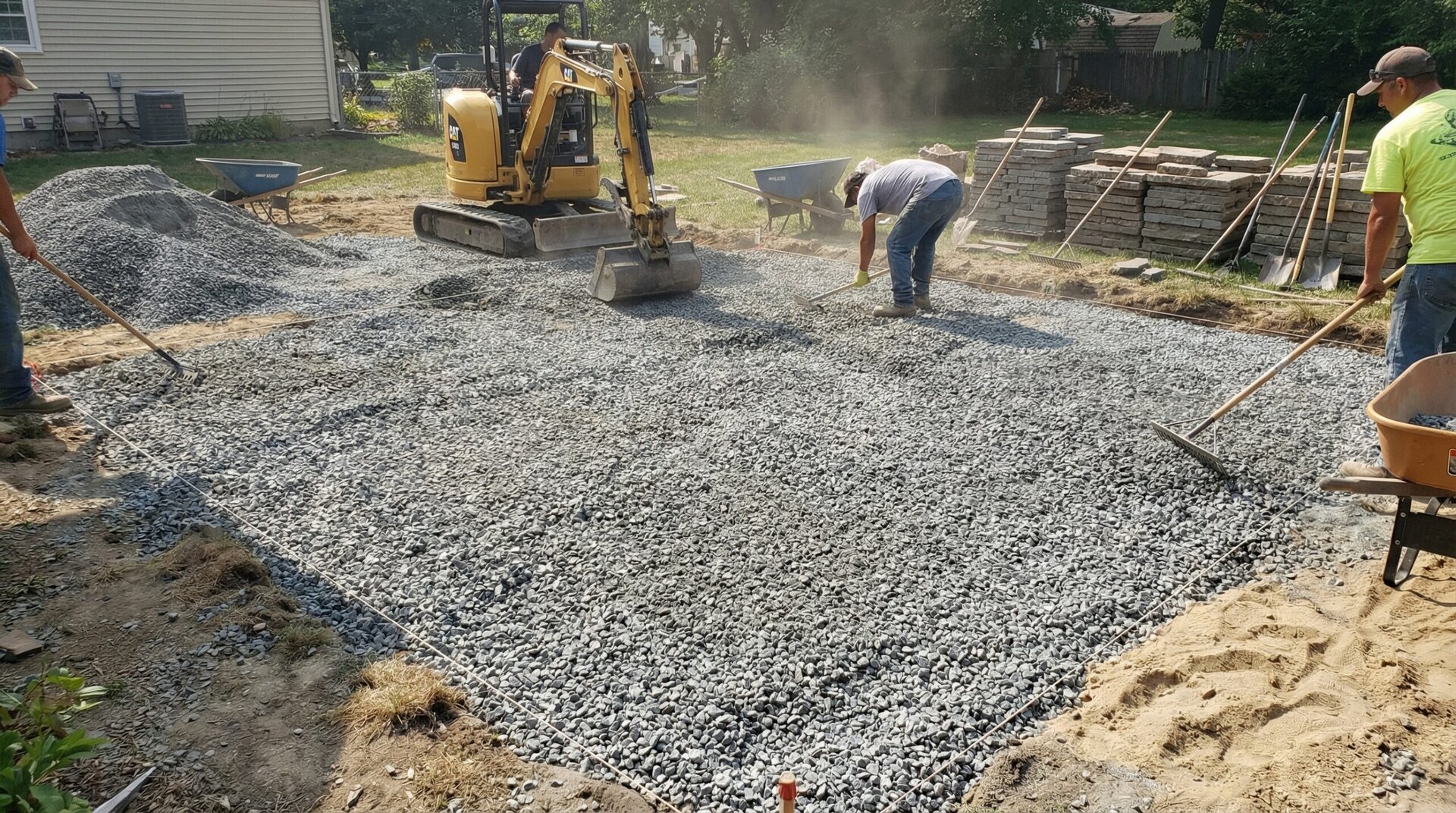
For landscaping projects, Gravel #5 serves as an excellent base for patios, walkways, and retaining walls. While you wouldn’t use it as a finished surface due to its rough texture, it provides the stable foundation needed for pavers, flagstones, or other decorative materials. When working with pavers, bedding gravel can provide the smooth, level surface needed for proper installation.
The material also works well for French drains and other drainage solutions. Its size allows water to flow through while filtering out smaller particles that might clog the system. This dual function makes it valuable for both structural and water management applications. Understanding optimal compaction and drainage with quarter minus materials can help you choose the right aggregate for drainage-critical projects.
Comparing Gravel #5 to alternatives
When compared to other driveway materials, Gravel #5 offers excellent value. Asphalt driveways cost $3 to $7 per square foot installed, while concrete runs $4 to $8 per square foot. Gravel #5 provides a durable surface at roughly half the cost of these alternatives.
Maintenance requirements differ significantly between materials. While asphalt needs sealing every 2-3 years and concrete may crack over time, Gravel #5 requires occasional regrading and fresh stone addition. These maintenance tasks are typically less expensive and can often be done as DIY projects.
Consider This: Gravel #5 driveways can last 10-15 years with proper maintenance, making the long-term cost per year very competitive with more expensive materials.
The environmental impact also favors Gravel #5. As a natural material that allows water infiltration, it helps prevent runoff issues common with impermeable surfaces like asphalt or concrete. This can be important in areas with strict stormwater management requirements.
However, Gravel #5 isn’t perfect for every situation. It can be tracked into homes on shoes and vehicles, and the surface may become uneven over time without proper maintenance. Snow removal can also be more challenging compared to smooth surfaces. For projects where you need a cleaner finish with less dust, washed aggregate might be a better choice.
Understanding these costs and applications helps you make an informed decision about whether Gravel #5 fits your project needs and budget. The material offers excellent value for many applications, especially when you factor in its durability and relatively low maintenance requirements. Whether you’re building a new driveway or need reliable base material for construction, Gravel #5 provides a cost-effective solution that performs well over time.


 Chance Kittrell
 igor
igor 