Can Pea Gravel Be Used as a Basketball Court Base? Complete Guide 2026

Get an estimate for your project in 60 seconds
 Your information is secure

While pea gravel can technically be used as a basketball court base, it’s generally not the best choice for most court projects. The rounded stones tend to shift under pressure and create an uneven playing surface over time, making it unsuitable for serious play or high-traffic courts.
However, this doesn’t mean pea gravel is completely off the table for your project. Understanding its limitations and benefits can help you make an informed decision based on your specific needs, budget, and intended use.
Quick fact: Pea gravel costs 40-60% less than concrete or asphalt bases but requires significantly more maintenance to keep the playing surface level and stable.
Let’s explore when pea gravel might work for your basketball court and what alternatives offer better long-term performance.
What makes pea gravel different from other base materials
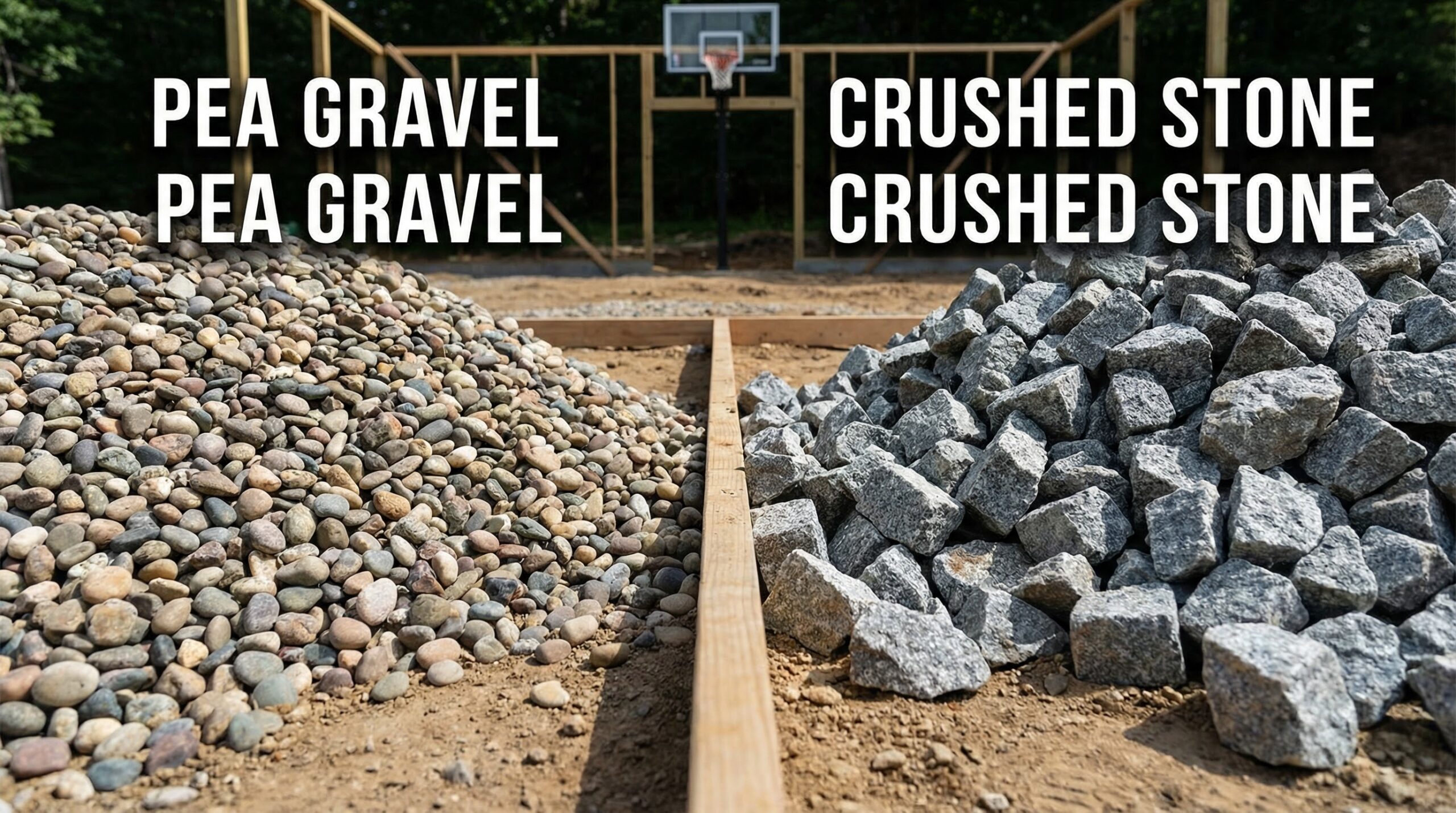
Pea gravel consists of small, naturally rounded stones typically measuring 1/8 inch to 3/8 inch in diameter. These smooth, pea-shaped stones get their name from their resemblance to garden peas and come in various natural colors including tan, brown, white, and gray. To learn more about the characteristics and applications of this material, check out our comprehensive pea gravel guide.
The rounded shape that makes pea gravel attractive for landscaping creates challenges when you need structural stability. Unlike angular crushed stone that locks together when compacted, pea gravel’s smooth surfaces allow the stones to roll and shift under weight.
This fundamental difference affects how well the material performs as a foundation. While pea gravel excels at drainage and provides an attractive appearance, it struggles to maintain the firm, stable surface that basketball courts require for consistent play. Understanding the differences between crushed gravel and pea gravel is crucial when selecting the right material for your project.
Advantages of using pea gravel for basketball courts
Pea gravel does offer several benefits that make it appealing for certain basketball court projects. The most significant advantage is cost savings, as pea gravel typically costs much less than concrete, asphalt, or proper base materials.
Installation is straightforward and doesn’t require specialized equipment or professional contractors. You can spread and level pea gravel with basic tools, making it a viable DIY option for budget-conscious homeowners.
The material provides excellent drainage properties, allowing water to flow through rather than pooling on the surface. This can help prevent water damage and keep your court playable sooner after rain compared to surfaces that don’t drain well. For more information on this benefit, see our article on the best pea gravel size for drainage.
Pea gravel also offers good traction when dry, reducing slip risks during play. The natural stone appearance can blend well with landscaping, making it more visually appealing than some industrial-looking alternatives.
Major drawbacks and limitations you should consider
The biggest problem with pea gravel as a basketball court base is its tendency to shift and settle unevenly under the weight and movement of players. This creates an unstable playing surface that can become dangerous over time.
The rounded stones don’t compact well, meaning you’ll struggle to achieve the firm, level surface that basketball requires. Players need consistent ball bounce and stable footing, both of which become compromised as the gravel shifts.
Important consideration: Courts using pea gravel bases often develop low spots and uneven areas within the first year of use, requiring frequent releveling and maintenance.
Maintenance becomes a significant ongoing challenge. Leaves, debris, and dirt easily get trapped between the stones, requiring regular cleaning. The gravel also tends to scatter beyond the court boundaries, needing periodic replenishment and edge maintenance.
For any serious basketball play or courts that will see regular use, these limitations typically outweigh the initial cost savings.
Better alternatives for basketball court bases
Professional court builders typically recommend crushed stone or road base as the foundation layer under concrete or asphalt surfaces. These angular materials compact into a stable, well-draining base that won’t shift under load. Learn more about how base material compares to pea gravel for structural applications.
| Material | Cost | Durability | Maintenance | Best For |
|---|---|---|---|---|
| Pea Gravel | Low | Poor | High | Casual/temporary courts |
| Crushed Stone | Medium | Excellent | Low | Professional installations |
| Concrete | High | Excellent | Very Low | Permanent courts |
| Asphalt | Medium-High | Good | Low | Most residential courts |
For budget-conscious projects, crushed stone or road base offers a much better balance of cost and performance than pea gravel. While more expensive initially, these materials create a stable foundation that supports whatever surface material you choose to install on top. If you’re considering pea gravel for other projects, you might find our guide on using pea gravel as a sub-base for asphalt roads helpful.
If you’re building a permanent court, concrete or asphalt surfaces over a proper crushed stone base provide the best long-term value despite higher upfront costs. For recreational court surfaces, you might also be interested in learning about using pea gravel for a bocce ball court surface.

The choice of base material significantly impacts your basketball court’s performance, safety, and longevity. While pea gravel might seem like an attractive budget option, its limitations typically make it unsuitable for courts intended for regular use. Investing in proper base materials like crushed stone creates a foundation that will serve you well for years to come, ultimately providing better value than cheaper alternatives that require constant maintenance and eventual replacement.


