Can You Use Pea Gravel for Water Feature Edging

Get an estimate for your project in 60 seconds
 Your information is secure
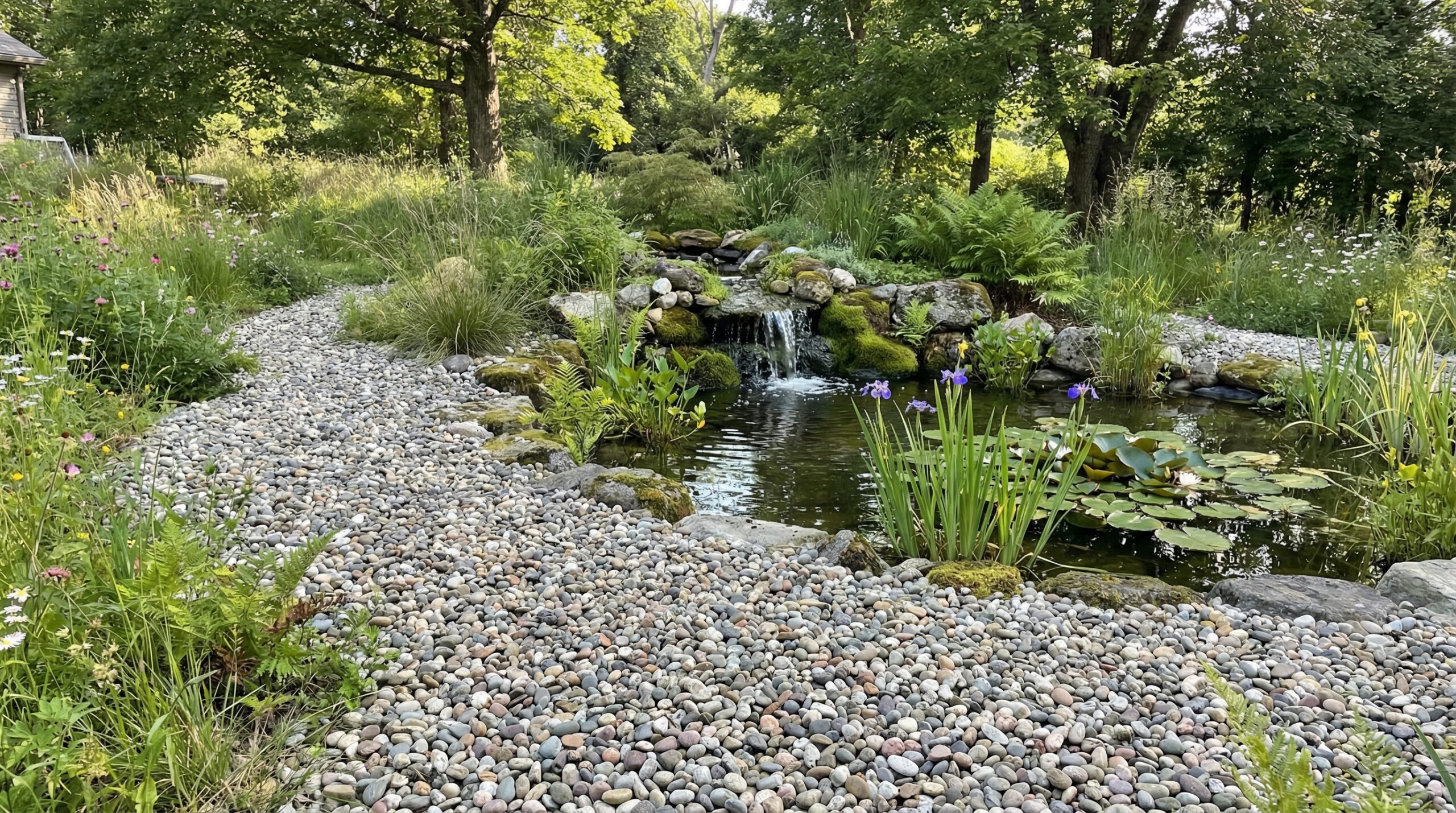
You absolutely can use pea gravel for water feature edging, and it’s one of the smartest choices you can make for your pond or fountain project. This versatile material combines natural beauty with practical benefits that make water feature maintenance easier while creating stunning visual appeal.
Pea gravel works exceptionally well around water features because of its excellent drainage properties and natural appearance. The small, rounded stones allow water to flow freely while preventing erosion and providing a clean transition between your water feature and surrounding landscape.
Quick insight: Pea gravel’s rounded shape provides superior drainage compared to angular stones, making it ideal for managing water runoff around ponds and fountains.
Why pea gravel works perfectly for water features
The natural properties of pea gravel make it an ideal edging material for any water feature project. These small stones, typically measuring 1/8 to 3/8 inch in diameter, create a permeable border that handles water management beautifully.
Unlike solid edging materials, pea gravel allows excess water from your pond or fountain to drain naturally into the surrounding soil. This prevents water from pooling around your feature, which could lead to erosion or damage to nearby plants and hardscaping. For projects requiring erosion management, you might also want to explore using pea gravel for erosion control structures.
The smooth, rounded texture of pea gravel also complements the flowing nature of water features. As noted by 3dev.hellogravel.com, the contrast between the smooth water surface and the textured gravel creates visual interest that enhances your overall landscape design.

Design benefits that enhance your landscape
Pea gravel comes in an impressive range of colors, from neutral tans and grays to warmer browns and even vibrant options. This variety lets you match your water feature edging to your existing landscape palette or create intentional contrast for visual impact. Learn more about the benefits of using colored pea gravel for your outdoor spaces to find the perfect shade for your project.
The natural appearance of pea gravel works with virtually any landscape style. Whether you’re creating a formal fountain area or a naturalistic pond setting, the organic look of these rounded stones feels at home in the environment. Understanding the versatility and beauty of pea gravel in landscaping can help you maximize its potential in your design.
According to 3dev.hellogravel.com, pea gravel edging creates clean, defined borders while maintaining a softer appearance than rigid materials like concrete or metal edging.
Pro tip: Choose pea gravel colors that complement your water feature’s surroundings rather than competing with them for the most cohesive look.
Installation process made simple
Installing pea gravel edging around your water feature requires minimal tools and expertise, making it perfect for DIY projects. The process involves creating a shallow trench, installing containment edging, and spreading the gravel evenly.
Start by clearing the area around your water feature and creating a 3-4 inch deep border where the gravel will sit. Install landscape edging or a physical barrier to contain the gravel and prevent it from spreading into unwanted areas. If you’re also planning decorative garden borders, you can apply similar techniques.
Lay landscape fabric over the prepared area to suppress weeds, then spread your pea gravel to the desired depth. Most installations work best with 2-3 inches of gravel depth, providing good coverage while maintaining the natural appearance. Choosing the ideal pea gravel size is crucial for achieving the best results.

Maintenance and long-term performance
One of the biggest advantages of pea gravel edging is its low maintenance requirements. Unlike organic mulches that decompose or solid materials that can crack, pea gravel maintains its appearance with minimal effort.
Occasional raking helps keep the gravel looking neat and prevents any settling into uneven areas. If weeds do appear, they’re easy to remove by hand or with a simple garden tool.
The durability of pea gravel means your water feature edging will look great for years without replacement. As highlighted by 3dev.hellogravel.com, the material withstands various weather conditions while maintaining its structural integrity and visual appeal.
Maintenance insight: A quick monthly rake-through keeps pea gravel edging looking fresh and prevents any organic debris from accumulating between stones.
Pea gravel edging transforms ordinary water features into stunning landscape focal points while providing practical benefits that make your outdoor space easier to maintain. The combination of natural beauty, excellent drainage, and simple installation makes it an ideal choice for pond and fountain projects of any size. Whether you’re working with a small backyard fountain or a large decorative pond, pea gravel edging delivers both form and function that enhances your landscape investment.


