Which Type of Pea Gravel Works Best for Erosion Control in 2026

Get an estimate for your project in 60 seconds
 Your information is secure
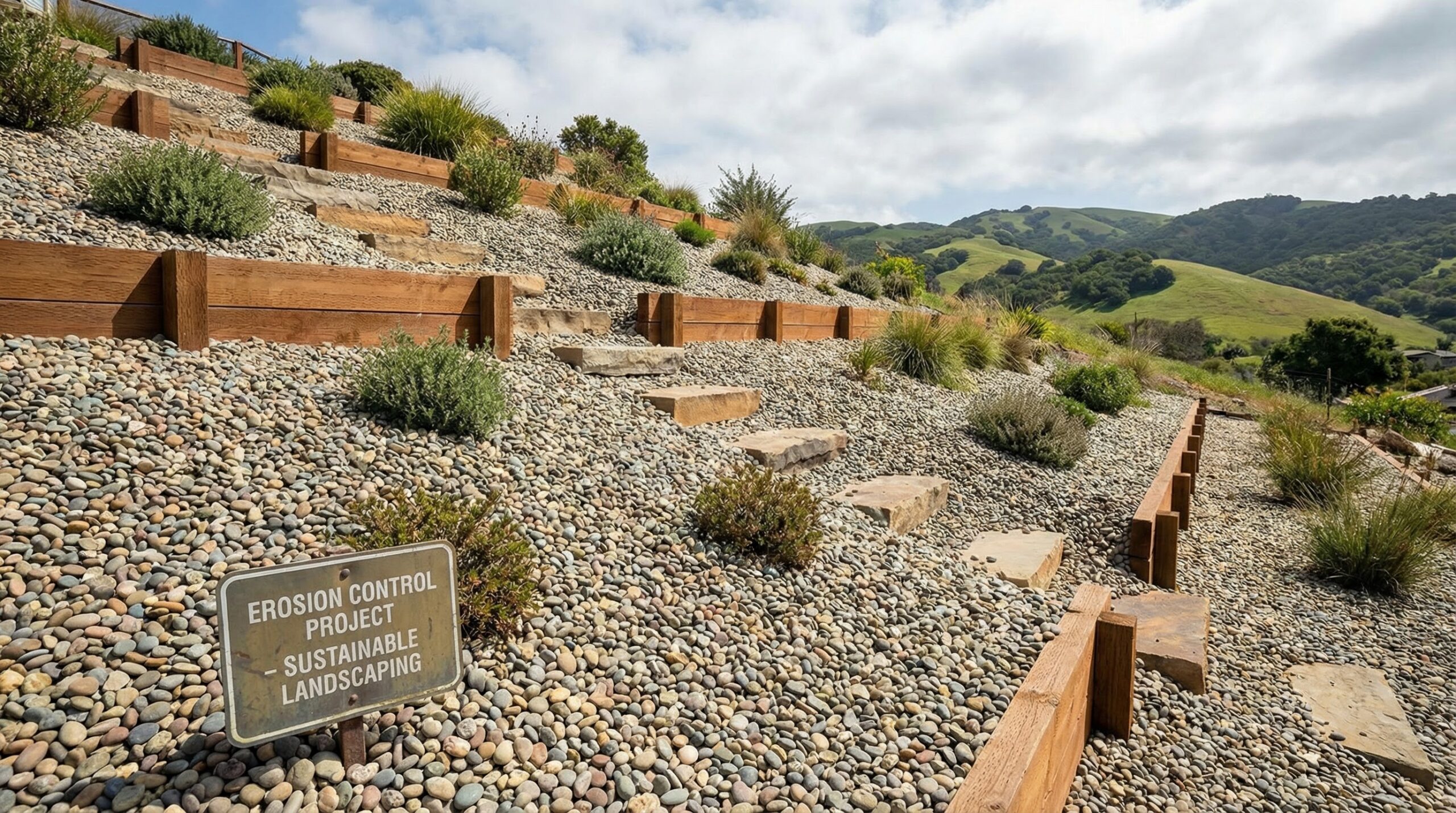
Choosing the right pea gravel type can transform your erosion problems into a stable, attractive landscape solution. River rock pea gravel excels for gentle slopes and decorative areas, while decomposed granite pea gravel provides superior stability for steep gradients and high-traffic zones.
Quick Fact: Properly installed pea gravel can reduce water flow velocity by up to 70%, significantly decreasing soil erosion on slopes and drainage areas.
When water rushes across your property, it carries away precious topsoil and threatens foundations, driveways, and landscaping. The key lies in selecting pea gravel that matches your specific conditions while providing long-term protection. Different pea gravel types serve unique purposes based on their size, shape, and compaction properties.
Understanding how pea gravel prevents erosion
Pea gravel works as an erosion barrier by slowing water flow and promoting infiltration rather than surface runoff. The rounded stones create friction that reduces water velocity, while spaces between stones allow water to penetrate into the ground instead of rushing across the surface.
The effectiveness comes from the material’s natural permeability. Unlike solid surfaces that channel water quickly downhill, pea gravel disperses the energy of flowing water. Each stone acts as a small obstacle, breaking up flow patterns and giving water time to soak into the soil below.
Size matters significantly in this process. Smaller stones provide better coverage for gentle slopes, while larger stones handle heavy water flow on steeper terrain. The key is matching stone size to your specific erosion challenges, which is why understanding the ideal pea gravel size for your project is essential.

River rock pea gravel for gentle slopes
River rock pea gravel offers the smoothest surface and works exceptionally well for walkways and gentle slopes. The naturally rounded stones range from 1/8 to 3/8 inch in diameter and provide excellent drainage while maintaining an attractive appearance.
You’ll find this type ideal for garden beds and areas where foot traffic is common. The smooth stones are comfortable to walk on and won’t shift easily under normal use. River rock also comes in various colors, allowing you to match your landscape design while protecting against erosion. For more details on how this material enhances outdoor spaces, explore the benefits of river rock pea gravel for your landscaping needs.
Installation Tip: For slopes under 15 degrees, river rock pea gravel provides adequate erosion protection while creating an aesthetically pleasing surface that complements most landscape designs.
The rounded shape allows water to flow through easily without creating turbulence that could dislodge the stones. This makes river rock particularly effective for areas with moderate water flow where you want both function and beauty.
Decomposed granite pea gravel for steep areas
Decomposed granite pea gravel provides superior compaction and stability compared to river rock. When properly installed, it creates a firm surface that resists displacement even during heavy rainfall. This makes it perfect for driveways, steep slopes, and areas requiring substantial erosion protection.
The angular particles in decomposed granite interlock better than smooth river rock, creating a more stable surface. This interlocking action helps the material stay in place during intense weather events. You’ll appreciate how well it handles both foot traffic and vehicle loads without shifting. Learn more about the benefits of pea gravel granite for your landscaping projects to understand why this material excels in demanding applications.
For slopes steeper than 15 degrees, decomposed granite pea gravel offers the best combination of stability and erosion control. The material compacts naturally over time, becoming even more resistant to displacement while maintaining good drainage properties.
| Pea Gravel Type | Best Slope Grade | Water Flow Capacity | Foot Traffic Suitability | Aesthetic Appeal |
|---|---|---|---|---|
| River Rock | Under 15° | Moderate | Excellent | High |
| Decomposed Granite | Over 15° | Heavy | Good | Moderate |
| Standard Pea Gravel | 5-20° | Moderate to Heavy | Good | High |
Installation techniques for maximum effectiveness
Proper installation determines whether your pea gravel erosion control succeeds or fails. Start by identifying problem areas where water runoff concentrates, such as slopes, drainage ditches, or areas around downspouts.
Prepare the surface by removing vegetation and loose soil, then grade the area to promote proper drainage. Install landscape fabric to prevent gravel from sinking into the soil while allowing water to pass through. This fabric also helps maintain separation between your gravel and underlying soil. Understanding what is the best pea gravel size for drainage will help you select the right material for optimal water management.
Apply pea gravel in layers, starting with a base layer of 2-3 inches. For steep slopes or high-flow areas, consider using a binding agent or installing edge restraints to keep the gravel in place. Compact each layer lightly to ensure stability without eliminating drainage capacity.
Pro Tip: Always install pea gravel when weather conditions are dry to ensure proper compaction and prevent the material from washing away during the first rainfall.

Choosing the right supplier for your project
Quality matters significantly when selecting pea gravel for erosion control. Look for suppliers who can provide consistent sizing and clean material free from excessive dust or debris. Hello Gravel offers high-quality pea gravel options specifically suited for erosion control applications.
Consider the delivery logistics for your project. Bulk delivery often provides better value for larger areas, while bagged material works well for smaller projects or areas with limited access. For hassle-free solutions, check out convenient bulk pea gravel delivery options that can save you time and effort. Calculate your coverage needs carefully, as pea gravel typically covers about 100 square feet per ton at a 2-inch depth.
When requesting quotes, specify your intended use for erosion control. This helps suppliers recommend the most appropriate pea gravel type and size for your specific conditions. Quality suppliers will also provide guidance on installation techniques and coverage calculations to ensure project success. For comprehensive information about material selection, consult the in-depth guide to pea gravel to make informed decisions.
The right pea gravel choice depends on your specific slope conditions, water flow patterns, and aesthetic preferences. River rock excels for gentle slopes and decorative applications, while decomposed granite provides superior stability for challenging terrain. Proper installation techniques ensure your investment provides long-lasting erosion protection while enhancing your property’s appearance.


