What is the Difference Between Topsoil and Potting Soil

Get an estimate for your project in 60 seconds
 Your information is secure

Choosing between topsoil and potting soil can feel overwhelming when you’re standing in the garden center aisle. The truth is, these two soil types serve completely different purposes, and understanding their differences will save you money and help your plants thrive.
Topsoil is the natural upper layer of earth used for outdoor gardening and landscaping, while potting soil is a specially formulated soilless mix designed for container plants. The main difference lies in their composition, drainage properties, and intended use. Topsoil works best for garden beds and lawn projects, whereas potting soil excels in pots and indoor plants.
Quick Answer: Use topsoil for outdoor ground planting and potting soil for containers. They’re not interchangeable due to different drainage and nutrient properties.
Let me walk you through everything you need to know about these soil types so you can make the right choice for your gardening project.
Understanding topsoil and its best uses
Topsoil is literally what its name suggests – the top layer of soil found naturally in the ground. This dark, nutrient-rich layer typically extends 5 to 12 inches deep and forms over years through the decomposition of organic matter like leaves, plants, and animal waste.
When you buy topsoil from Hello Gravel or other suppliers, you’re getting this natural material that’s been screened to remove rocks and debris. Quality topsoil contains a balanced mix of sand, silt, and clay particles, plus beneficial microorganisms that help plants access nutrients.
The texture of topsoil feels heavier and denser than potting mixes. It holds water well but can become compacted over time, especially if it contains high clay content. This makes it perfect for outdoor applications where plants have room to spread their roots and where natural rainfall provides irrigation.
You’ll want to use topsoil when filling garden beds, leveling your lawn, or creating new planting areas. It’s also ideal for mixing with existing soil to improve its quality and nutrient content. The cost-effectiveness of topsoil makes it practical for large landscaping projects where you need substantial amounts of soil.
What makes potting soil different
Potting soil isn’t actually soil at all – it’s a carefully crafted soilless mixture designed specifically for container gardening. Manufacturers combine ingredients like peat moss, coconut coir, perlite, vermiculite, and compost to create a lightweight growing medium.
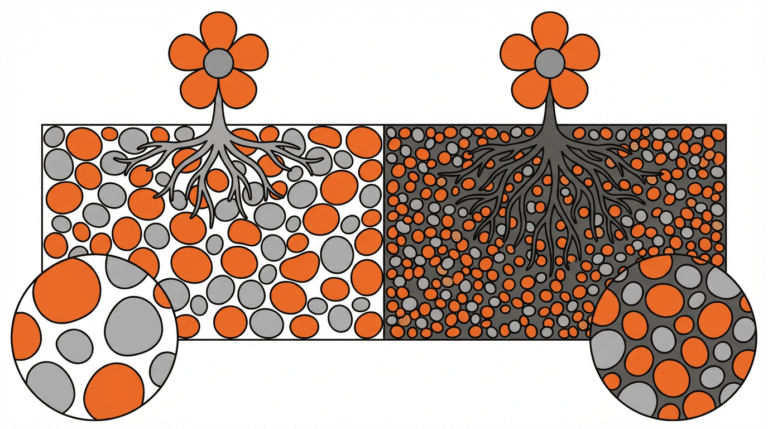
The magic of potting soil lies in its engineered properties. It drains quickly to prevent waterlogged roots while still retaining enough moisture for plant health. The lightweight nature means your containers won’t become impossibly heavy, and the loose texture allows roots to grow freely without compaction issues.
Most quality potting soils come pre-fertilized with slow-release nutrients, giving your plants a head start. They’re also sterilized during manufacturing, which eliminates weed seeds and harmful pathogens that could damage container plants.

The downside is that potting soil costs more per cubic foot than topsoil and breaks down over time, requiring replacement every few years. However, for container gardening, hanging baskets, and indoor plants, nothing beats its performance.
Key differences that matter for your garden
The differences between topsoil and potting soil go beyond just their origins. Understanding these distinctions helps you choose the right option for your specific needs.
Drainage and water retention represent the biggest functional difference. Topsoil holds water longer, which works well for outdoor plants that can handle varying moisture levels. Potting soil drains rapidly, preventing the root rot that kills container plants but requiring more frequent watering.
Nutrient content varies significantly between the two. Topsoil provides natural, slow-release nutrients from organic matter decomposition. Potting soil delivers controlled nutrition through added fertilizers, giving you more predictable feeding for container plants.
Weight and handling create practical considerations. A cubic foot of topsoil weighs about 80 pounds when moist, while potting soil weighs roughly 25-30 pounds. This difference matters when you’re filling large containers or moving planters around.
| Feature | Topsoil | Potting Soil |
|---|---|---|
| Best Use | Garden beds, lawns | Containers, indoor plants |
| Drainage | Moderate, holds moisture | Excellent, prevents waterlogging |
| Weight | Heavy (80 lbs/cubic ft) | Light (25-30 lbs/cubic ft) |
| Cost | Lower per cubic foot | Higher per cubic foot |
Pro Tip: Never use topsoil in containers – it becomes waterlogged and compacted, leading to poor plant performance and potential root rot.
Choosing the right soil for your project
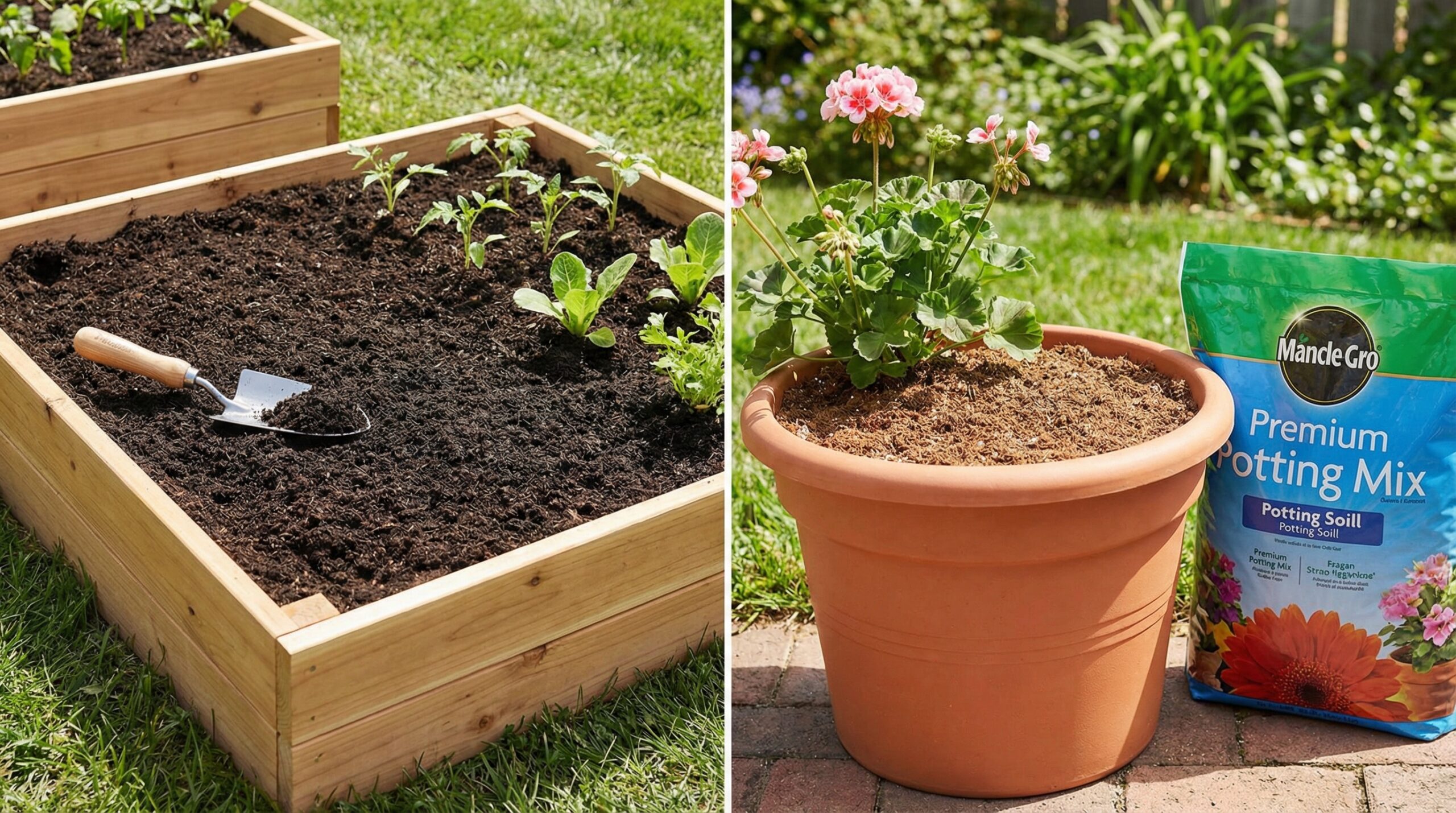
Your choice between topsoil and potting soil should match your specific gardening situation. For outdoor garden beds, raised beds, and lawn projects, topsoil provides the foundation your plants need. Its natural composition supports the complex ecosystem of beneficial organisms that outdoor plants rely on.
Container gardening demands potting soil’s specialized properties. Whether you’re growing herbs on your windowsill, flowers in hanging baskets, or vegetables in patio containers, potting soil’s drainage and aeration prevent the problems that plague containerized plants.
Consider your long-term plans too. Topsoil improves over time as organic matter continues decomposing and soil organisms establish themselves. Potting soil degrades and compacts after 2-3 years, requiring replacement or refreshing with new mix.
For indoor plants, potting soil is your only viable option. Its sterile nature prevents pest problems, and its consistent moisture management keeps houseplants healthy without the unpredictability of natural soil.
Money-Saving Tip: Buy topsoil in bulk for large projects and potting soil in smaller quantities as needed. Topsoil stores well outdoors, while potting soil should be kept dry and covered.
The bottom line is simple – match your soil choice to your planting location. Outdoor ground planting calls for topsoil, while any container or indoor situation needs potting soil. Understanding this fundamental difference will lead to healthier plants and more successful gardening projects, whether you’re landscaping your yard or creating a succulent garden on your patio. If you’re still unsure about which soil type is right for your specific needs, learning about the differences between fill dirt and topsoil can provide additional clarity for your project.