How Do You Get Pea Gravel Delivered for Your Project?

Get an estimate for your project in 60 seconds
 Your information is secure
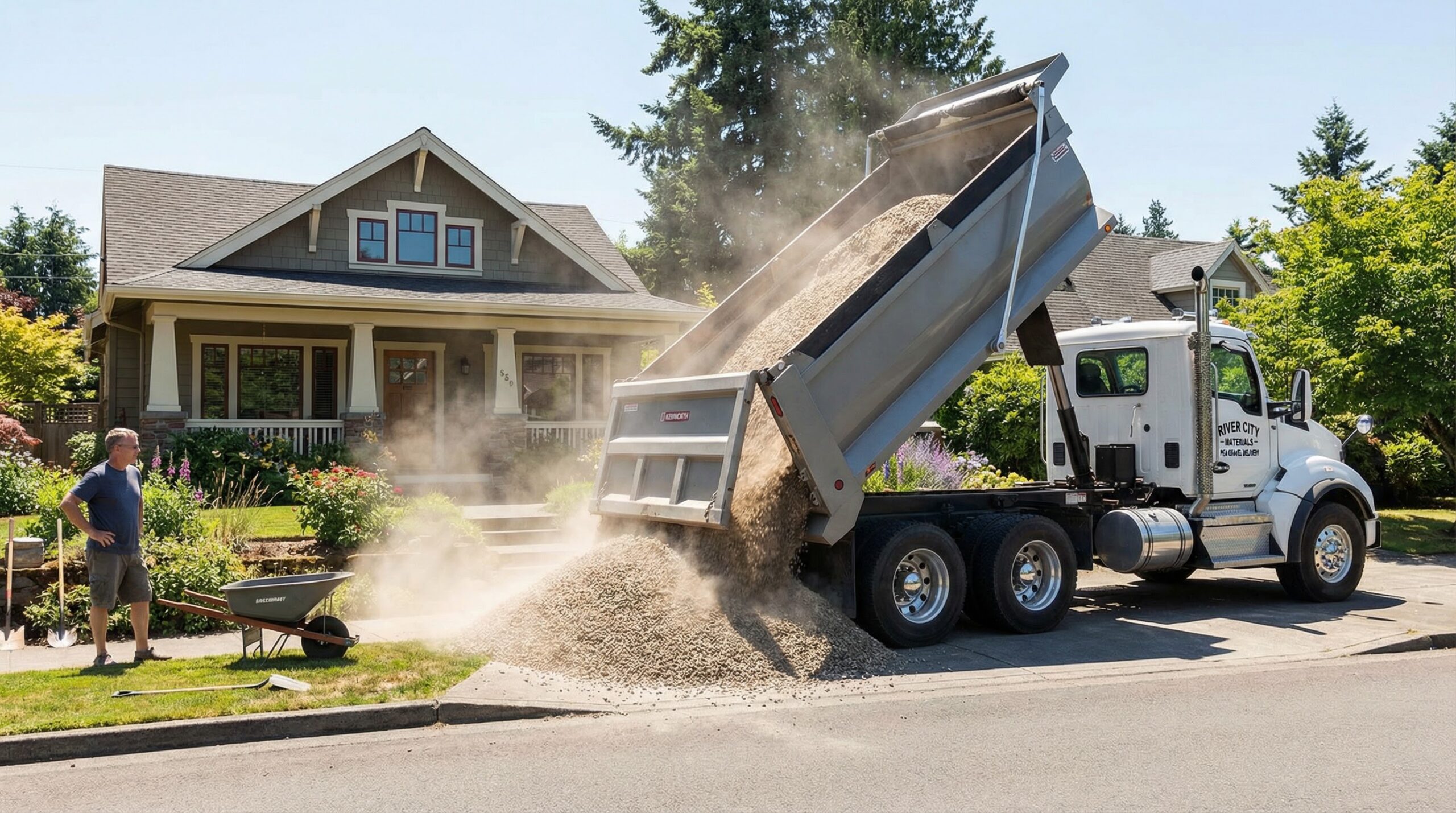
Planning a pea gravel project but unsure about the delivery process? You’re making a smart choice. Pea gravel offers excellent drainage, comfortable walking surfaces, and versatile applications for driveways, pathways, and decorative landscaping. Understanding the delivery process ensures your project runs smoothly from start to finish.
This guide walks you through everything from calculating quantities to post-delivery maintenance. Whether you’re creating a garden pathway or building a patio, you’ll discover how to prepare for delivery, handle the material safely, and maintain your investment for years to come.
Quick Answer: Most pea gravel can support 100-125 pounds per cubic foot when properly compacted, making it ideal for both decorative and functional applications like walkways and light vehicle areas.
Understanding pea gravel specifications and applications
Pea gravel consists of small, rounded stones typically measuring 1/8 to 3/8 inches in diameter. These smooth stones, sourced from riverbeds or quarries, create comfortable walking surfaces while providing excellent drainage properties. According to 3dev.hellogravel.com, properly compacted pea gravel can support significant weight loads, making it suitable for various applications.
The material’s versatility shines in multiple landscaping and construction projects. You can use pea gravel for pathways where its smooth surface prevents discomfort underfoot, patios that need good drainage, decorative garden borders, and even playground surfaces where safety matters. Its natural appearance complements both rustic and modern design themes.

Unlike angular crushed stone that locks together tightly, pea gravel’s rounded shape allows for better water flow while still providing stability when properly installed. This makes it particularly valuable in areas prone to heavy rainfall or where drainage is a concern. To understand the differences better, check out our comparison of pea gravel vs crushed rock.
Preparing your site for pea gravel delivery
Before your gravel arrives, assess your delivery site thoroughly. Walk the area and identify any obstacles like low-hanging branches, narrow gates, or soft ground that might prevent the delivery truck from accessing your project location. Remove debris, large rocks, and vegetation that could interfere with the unloading process.
Measure your project area carefully to calculate the exact quantity needed. For most applications, you’ll want a depth of 2-3 inches, though high-traffic areas may require up to 4 inches. Multiply length times width times depth (in feet) and divide by 27 to get cubic yards. According to 3dev.hellogravel.com, adding 10-15% extra accounts for compaction and ensures you have enough material.
Consider the delivery truck’s requirements too. Standard delivery trucks need at least 10 feet of width and adequate turning radius. If your site has limited access, discuss alternative delivery methods with your supplier, such as smaller trucks or conveyor systems.
Pro Tip: Check your local utility marking requirements before delivery. Many areas require utilities to be marked before heavy trucks enter your property, preventing costly damage to underground lines.
Managing the delivery and unloading process
When your pea gravel arrives, the delivery process typically involves either direct dumping or controlled spreading, depending on your site’s accessibility. Most delivery trucks can dump the entire load in one location, but you’ll need to spread it manually to your desired areas using wheelbarrows, shovels, and rakes.
Position yourself safely away from the truck during unloading and ensure children and pets are kept at a safe distance. The driver will typically ask where you want the material placed, so have this decision made beforehand. Choose a location that minimizes the distance you’ll need to transport the gravel while ensuring the truck can safely maneuver.
| Delivery Method | Best For | Considerations |
|---|---|---|
| Direct dump | Large, accessible areas | Requires manual spreading |
| Conveyor delivery | Tight spaces, precise placement | Higher cost, longer setup |
| Bagged delivery | Small projects, difficult access | Most expensive per yard |
Once unloaded, begin spreading immediately if possible. Pea gravel is easier to work with when dry, and prompt spreading prevents the pile from settling too firmly. Use a rake to achieve even distribution and the desired depth across your project area. For more insights on streamlining your delivery experience, explore our guide on convenient bulk pea gravel delivery.
Safety measures and proper handling techniques
Safety should be your top priority throughout the delivery and installation process. Wear appropriate personal protective equipment including safety glasses, work gloves, and sturdy closed-toe shoes. The rounded stones can shift unexpectedly underfoot, so maintain good footing while working.
When lifting and moving pea gravel, use proper body mechanics to prevent injury. Lift with your legs rather than your back, and avoid overloading wheelbarrows or buckets. Take frequent breaks, especially on hot days, and stay hydrated throughout the process.

Be mindful of dust during dry conditions. While pea gravel produces less dust than crushed stone, windy conditions can still create airborne particles. Consider wearing a dust mask and wetting the material lightly if dust becomes problematic.
If you’re working near structures or vehicles, lay down protective tarps to catch any scattered stones. This prevents damage to siding, windows, or car finishes and makes cleanup easier once your project is complete.
Safety Note: Never walk directly behind a delivery truck during unloading. Hydraulic systems can fail, and the sudden release of material poses serious injury risks.
Post-delivery maintenance and long-term care
After spreading your pea gravel, rake the surface to eliminate any uneven spots and achieve a uniform appearance. Remove any packaging materials or debris from the delivery process, and use a leaf blower or gentle hose spray to clear away dust and fine particles.
Maintaining your pea gravel landscape requires minimal effort but regular attention. Rake the surface periodically to redistribute stones and maintain proper drainage. This prevents low spots where water might pool and keeps the surface looking fresh and even. If you’ve installed a pea gravel parking pad, regular maintenance becomes even more important.
Watch for weed growth between stones and address it promptly. While pea gravel naturally suppresses many weeds due to its drainage properties, some persistent plants may still emerge. Hand-pulling or spot-treating with appropriate herbicides keeps your landscape looking professional.
Plan for occasional replenishment, especially in high-traffic areas. Normal settling and displacement mean you’ll likely need to add fresh material every few years. Keep records of your original quantity and supplier information to ensure color and size consistency for future additions. For comprehensive information on selecting the right material, visit our in-depth guide to pea gravel.
Your pea gravel investment will provide years of attractive, functional landscaping with proper installation and basic maintenance. The key lies in thorough preparation, safe handling during delivery, and consistent care afterward. Whether you’re enhancing your garden’s drainage or creating an inviting pathway, following these guidelines ensures professional results that enhance your property’s value and appeal.


