The Complete Guide to Types of Crushed Stone for Construction and Landscaping

Get an estimate for your project in 60 seconds
 Your information is secure
Choosing the right crushed stone can make or break your construction or landscaping project. Whether you’re building a driveway, creating drainage solutions, or laying a foundation, understanding the different types of crushed stone and their specific applications will save you time, money, and headaches down the road.
Crushed stone serves as the backbone of countless construction projects, from residential driveways to major highway systems. This versatile aggregate material comes in various types, each with unique properties that make it suitable for specific applications. The key lies in matching the right stone type to your project’s requirements.
Quick Fact: Limestone crushed stone accounts for approximately 70% of all crushed stone production in the United States, making it the most widely used type for construction projects.
In this guide, you’ll discover the four main types of crushed stone, learn how each performs in different applications, and get practical advice on selecting the perfect material for your specific needs.
Understanding crushed stone basics
Crushed stone is construction aggregate created by mechanically breaking down larger rocks into smaller, uniform pieces. Unlike natural gravel, which forms through weathering and erosion, crushed stone is manufactured to meet specific size and quality standards.
The production process begins at quarries where suitable rock deposits are extracted using heavy machinery. These rocks then go through crushing equipment that reduces them to the desired size ranges. After crushing, the material undergoes screening to separate different sizes and washing to remove impurities.
What sets crushed stone apart from other aggregates is its angular shape. When rocks are mechanically crushed, they create sharp, angular edges that interlock when compacted. This interlocking action provides superior stability and load-bearing capacity compared to rounded materials like river gravel.
The angular nature of crushed stone also enhances drainage properties. Water can flow through the spaces between particles, preventing pooling and reducing the risk of frost damage in colder climates. To learn more about how different aggregate types compare, check out our guide on understanding the different sizes of gravel aggregates.
Types of crushed stone and their properties
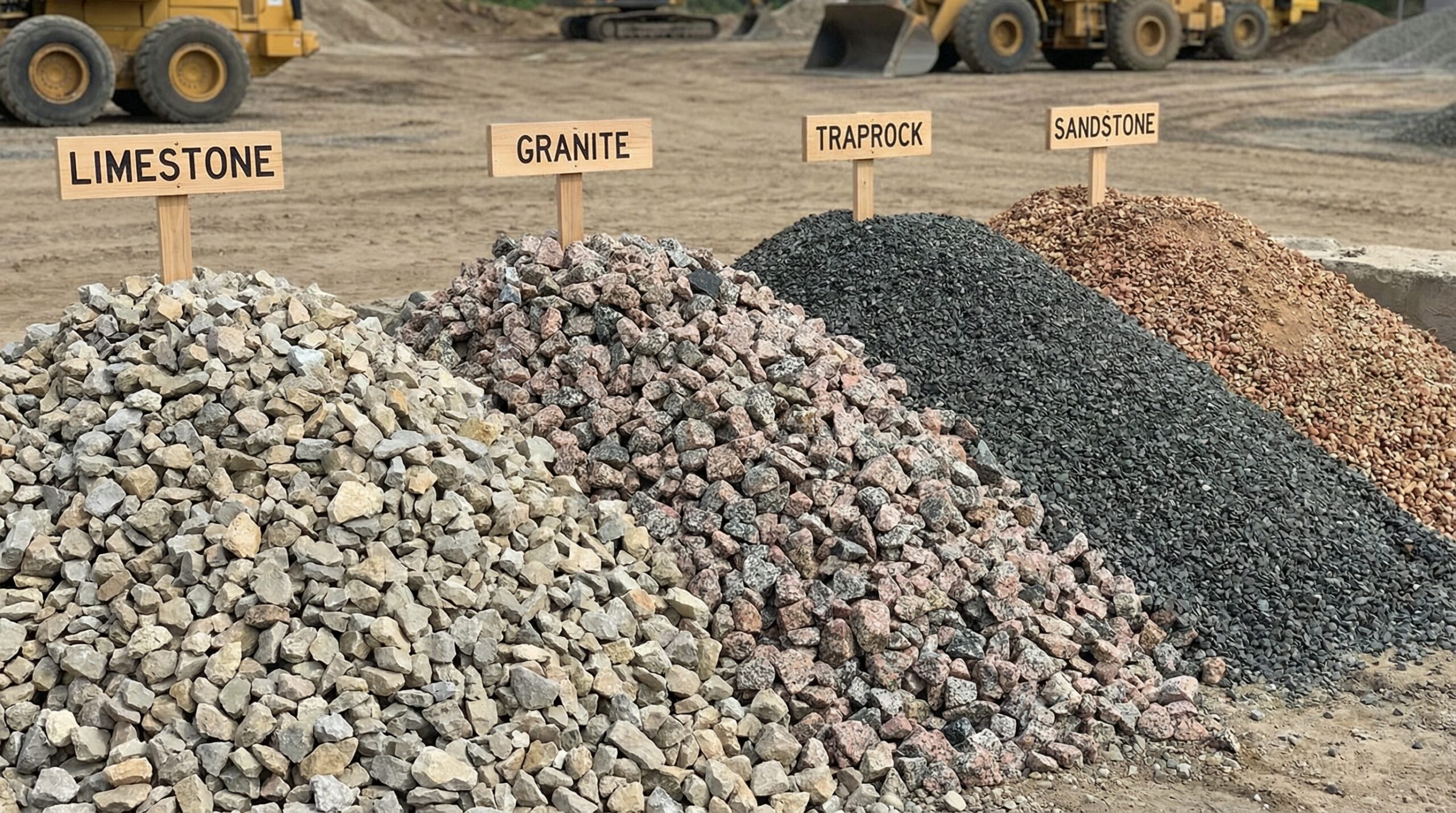
Limestone crushed stone
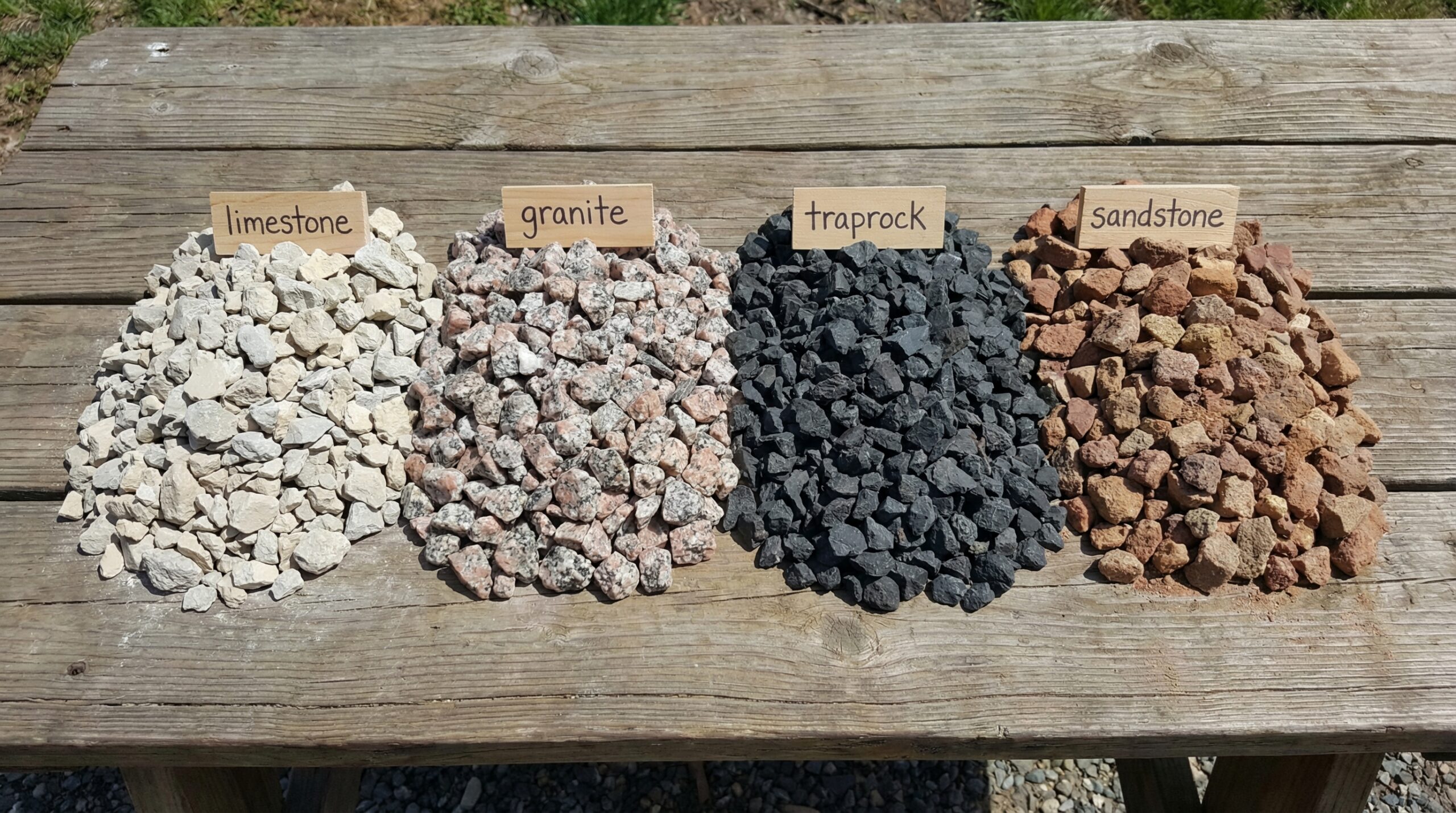
Limestone stands out as the most popular choice for crushed stone applications. This sedimentary rock offers excellent durability while remaining relatively soft and easy to work with during installation.
You’ll find limestone crushed stone particularly effective for driveways, walkways, and as a base material for concrete projects. Its natural gray to off-white color complements most architectural styles, and it compacts well to create stable surfaces.
One unique advantage of limestone is its ability to self-cement over time. When exposed to moisture, limestone particles can bond together, creating an even more stable surface. This property makes it especially valuable for long-term applications.
Granite crushed stone
Granite brings exceptional hardness and weather resistance to your projects. This igneous rock can withstand heavy traffic and extreme weather conditions without significant wear or degradation.
If you’re working on high-traffic areas like commercial driveways or parking lots, granite crushed stone delivers the durability you need. Its speckled appearance, ranging from gray to pink to black, adds visual interest to decorative applications.
Granite’s hardness does require more effort during installation and compaction, but the long-term benefits often justify the extra work. It’s particularly well-suited for areas that experience freeze-thaw cycles.
Traprock (basalt) crushed stone
Traprock, also known as basalt, represents the premium option for heavy-duty applications. This volcanic rock offers the highest strength and durability among common crushed stone types.
Road construction projects frequently specify traprock because of its exceptional load-bearing capacity and resistance to polishing under traffic. For more information on selecting materials for road projects, explore our article on the best crushed rock size for road construction. While it typically costs more than limestone or granite, traprock’s longevity often makes it the most economical choice for demanding applications.
The dark gray to black color of traprock provides a professional appearance that works well in both commercial and residential settings.
Sandstone crushed stone
Sandstone offers a unique combination of functionality and aesthetic appeal. This sedimentary rock typically displays warm colors ranging from tan to red to brown, making it popular for decorative landscaping projects.
While not as hard as granite or traprock, sandstone provides adequate strength for most residential applications. It’s particularly effective for garden paths, decorative borders, and areas where appearance matters as much as function.
Pro Tip: Sandstone’s porous nature makes it excellent for drainage applications, but this same property means it may require more frequent maintenance in high-traffic areas.
Selecting the right crushed stone for your project
The key to successful crushed stone selection lies in understanding your project’s specific requirements. Consider these critical factors before making your choice.
Load-bearing requirements play a crucial role in material selection. Heavy-duty applications like driveways for large vehicles or commercial parking areas need harder materials like granite or traprock. For guidance on choosing the right material for your driveway, read our comprehensive guide on the best crushed stone size for a driveway. Lighter applications such as garden paths can use limestone or sandstone effectively.
Drainage needs also influence your choice. Projects requiring excellent water flow, such as French drains or foundation backfill, benefit from angular crushed stone with consistent sizing. The spaces between particles allow water to move freely while maintaining structural integrity.
Climate considerations matter more than many people realize. Areas with frequent freeze-thaw cycles need materials that won’t shift or heave when moisture expands. Granite and traprock excel in these conditions, while limestone performs well in more stable climates.
Budget constraints often determine the final selection. Limestone typically offers the best value for most residential projects, providing good performance at a reasonable cost. Granite costs more but delivers superior longevity, while traprock commands premium pricing for specialized applications. If you’re considering purchasing materials in bulk, our guide on choosing a bulk bag of gravel stones can help you make cost-effective decisions.
Installation and maintenance considerations
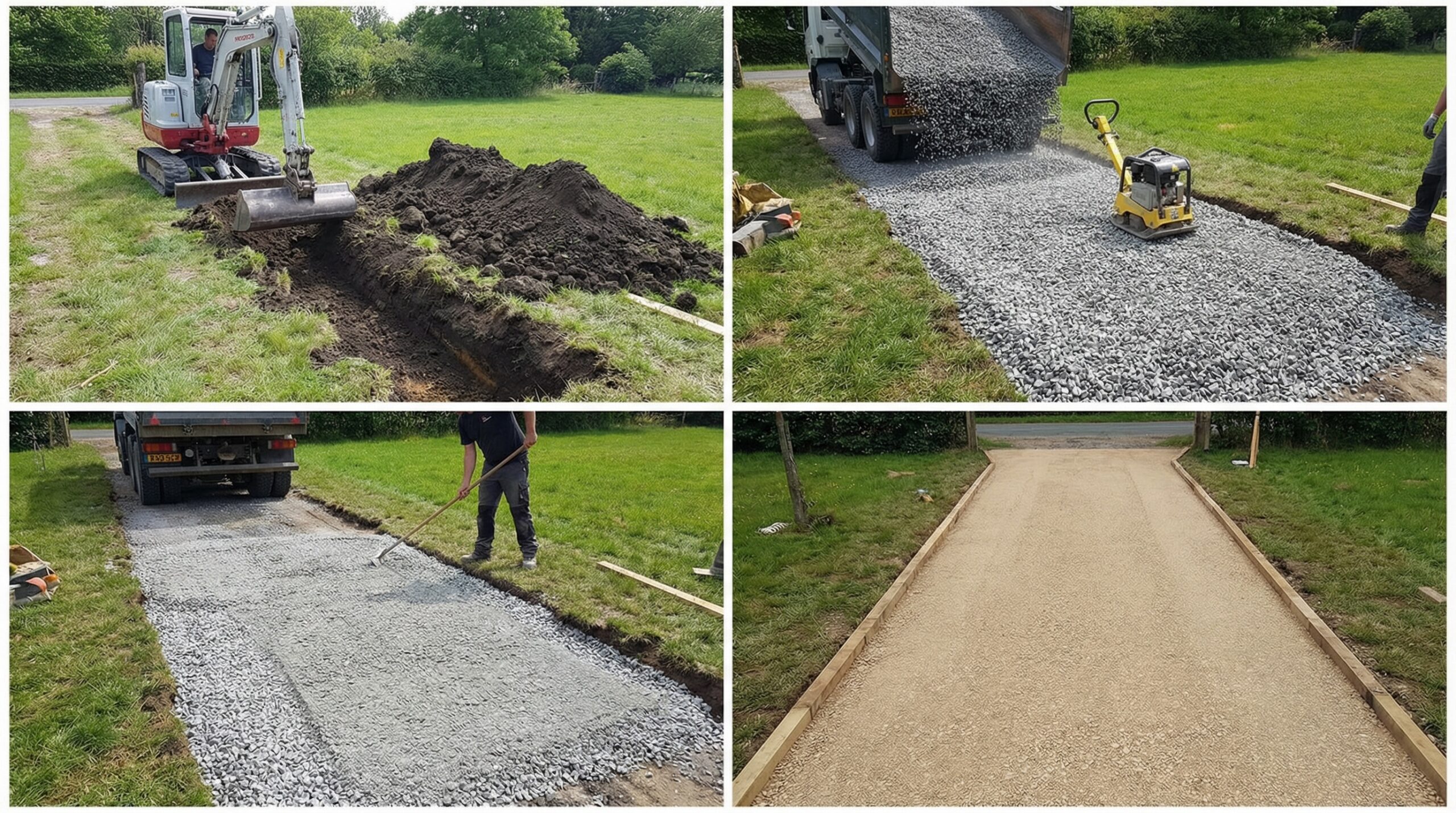
Proper installation techniques determine how well your crushed stone performs over time. Start by preparing the area thoroughly, removing all vegetation and organic matter that could decompose and create settling issues.
Excavate to the proper depth based on your project requirements. Most residential driveways need 4-6 inches of crushed stone, while heavy-duty applications may require 8-12 inches or more. Create proper drainage by sloping the base away from structures.
Compaction is critical for long-term success. Install crushed stone in lifts of 2-3 inches, compacting each layer thoroughly before adding the next. Use a plate compactor for small areas or a vibratory roller for larger projects.
Edge restraints prevent the crushed stone from spreading over time. Install concrete curbing, steel edging, or other permanent barriers to maintain clean lines and prevent material migration.
Maintenance Tip: Annual inspection and touch-up work will keep your crushed stone surfaces looking and performing their best. Add fresh material to low spots and re-compact high-traffic areas as needed.
Regular maintenance extends the life of crushed stone installations significantly. Address any settling or rutting promptly by adding fresh material and re-compacting. Keep drainage systems clear to prevent water accumulation that could undermine the base.
Understanding the different types of crushed stone and their applications empowers you to make informed decisions for your construction or landscaping projects. Whether you choose limestone for its versatility, granite for its durability, traprock for maximum strength, or sandstone for aesthetic appeal, proper selection and installation will deliver years of reliable performance. For more insights on selecting materials for specific landscaping needs, explore our comprehensive guide on types of gravel for landscaping. Take time to evaluate your specific needs, consult with suppliers about local availability, and invest in quality installation techniques for the best results.